
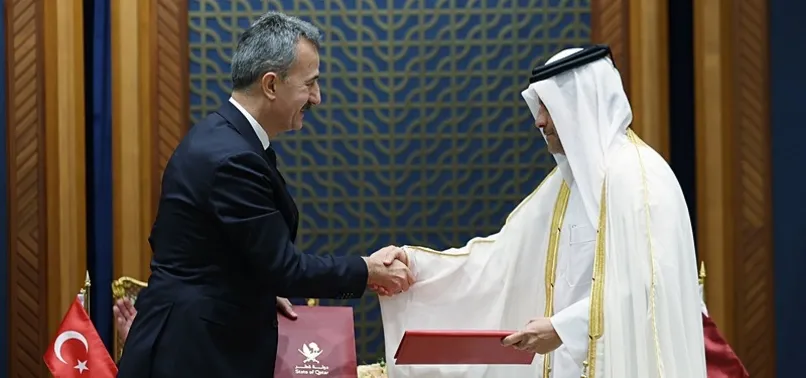
Turkey, Qatar, Pakistan, and Indonesia are set to enhance defense industry collaboration through a new memorandum of understanding (MoU) in Doha, as announced by Turkey’s Defense Industries Secretariat (SSB). This agreement aims to strengthen existing defense projects among these nations, showcasing Turkey’s commitment to multilateral cooperation in the defense sector.
Strengthening Defense Industry Ties
The signing of this memorandum marks a significant milestone in Turkey’s strategy for fostering international defense partnerships. The initiatives spearheaded by the SSB are designed to go beyond merely supplying military equipment; they emphasize joint production, technology transfers, interoperability, and the synchronization of supply chains among these nations. In a public statement, the SSB highlighted that the partnerships promoted under Turkish President Recep Tayyip Erdogan are integral to Turkey’s foreign policy objectives. Efforts aimed at mass production and enhancing export capabilities have gained impetus, particularly under the leadership of Haluk Gorgun, the SSB’s head.
Turkey’s defense and aerospace sector have witnessed substantial growth, with the Defense and Aerospace Industry Exporters’ Association reporting approximately $54 billion in exports from 2012 to the first nine months of 2026. Notably, over $30 billion of that has been realized in the past four years, making this period responsible for more than 55% of the exports during the entire duration. The sector notably soared in 2025, with a 48% increase in exports yielding over $10 billion. As such, Turkey has emerged as the 11th largest arms supplier globally, with NATO allies constituting 56% of its defense exports.
Collaborative Projects with Qatar
Qatar represents one of Turkey’s vital partners in this defense collaboration. Their longstanding relationship is exemplified by various joint projects, including the supply of Bayraktar TB2 armed drones and armored vehicles to the Qatari Armed Forces. Furthermore, Barzan Holdings, a subsidiary of Qatar’s Defense Ministry, has previously entered into agreements with Turkish defense firms such as Aselsan and MKE. A noteworthy advancement in their collaboration is BARQ, a joint venture launched in Qatar by Aselsan and Barzan Holdings, which is engaged in the local assembly and production of SARP remote-control weapon systems.
Collaboration with Pakistan and Indonesia
The defense cooperation between Turkey and Pakistan is prominently illustrated by the PN MILGEM Babur-class corvette project. Under this contract, Asfat, the main contractor, is overseeing the construction of four corvettes, with two vessels built in Istanbul and the remaining two at Karachi Shipyard. This collaboration has not only enhanced Karachi Shipyard’s production capabilities but also contributed significantly to local workforce training in shipbuilding.
Similarly, Indonesia’s collaboration with Turkey materializes through the KAPLAN MT medium-weight tank project, which has been developed under an intergovernmental agreement. This initiative sees Turkish defense company FNSS working alongside Indonesia’s PT Pindad, where prototypes and initial production tanks have been successfully delivered to Indonesian authorities, with ongoing production taking place in Indonesia, backed by a technology transfer agreement.
Fostering Multilateral Defense Cooperation
The forthcoming memorandum in Doha serves the dual purpose of fortifying Turkey’s individual partnerships with Qatar, Pakistan, and Indonesia, while also cultivating a multilateral defense framework. The SSB’s defense diplomacy emphasizes the significance of establishing not just defense product exports but also focused on developing joint production capabilities, technology transfers, and fostering sustainable strategic partnerships. This collaborative effort is anticipated to broaden existing defense initiatives and pave the way for new projects that will benefit all participating nations.