
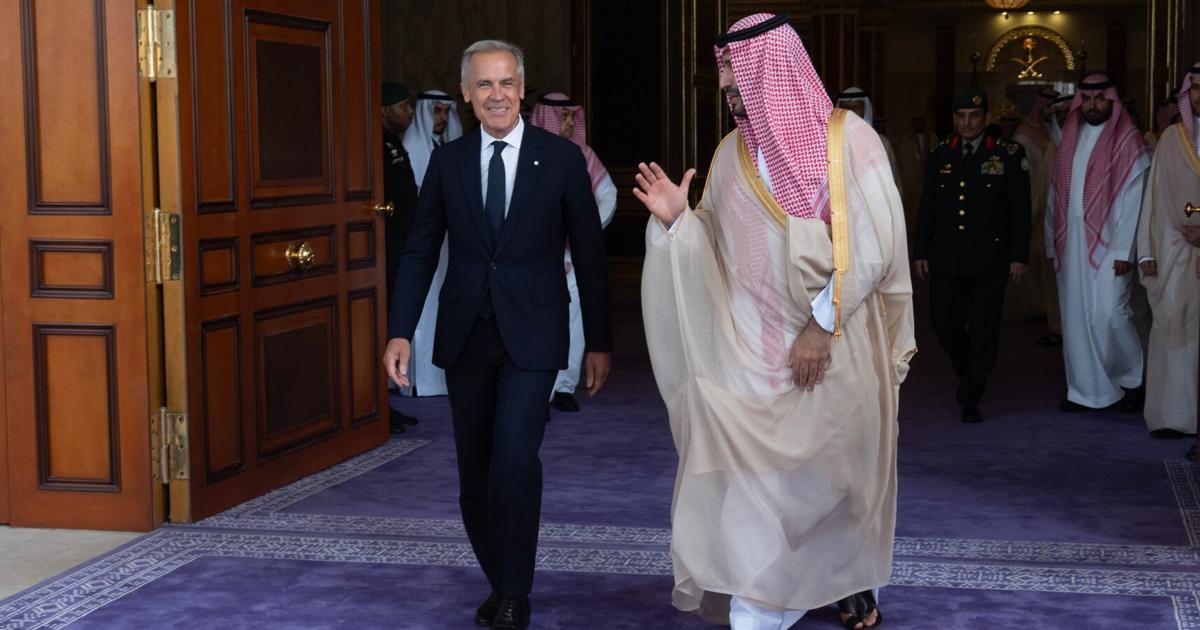
Canadian Prime Minister Mark Carney has found himself in the spotlight as he justifies his recent trip to Saudi Arabia, a nation often criticized for its human rights violations. His remarks, made on the second day of his visit, echo a complex balancing act between diplomacy and ethical considerations in international relations.
Understanding the Context of the Visit
Carney’s trip to Saudi Arabia comes at a time when global leaders are increasingly scrutinizing the actions of other nations with regard to human rights. The Prime Minister emphasizes that engagement with Saudi Arabia is crucial, not merely for political alliances but also for fostering economic partnerships and addressing key geopolitical issues. The Middle East’s stability is vital for global security, and Carney believes dialogue can open pathways to a more constructive relationship.
Despite widespread condemnation of Saudi Arabia’s treatment of dissenters, women’s rights issues, and freedom of expression, Carney argues that isolating the kingdom could exacerbate rather than alleviate these problems. By maintaining a dialogue, he aims to influence progressive change from within and address critical issues related to economic and security interests.
Evaluating Human Rights Concerns
Critics of Carney’s trip argue that ignoring the human rights agenda in favor of economic discussions dilutes Canada’s standing in the global human rights arena. According to various watchdog organizations, Saudi Arabia remains one of the most oppressive regimes worldwide, and any form of legitimization may inadvertently signal tolerance toward their policies. This sentiment raises questions about the effectiveness of engaging with such regimes.
Carney’s defense highlights the delicate balance leaders must maintain when navigating international relations. While human rights issues are undeniably pivotal, security and economic interests often dictate policy decisions. Carney believes leveraging influence through diplomatic channels could prove more effective in instigating positive change, even in difficult environments.
The Broader Implications for Canadian Foreign Policy
The Prime Minister’s stance reflects a broader contemplation within Canadian foreign policy, where ethical considerations must coexist with pragmatic needs. His trip underscores a growing acknowledgment of the trade-offs that come with international diplomacy. As Canada seeks to uphold its values globally, it faces the challenge of effectively managing relationships with countries like Saudi Arabia.
Moving forward, how Canada navigates this dichotomy will shape its diplomatic identity and relationships with both allies and critics. The resonance of Carney’s visit may serve as a litmus test for the future of Canada’s global engagement strategy. It remains to be seen how these diplomatic efforts will impact both human rights outcomes in Saudi Arabia and Canada’s international reputation in the long run.
In conclusion, while Carney’s visit to Saudi Arabia has raised critical questions regarding human rights and diplomatic relationships, it underscores a pivotal moment where engagement is seen as a tool for potential reform. The ongoing dialogue on these pressing issues serves as a reminder of the complex fabric of international relations that countries must navigate with sensitivity and strategic foresight.