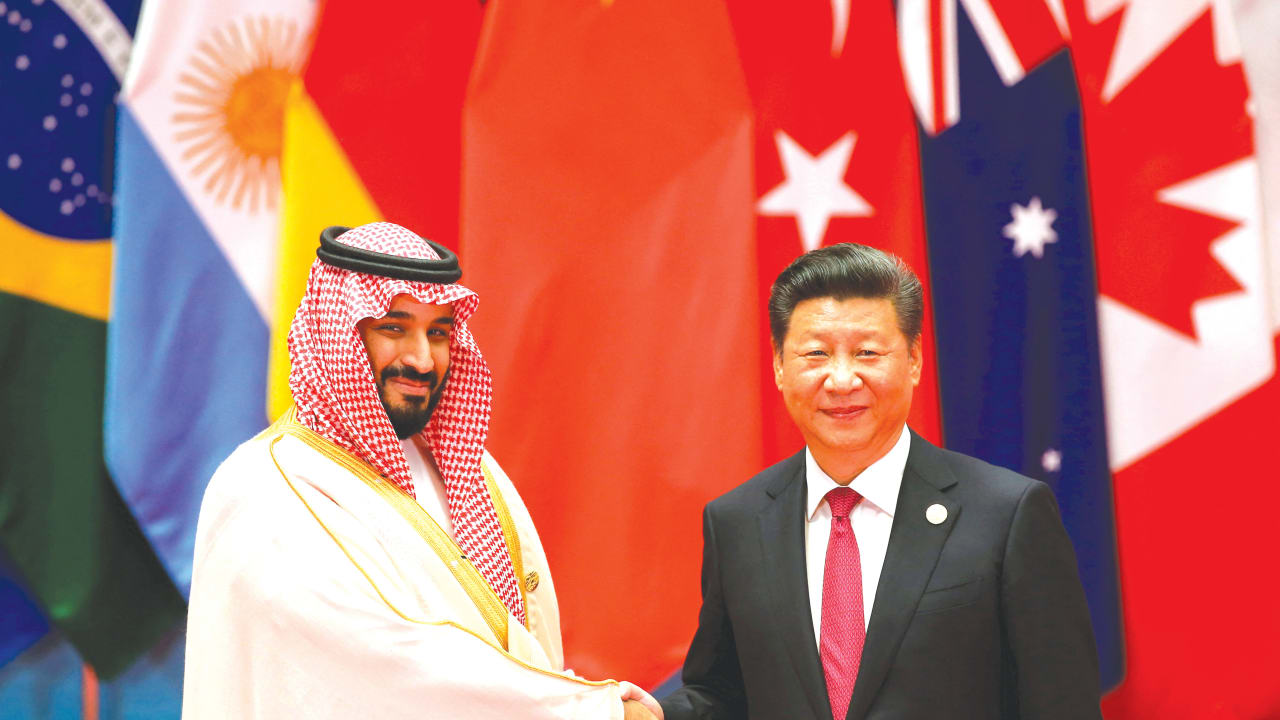
The ongoing conflict in the Middle East has highlighted a critical shift in regional alliances, particularly as the war with Iran enters its later stages. As powerful nations become deeply involved in enduring conflicts, smaller countries actively seek security arrangements that can buffer them against potential threats. This dynamic is leading to a reevaluation of partnerships that could reshape the region’s geopolitical landscape.
China’s Growing Influence
China’s role in the Middle East is evolving, as it does not necessarily aim to be the primary security provider in the region. Instead, Beijing’s strategy focuses on supplying critical resources such as advanced technology, drones, and military hardware. This approach allows China to build strong economic ties without committing troops or declaring itself a direct ally or adversary.
Saudi Arabia’s relationships have often mirrored the shifting tides of American military power. When the U.S. appears dominant, Riyadh aligns closely with Washington. Conversely, Saudi Arabia has sought rapprochement with Iran when faced with its impactful military capabilities. Most recently, the emergence of a defense pact involving Turkey and Pakistan—what some are calling the “Mecca Alliance”—underlines this trend. Saudi Arabia aims for protection, Turkey desires influence, and Pakistan is seeking financial aid. In this blend, China stands to gain further leverage without direct involvement.
Saudi Arabia’s Insurance Strategy
The defense agreement among Saudi Arabia, Turkey, and Pakistan establishes a collective security framework. However, it’s not yet akin to a NATO-style alliance. The agreement’s provision that an attack on one member is regarded as an attack on all signals a collective security commitment, albeit with unclear responses in real-world scenarios. This reflects a significant shift, illustrating regional states’ reluctance to rely solely on American security assurances.
Interestingly, while Iran might view this alliance with concern, China appears keen to reassure Tehran that this pact isn’t a Sunni coalition aimed at waging war against it. The goal seems to be creating an environment where Sunni states can pursue collective security while maintaining a balance that prevents any one power from becoming overwhelmingly dominant.
The Economic Stakes
Analyzing the formation of these new alliances highlights the underlying economic motivations fueling these strategic decisions. The Gulf region serves as both a crucial energy source for China and a promising market for trade, particularly as Gulf nations look to diversify away from American influence. China’s non-ideological stance provides an attractive alternative; it offers infrastructure projects and technology without demanding political alignment, extending its economic reach significantly.
In this evolving scenario, the relationships formed are not limited to military alliances; they also encompass economic partnerships. For instance, if Saudi Arabia, Pakistan, and Turkey develop joint military capabilities, they can create a long-term dependency on Chinese technology, thereby further increasing Beijing’s foothold in the region.
Israeli Interests in a Fragmented Landscape
Israel’s geopolitical strategy must adapt to a reality where traditional alignments are dissolving. Rather than solely aligning with any singular block, Israel may find value in deepening ties with nations like the UAE, which itself has reasons to scrutinize the power dynamics introduced by the Mecca Alliance. The UAE’s efforts to establish an independent foreign policy position it favorably against a possible Saudi-led hegemony.
The Abraham Accords can be seen as a proactive measure to foster cooperation across various fronts, ranging from trade to technology, rather than solely through military means. As the region experiences a power shift, Israel’s opportunity lies in promoting a network of alliances that prioritizes collective stability, pushing back against any one nation’s predominance, whether it be Iran, Saudi Arabia, or Turkey.
In summary, the Mecca Alliance reflects broader shifts in the Middle Eastern power dynamic, where countries are continuously seeking new forms of security and cooperation. In light of these transformations, stakeholders like China are positioned to capitalize economically, while nations like Israel and the UAE explore ways to maintain agency and influence in a changing landscape.