
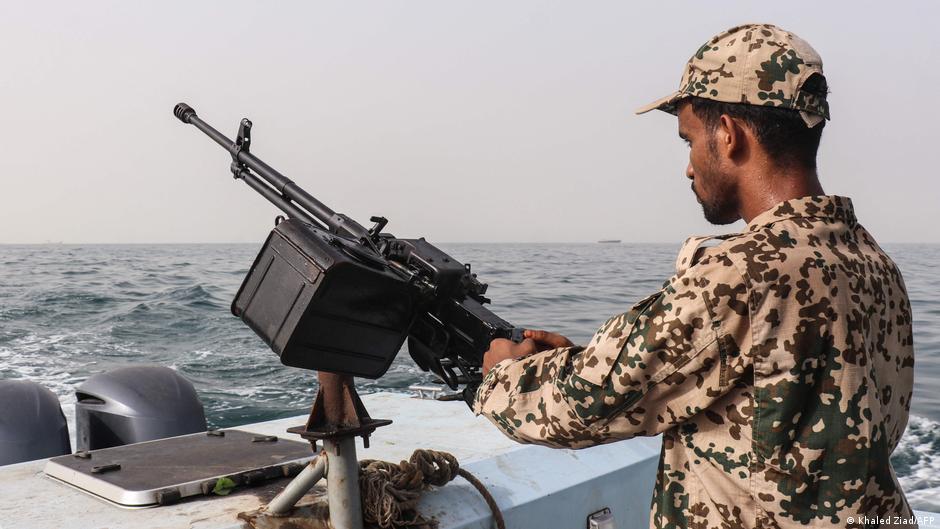
Military tensions between Yemen’s Houthi group and Saudi Arabia have escalated for the first time since a truce was established in 2022. The cessation of hostilities appears fragile as new military actions signal a deteriorating situation that involves regional geopolitical complexities.
Recent Aggressions Spark Rising Tensions
In July, the Iran-supported Houthi militia accused Saudi Arabia of targeting the airport in Sanaa. This supposed assault aimed to disrupt the return of Houthi leaders following the funeral of former Iranian Supreme Leader Ayatollah Khamenei. Saudi officials swiftly denied these claims, suggesting they were merely fabrications by the Houthis. Following this incident, the Houthis intensified their offensive, targeting facilities owned by Saudi Arabia’s national oil company, Aramco. This aggressive maneuver forced a production halt at the Jazan site, which has been pivotal for circumventing Iran’s blockade of the Strait of Hormuz.
The Houthis have also threatened commercial vessels linked to Saudi interests traversing the Bab el-Mandeb Strait, a crucial maritime route connecting the Red Sea to the Gulf of Aden. This blockade has reportedly prompted some vessels to turn back, highlighting the strategic importance of this strait, especially in the context of Saudi oil exports faced with rising regional tensions. Consequently, Saudi Arabia confirmed military strikes against Houthi targets to safeguard shipping routes, announcing the formation of a multinational maritime coalition with participation from 14 countries.
Potential Unraveling of a Truce and Its Implications
According to Elham Manea, a political scientist with expertise in Middle Eastern studies, the current aggressions seem to be primarily instigated by the Houthis as they leverage the evolving U.S.-Iran confrontation to address unresolved grievances with Saudi Arabia. Manea notes that Houthi leader Abdulmalik al-Houthi has recently altered the group’s rhetoric to focus on specific Yemeni demands rather than merely supporting Iran, indicative of a new strategy to enhance their negotiating power. The Houthis seek an end to the air and naval blockades imposed by Saudi Arabia, which persist despite the previous truce.
While there are signs of an escalation, some experts caution against concluding that Saudi Arabia intends to abandon its more restrained approach in Yemen. Manea points out that the kingdom has prioritized regional stability to support its broader economic initiatives, particularly Vision 2030, a transformative agenda aimed at developing its economy and reducing dependence on oil revenues.
Humanitarian Crisis Deepens Amid Renewed Hostilities
As the conflict reignites, Yemen’s humanitarian crisis worsens, compounded by years of war. According to the United Nations, the nation faces one of the world’s gravest humanitarian emergencies. Human Rights Watch researchers indicate that food and water infrastructure have been significantly damaged while aid has been obstructed. These conditions have left over half of Yemen’s population without reliable access to essential food supplies, prompting fears that a renewed military escalation could further endanger civilian lives.
As the fighting escalates, experts predict a cycle of violence that results in extensive human suffering and losses. Michael Stephens from the Royal United Services Institute notes that if larger military engagements resume, they may ultimately lead to a realization on both sides that dialogue is necessary for resolution. Considering historical precedents, there is a strong likelihood that major military actions will fail to yield decisive victories.
In summary, the renewed hostilities between the Houthis and Saudi Arabia reveal a precarious and volatile situation, one that could easily draw in regional powers and exacerbate Yemen’s ongoing humanitarian crisis. As stakeholders navigate this complex landscape, the imperative for diplomatic solutions remains paramount.