
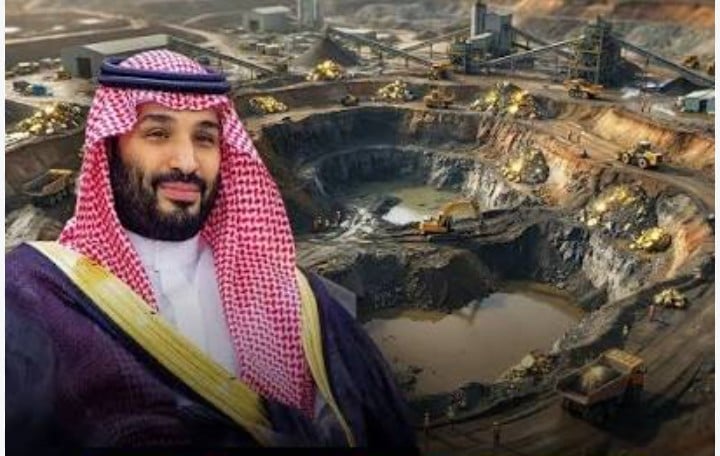
West Africa is experiencing a significant boom in gold production, heavily influenced by interests from the Gulf region, particularly the UAE. As we look toward 2026, this dynamic is evolving with Saudi Arabia making substantial investments and expressing increased interest in gold-rich countries like Burkina Faso.
The UAE’s Dominance in West African Gold
The United Arab Emirates has established a formidable presence in West Africa’s gold market. For years, Dubai has served as a vital transit point for gold originating from the continent. In 2024, UAE gold imports reached close to 1,400 tonnes, valued at over $105 billion, with more than half sourced from African nations. This extensive network reflects not only the UAE’s commercial interests but also its strategic involvement in the region’s mining sector.
In Mali, which stands as Africa’s second-largest gold producer, UAE-linked entities account for about 81% of the country’s total production. This degree of concentration highlights the intricate ties between gold production and regional security, with reports of incidents such as a kidnapping associated with gold trade activities near Bamako further complicating this landscape. Moreover, UAE sovereign wealth funds have engaged in partnerships with Moroccan companies for various gold and base-metal ventures across West Africa, incorporating Islamic finance methods and infrastructure deals that emphasize a broader Gulf strategy.
The Saudi Approach Through Burkina Faso
Saudi Arabia’s entry into West Africa’s gold sector is particularly noteworthy due to its strategic timing rather than size. Burkina Faso’s gold exports reached approximately $10.1 billion in 2025. The Saudi ambassador in Burkina Faso met with representatives from Sarmady Co to explore investment opportunities in the gold industry. Although no formal agreements have been finalized yet, Sarmady has been invited to present a detailed investment proposal.
This move aligns with Saudi Arabia’s broader strategy, as the nation has been relatively slower to join the African mining scene compared to the UAE. However, in reaction to Emirati acquisitions such as the $1.9 billion deal with the Democratic Republic of the Congo and a $1.1 billion stake in Zambia’s Mopani Copper Mines, Saudi Arabia appears eager to build its portfolio. Internally, the country’s mining sector is undergoing a rapid transformation under the Vision 2030 initiative, with a staggering 595% increase in exploration budgets planned between 2022 and 2025, marking gold as a strategic focus alongside other vital minerals.
West Africa’s Reform Agenda Amid Gulf Investment
As Gulf investments intensify, major gold-producing nations in West Africa are simultaneously pursuing their own reform strategies. Burkina Faso has notably revised its mining code to allow greater state involvement, with several industrial mining sites transitioning to majority local ownership. The inauguration of the fully state-run mine in Yako in July 2026 exemplifies this shift.
Mali is also enhancing the oversight of artisanal and small-scale mining, having established the Malian Office of Precious Substances to formalize operations across approximately 400 sites, aiming for an annual output exceeding 60 tonnes. Additionally, countries like Ghana are expanding their gold purchase programs to bolster national reserves, capitalizing on the soaring gold prices expected to remain above $4,000 an ounce through 2026.
The growing participation of Gulf investors sets the stage for a critical tension within West Africa’s gold economies. Will the influx of Saudi and other Gulf investments provide the necessary financing and expertise to support reforms, or will it perpetuate the opaque ownership structures that have drawn scrutiny in Mali’s Emirati-dominated mining sector? How Burkina Faso navigates any potential agreements with Sarmady may serve as an essential benchmark for the future of the region.