
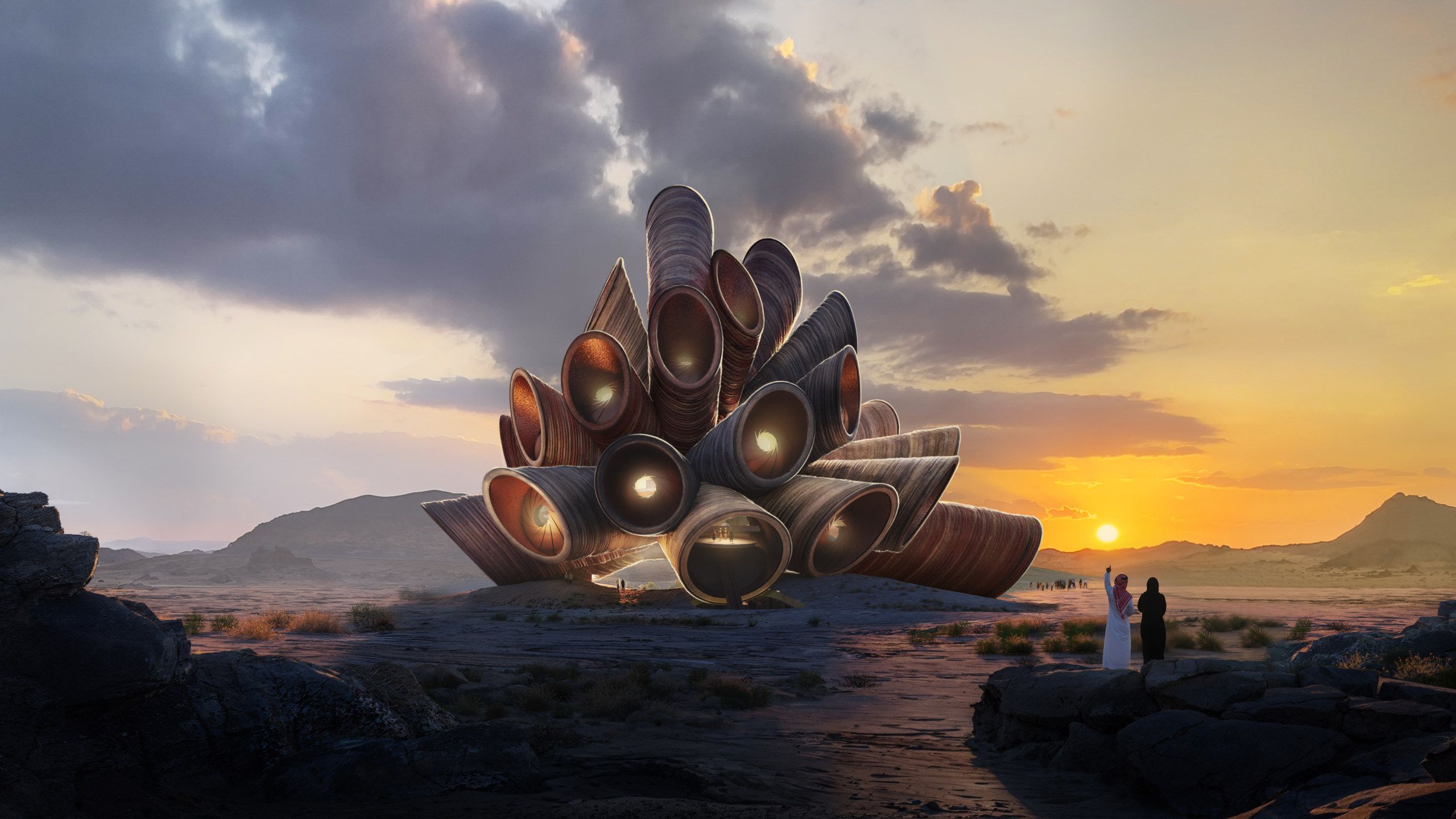
AlUla Manara is an innovative project emerging as a key player in the realm of astrotourism. Nestled in the AlUla region of Saudi Arabia, about 1,100 kilometers west of Riyadh, this vast expanse of 22,561 km² features breathtaking landscapes, including verdant valleys and unique sandstone formations. Renowned for its historical significance, AlUla boasts heritage sites stretching back over 2,500 years, prominently featuring the ancient city of Hegra, which highlights the cultures of the Lihyan and Nabataean civilizations.
Attractions of AlUla as a Dark Sky Park
One of the remarkable aspects of AlUla is its recognition as a Dark Sky Park, a status that underscores its commitment to preserving natural darkness by minimizing artificial light. This designation not only enhances the experience for astronomy enthusiasts and sky-gazers but also protects the local flora and fauna. AlUla’s pristine night skies provide a stunning backdrop for stargazing, making it an ideal location to embrace the wonders of the universe, particularly when complemented by the meticulously planned AlUla Manara observatory.
The Vision Behind AlUla Manara Observatory
Designed by the acclaimed Heatherwick Studio, the AlUla Manara observatory is inspired by the surrounding landscape and the ethereal shapes of galaxies. The structure is envisioned to emerge from the desert akin to a native plant, utilizing specially textured stone that harmonizes with the area’s natural features. The observatory’s design evokes a sense of otherworldliness, aiming to attract visitors seeking an extraordinary experience amidst the desert terrain.
Stuart Wood, Executive Partner at Heatherwick Studio, notes that traditional space observatories often feel sterile and remote. The goal behind the AlUla Manara is to create an inviting atmosphere where guests can engage with the cosmos in a meaningful way. The observatory will feature spiral forms that echo a cluster of camera lenses, enabling diverse viewing experiences that contribute to an immersive environment for learning and exploration.
Facilities and Attractions Within the Observatory
The AlUla Manara project promises a range of facilities designed to enhance the visitor experience. Apart from the observatory itself, there will be gallery spaces, immersive exhibitions, a planetarium, and a restaurant. These elements not only cater to tourists but will also serve as a center for scientific research and education, fostering a deeper understanding of the universe.
Strategically positioned near the Gharameel Nature Reserve and Harrat Uwayrid Reserve, the observatory aligns with Saudi Arabia’s Vision 2030 initiative, which aims to enhance the kingdom’s tourism appeal. Phillip Jones, Chief Tourism Officer at the Royal Commission for AlUla, describes the observatory as a potential symbol of AlUla’s future as a hub of exploration, learning, and inspiration.
While the official timeline for the construction and completion of the AlUla Manara Observatory remains undecided, its anticipated role in promoting astrotourism reflects a broader trend of integrating scientific inquiry with cultural and historical appreciation. This ambitious endeavor not only paves the way for astronomical exploration but also highlights AlUla’s significance as a destination poised to attract global attention.