
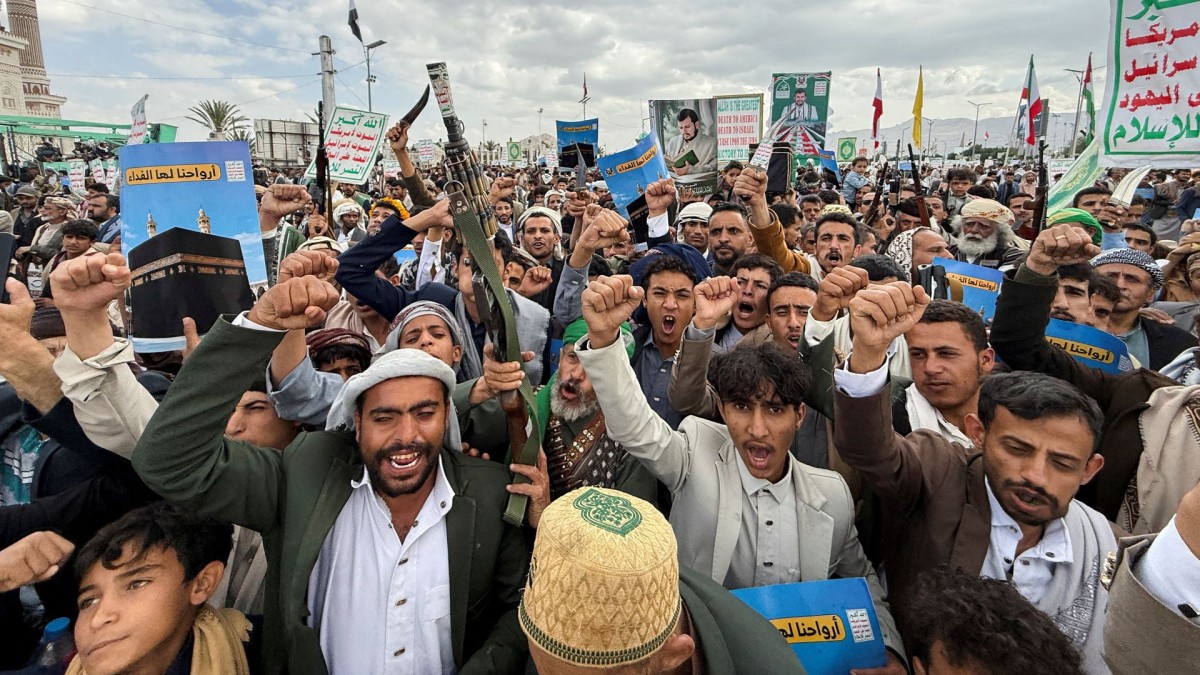
Recently, the Houthi movement in Yemen announced a new ballistic missile attack targeting Abha International Airport, located in the southwestern region of Asir in Saudi Arabia. This incident has raised concerns as the group claimed that their strike caused a significant disruption to air traffic operations at the airport.
Details of the Attack on Abha International Airport
On Tuesday, Houthi military spokesperson Yahya Sarea took to social media to assert that the missile had successfully “precisely and directly” hit its intended target—Abha International Airport. As of now, there has been no official confirmation or response from Saudi authorities regarding this attack, leaving many questions unanswered about the extent of the damage or any potential casualties.
In conjunction with the missile attack on Abha Airport, the Saudi General Authority of Civil Aviation reported that other airports in the southwestern region, specifically King Abdullah bin Abdulaziz International Airport in Jazan and Najran International Airport, were also subjected to missile strikes on the previous evening. These attacks resulted in minor injuries to three individuals but highlighted a broader trend of rising tensions in the area.
Houthi Attacks and Saudi Responses
In a separate statement, Sarea indicated that Houthi forces had targeted Saudi troop concentrations at the Al-Daghareer military camp in Jazan, which is situated near the Yemeni border. The spokesperson claimed that these ballistic missiles also successfully struck their targets, emphasizing the group’s ongoing military capabilities. This pattern of missile and drone strikes against Saudi objectives has underscored a significant escalation in the conflict as hostilities between the two sides continue to intensify.
The recent missile attacks are part of a broader, troubling trend in cross-border confrontations. As the Houthis persist in their offensive, the Saudi military has responded by intensifying airstrikes against Houthi positions. This cycle of retaliation aims to support Yemeni government forces, particularly in reclaiming territory along the southwestern Red Sea coast that has fallen under Houthi control.
The Context of Yemen’s Ongoing Conflict
Yemen’s conflict initially ignited in late 2014 when the Houthi movement seized control of the capital, Sanaa, alongside much of northern Yemen. In response, a Saudi-led military coalition intervened in 2015 to bolster the internationally recognized Yemeni government. The recent uptick in violence represents the most serious escalation of hostilities since a UN-brokered truce, which had largely put a halt to major confrontations in the war-torn country in 2022.
The conflict in Yemen continues to draw attention due to its humanitarian crisis and ongoing implications for regional stability. As both the Houthis and Saudi Arabia engage in intensified military actions, the international community remains wary of a potential further deterioration in conditions on the ground, underscoring the need for renewed efforts toward a lasting resolution.