
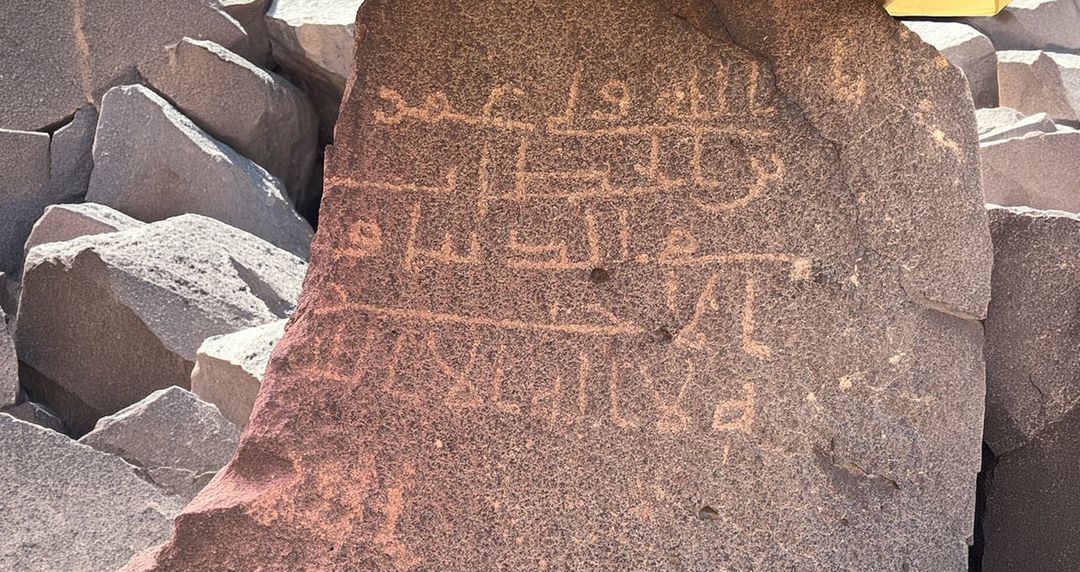
The Heritage Commission of Saudi Arabia has made a remarkable discovery: a rock inscription referencing Umar ibn al-Khattab, a prominent figure in early Islamic history. This finding emerged from comprehensive archaeological surveys in the Medina province, showcasing the region’s historical significance.
Significant Discoveries in Medina
Recently, the Heritage Commission shared news of this extraordinary inscription, which is just one highlight among a total of 1,774 archaeological items uncovered during an extensive two-season survey in the Al Mahd Governorate. Conducted by dedicated survey teams, these excavations reflect a profound commitment to exploring and preserving the cultural legacy of Saudi Arabia.
A Glimpse Into the Past
The findings documented by the Heritage Commission indicate that archaeologists identified 173 previously unknown archaeological sites, further illuminating the rich and diverse historical heritage present in the region. This discovery underscores the importance of ongoing archaeological efforts to uncover the many layers of history embedded in the land.
Preserving Cultural Heritage
The significance of these archaeological findings cannot be overstated. By revealing inscriptions and artifacts connected to key historical figures, such as Umar ibn al-Khattab, the Heritage Commission is not only preserving the past but also fostering a deeper understanding of the region’s role in Islamic history. This commitment to conservation plays a vital role in educating future generations about their cultural identity.
In addition to its historical implications, the discovery also serves as a reminder of the importance of archaeological research in enhancing our understanding of different cultures. Such findings sharpen our awareness of how historical figures and events have shaped local and global narratives.
Future Prospects for Archaeology in Saudi Arabia
With these recent discoveries, the future of archaeology in Saudi Arabia looks promising. The meticulous work conducted by survey teams emphasizes the need for continued exploration and documentation within various regions. This venture not only enriches the field of archaeology but also contributes to tourism and cultural initiatives that celebrate Saudi Arabia’s astonishing history.
In conclusion, the discovery of the rock inscription mentioning Umar ibn al-Khattab marks an important chapter in the ongoing story of Saudi Arabia’s archaeological endeavors. By focusing efforts on uncovering and preserving their heritage, Saudi Arabia is poised to deepen not only its own understanding of the past but also the global appreciation for the historical significance that the region holds.