
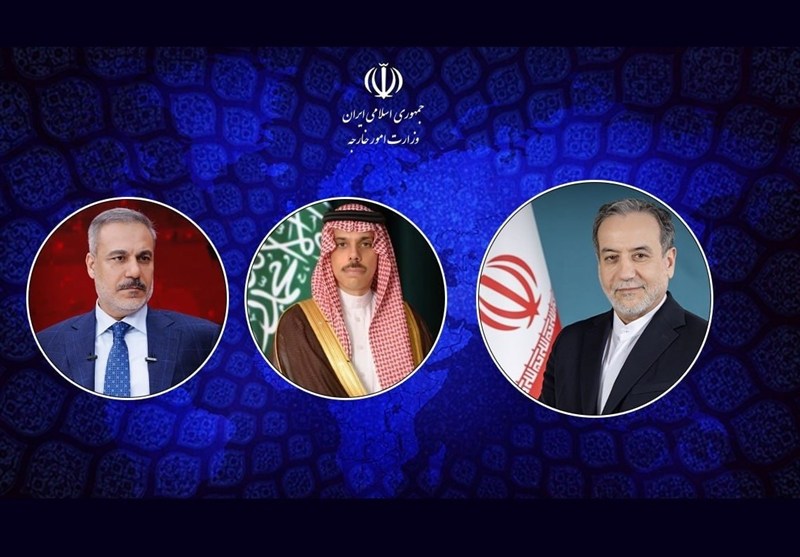
Recent dialogues between senior Iranian officials and their Turkish and Saudi counterparts have highlighted rising tensions in the Middle East, specifically in response to the United States’ military actions in southern Iran. Foreign Minister Abbas Araqchi engaged in separate discussions with Turkish Foreign Minister Hakan Fidan and Saudi Foreign Minister Prince Faisal bin Farhan. These conversations centered around the escalating regional situation that has unfolded following US attacks on Iranian territory.
Condemnation of US Military Actions
During these discussions, Araqchi expressed strong condemnation of the US military operations targeting Iran. He stressed that these actions not only violate Iran’s sovereignty but also pose a significant challenge to international law and order. By emphasizing Iran’s inherent right to self-defense, he underscored the nation’s resolve to protect its territorial integrity against foreign aggression. This perspective aligns with wider Iranian rhetoric that views military actions by the US as part of ongoing imperial tendencies in the region that destabilize local governance and exacerbate conflicts.
Responses and Regional Tensions
Following the US strikes, Iran conducted missile and drone operations targeting US facilities in the region. This response marks a significant escalation in hostilities, showcasing Iran’s military capabilities and willingness to retaliate against what it sees as unjustified aggression. The Khatam al-Anbiya Central Headquarters, Iran’s military command, confirmed that these operations were a direct response to the US’s characterization of its forces as a “terrorist army.” The joint military action involving both the Iranian Army and the Islamic Revolution Guards Corps (IRGC) demonstrates a unified front in response to external threats.
Consequences of Continued Aggression
Iran’s military command further issued a stern warning that any future acts of aggression would provoke even more extensive and severe countermeasures. This threatens to escalate military conflict in the region, creating a precarious situation for neighboring states and global powers involved in Middle Eastern affairs. The response is not only about military might but also serves as a statement of national pride and resilience in the face of perceived existential threats.
Broader Implications on International Relations
The recent exchanges highlight a complex web of geopolitical relationships, where alliances may shift based on perceived threats. Turkey and Saudi Arabia, both significant players in regional politics, expressed concern over the evolving dynamics, eager to maintain stability while grappling with their own foreign policy objectives in relation to Iran and the US. As these nations assess their positions, the risk of miscalculations increases, potentially drawing more countries into a conflict that could have far-reaching ramifications beyond the immediate parties involved.
In summary, the dialogue among Iranian, Turkish, and Saudi officials underscores the urgency for diplomatic engagement amid escalating tensions. Left unchecked, the cycle of aggression and retaliation could lead to wider regional instability, calling into question the effectiveness of both international diplomacy and military strategies in achieving long-term peace in the Middle East.