
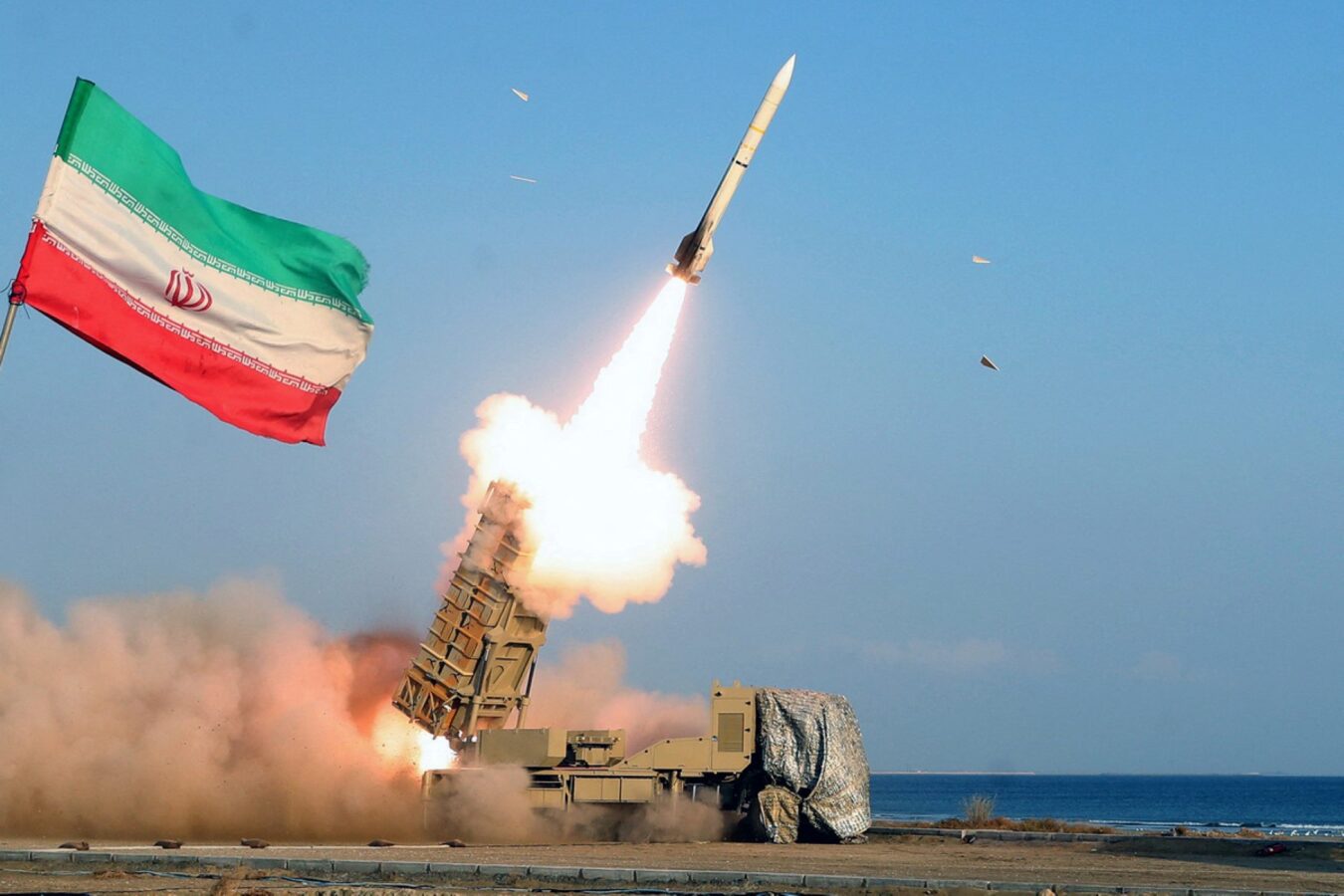
Iran has declared the closure of the Strait of Hormuz following missile and drone attacks on multiple Gulf nations in response to U.S. military actions. This escalation has led to widespread alarm and significant geopolitical implications for the region.
Escalation in Hostilities
Witnesses reported air raid sirens and explosions across Qatar, the United Arab Emirates, Bahrain, Jordan, and Oman, with only Saudi Arabia remaining unaffected. The U.S. military responded to an incident where the Iranian Revolutionary Guard Corps (IRGC) fired on a Cyprus-registered container ship, which Iran claimed was navigating an unauthorized route through the vital shipping lane. State media later announced that the IRGC had also targeted another vessel, accusing it of regulatory violations.
The Pentagon’s retaliatory strikes aimed at Iranian targets came amid growing tensions, specifically aimed at facilities believed to support U.S. military operations in the region. The IRGC described hitting logistical and supply hubs at Oman’s port of Duqm, emphasizing that they had acted against a vessel that ignored warnings to adhere to designated shipping lanes.
Impact on Civilian Maritime Safety
Amid these military actions, air raid alerts were reported in Bahrain, while Qatar confirmed the interception of incoming missiles. The situation escalated to a tragic note as India announced that 11 of its citizens were on a commercial vessel, the GFS Galaxy, which came under attack. While ten individuals were rescued, one remains missing, prompting search-and-rescue operations by the Indian government.
The Indian Ministry of External Affairs expressed grave concerns about the targeting of civilian maritime activities, calling for an immediate halt to attacks on commercial shipping and a restoration of safe navigation through international waters, in line with global legal frameworks.
Strategic Significance of the Strait of Hormuz
The Strait of Hormuz has long been a focal point of international tension, especially during times of conflict. Given that a substantial percentage of the world’s oil and gas exports flow through this narrow passage, any closure could have serious ramifications for global energy markets and economic stability. Iran’s historical insistence on regulating maritime traffic and imposing passage fees has drawn sharp objections from Washington, which maintains that such actions violate international law.
Moreover, the current tensions pose a threat to peace initiatives aimed at resolving the ongoing conflict that intensified with recent U.S.-Israeli military operations. Iran’s supreme leader, Mojtaba Khamenei, has publicly vowed to seek revenge for the recent killing of his predecessor, stating that vengeance is a national imperative and will be pursued regardless of political circumstances.
Regional Reactions and International Dynamics
While Iran’s missile strikes targeted multiple Gulf states, Saudi Arabia avoided direct hits but strongly condemned the actions, labeling them a violation of international law. The Saudi Foreign Ministry criticized Iran’s behavior as detrimental to maritime security and regional stability. Notably, Saudi Arabia has bolstered military ties with Pakistan, enhancing collaboration for mutual defense, especially in light of the chaotic security landscape.
In a bid to mediate the escalating situation, Pakistan’s Deputy Prime Minister underscored the importance of the mutual defense agreement with Saudi Arabia, urging Iran to refrain from utilizing its territory for hostile actions against their alliance. Although not directly attacked, Saudi Arabia’s responsive posture reflects its strategic interests and dedication to maintaining regional security amidst turbulent dynamics.
As this situation unfolds, the critical balance within the Gulf region will rely on diplomatic engagements, security collaborations, and adherence to international laws governing maritime navigation and military conduct.