
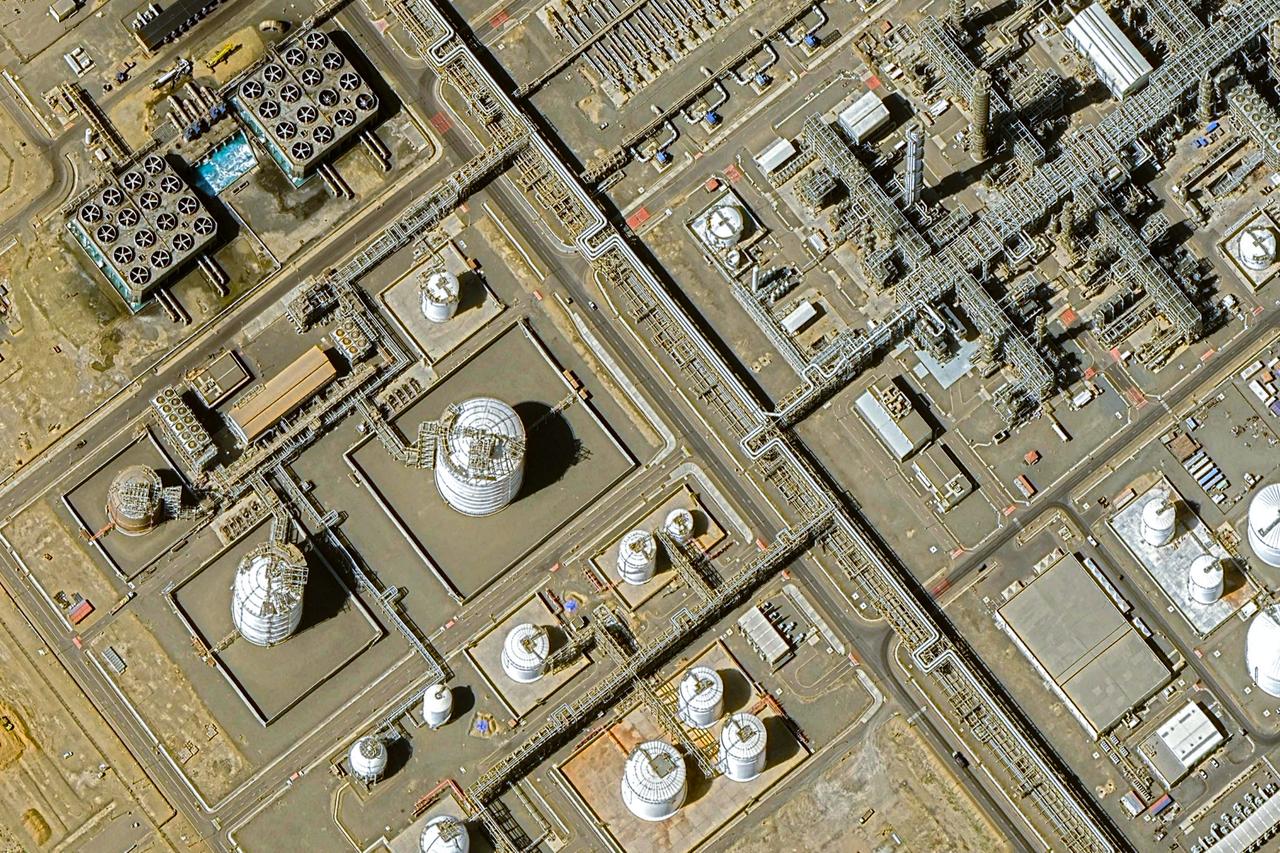
Saudi Arabia has halted operations on its East-West Petroleum Pipeline, commonly referred to as Petroline, following drone assaults from Iraq. This crucial pipeline, the largest oil conduit in the region, is now rendered inoperative, raising concerns about its implications for global energy markets, especially as it served as a significant alternate route to the congested Strait of Hormuz.
Petroline Overview and Significance
The Petroline spans approximately 1,200 kilometers, extending from the oil-rich Abqaiq region in eastern Saudi Arabia to Yanbu on the Red Sea. Its design allows for the transport of up to 7 million barrels of crude oil per day. By connecting various production and processing hubs with refineries and export terminals along the western coast, Petroline has become an essential element in facilitating Saudi Arabia’s oil exports. The disruption of this pipeline is being closely monitored by energy analysts globally, particularly given that the region influences about 20% of the world’s oil supply.
Following the drone attacks on September 10, the Saudi Energy Ministry has deployed emergency response teams to evaluate and secure the pipeline’s integrity. While the extent of the resulting damage remains unspecified, officials are treating the pipeline shutdown as a precaution. Current measures include temporarily ceasing crude flows as assessments continue on the pipeline and associated pumping facilities.
Impact on Energy Exports
The ramifications of a prolonged Petroline shutdown could substantially impact global oil supply chains. Saudi Arabia’s ability to export crude is critical, and any delays or reductions in throughput could distort market equilibrium. Data from earlier incidents indicate that Petroline previously faced operational challenges, such as when attacks caused a drop of around 700,000 barrels per day in capacity, though full functionality was typically restored in short order.
Saudi Aramco, the kingdom’s state-owned oil giant, has managed to ramp up the pipeline’s operational capacity in response to challenges. Despite the disturbances, the company has adjusted its strategies to keep the flow moving, particularly through the Yanbu port, which serves as a crucial nexus for exports, especially when the Strait of Hormuz became less accessible.
Global Market Reactions
The recent pipeline shutdown coincides with growing tensions in the region that could further threaten Saudi oil exports. As Houthi attacks escalate in the vicinity of the Red Sea, industry experts predict some buyers may opt for longer routes to avoid disruption. This diversion could significantly increase shipping costs and delay delivery timelines, causing ripple effects across the global oil market.
In August, crude loadings at Yanbu were estimated at 3.2 million barrels per day, dipping to around 2.9 million barrels per day in September. The volatility in transport capacity highlights the importance of Petroline in meeting demand, but evidence suggests that not all of what flows through Petroline is destined for the export market, which complicates the analysis of potential losses.
As the situation unfolds, the lack of transparency from Saudi authorities regarding the pipeline’s condition leaves industry players guessing. Brent crude prices experienced fluctuations following the news, settling near $104.61 a barrel amidst a broader context of elevated price movements driven by supply uncertainties. Understanding the full impact requires continued attention on both the operational status of Petroline and the stability of the region as a whole.
In summary, the shutdown of Saudi Arabia’s Petroline has thrown global energy markets into uncertainty. Stakeholders are left to navigate the potential consequences as the situation develops, and the need for alternate routes is more pressing than ever.