
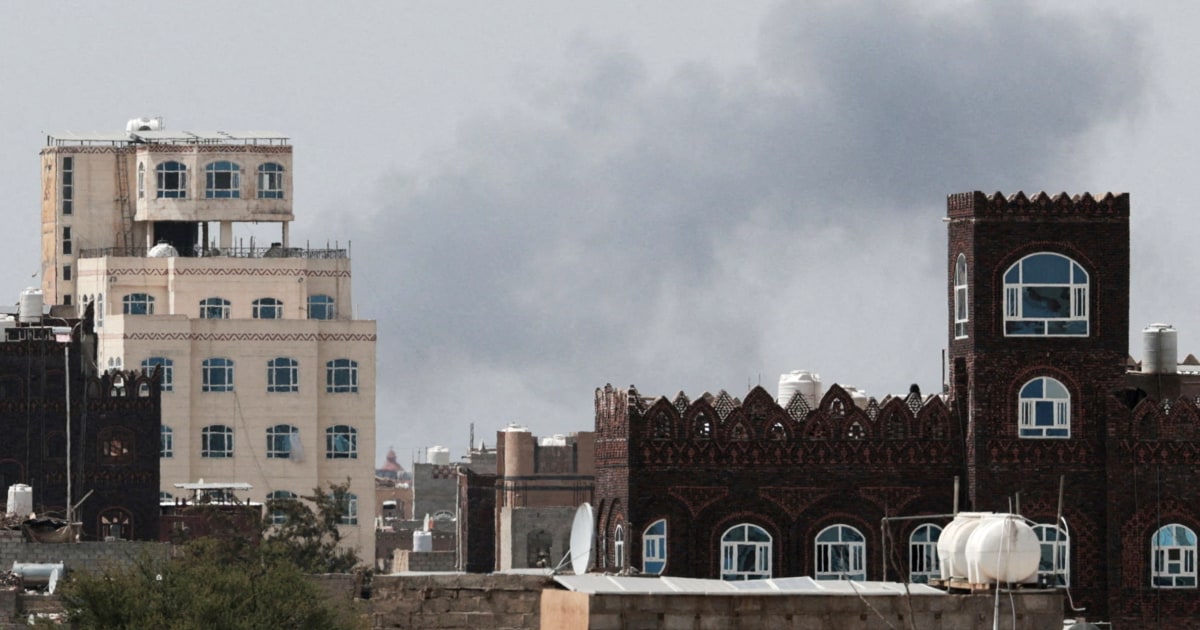
Tensions are escalating in Yemen following reports of airstrikes targeting Sanaa International Airport. The Iranian-aligned Houthi rebels accused Saudi Arabia of launching these airstrikes to obstruct a flight intended to return a Houthi delegation from a funeral in Iran. This incident highlights the ongoing conflict and the complex geopolitical landscape in the region.
Escalating Conflict in Yemen
For several years, a coalition led by Saudi Arabia, comprising the internationally recognized Yemeni government, has been engaged in a fierce struggle against the Houthi movement, which controls significant territories in northern Yemen. The recent airstrikes reflect the deteriorating situation and raise concerns about the possibility of further escalation in violence. The Yemeni government stated that the strikes were a necessary defensive measure to safeguard its airspace from Iranian influence. Saudi Arabia has not confirmed its involvement in the attacks, leaving many questions unanswered regarding its airstrike strategy.
Government Responses and Warnings
Gen. Taher al-Aqili, Yemen’s defense minister, asserted on social media platform X that the airstrikes targeted the runway of Sanaa International Airport to prevent a plane from landing that was carrying members of the Houthi delegation. This group had recently attended the funeral of Iran’s influential Supreme Leader, Ayatollah Ali Khamenei. In a preceding video statement, Al-Aqili emphasized the government’s preparedness to take necessary actions against any violations of Yemeni airspace, signaling a hardline stance on foreign aircraft, particularly those associated with Iran.
The escalation of military actions was underscored by intensified rhetoric. Al-Aqili stated, “Our patience has run out,” expressing the government’s readiness to respond robustly to any perceived threats or encroachments upon its sovereignty. His remarks underscore the precarious balance in this ongoing conflict and the government’s urgency in addressing external influences.
Reactions from the Houthi Forces
The Houthi movement’s response was immediate, with Brig. Gen. Yahya Saree stating via Telegram that Saudi Arabia’s airstrikes would mark an end to any temporary de-escalation. He warned that this act of aggression would not go unpunished, reflecting a determination to retaliate against any actions that threaten their leadership and control over the regions they occupy. The Houthis reported that the targeted plane altered its route, successfully landing at Hodeida Airport instead of Sanaa.
With rising tensions, the Yemeni defense ministry has advised the evacuation of the airport and surrounding areas, indicating the seriousness of the situation. There were no immediate reports of damage to the airport itself, but the ongoing conflict underscores the fragile state of peace in Yemen.
The Broader Implications
Beyond the immediate military implications, this situation raises critical questions about foreign intervention and influence in Yemen. Rashad al-Alimi, head of Yemen’s Presidential Leadership Council, noted that Iran sought to operate a flight for the Houthi delegation, emphasizing the regional power dynamics at play. The complex interplay of local and foreign interests continues to complicate the humanitarian crisis gripping Yemen, which has already endured years of devastating conflict, famine, and economic instability.
As hostilities continue to flare, the prospects for peace remain bleak, with the situation evolving rapidly. Both the Yemeni government and the Houthis appear entrenched in their positions, raising significant concerns for the future of the nation and the safety of its civilians. The international community remains watchful, but effective intervention is crucial to prevent further escalation and to facilitate a path toward lasting peace.