
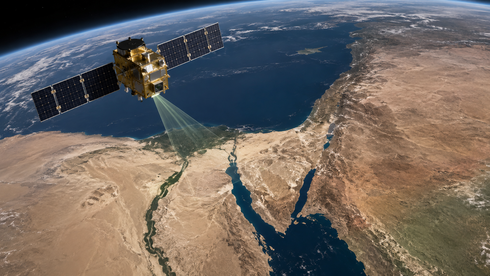
Saudi Arabia and Egypt are embarking on an ambitious joint venture to develop their first satellite, a project recently greenlit by the Saudi cabinet. As part of a larger initiative aimed at enhancing remote sensing and commercial Earth observation capabilities, this collaboration is framed as a strategic move for economic diversification under Crown Prince Mohammed bin Salman’s Vision 2030 agenda. However, there are complexities beneath the surface that merit closer examination.
The Geopolitical Context of the Saudi-Egyptian Satellite Project
This undertaking is not merely about technological advancement; it reflects a patron-client relationship that has already influenced Egypt’s infrastructure, such as its ports and financial institutions. The satellite project is a new asset in a landscape where Egypt has grappled with rampant external debt—now exceeding 40% of its GDP, with debt servicing costs nearing $40 billion annually. Since the 2011 uprisings, Gulf states have infused over $100 billion into Egypt’s economy, especially following significant investments from Saudi Arabia and other Gulf nations targeting various sectors like healthcare and finance.
Egypt’s negotiations with Gulf states have shifted dramatically. No longer does Cairo hold the status of a sovereign equal; instead, it approaches future deals as a nation burdened by debt, continually relinquishing parts of its autonomy amidst financial rescues. This upcoming satellite is emblematic of that trend, presenting not just technological growth but an extension of foreign influence in national security matters.
Implications for Egyptian National Security
While the project is touted as a pathway to developing satellite technology, it has significant military implications. Egypt has previously engaged in remote sensing through satellites like EgyptSat 1 and EgyptSat 2, which were claimed to serve civilian purposes but were primarily utilized for military intelligence. A new satellite, partially funded by Saudi sources, would enhance Egypt’s surveillance capabilities over its borders and vital regions such as the Sinai Peninsula and the Red Sea.
Furthermore, this satellite fits into a broader narrative concerning the geopolitical dynamics in the region. Saudi investment offers Egypt a clearer lens to observe its surroundings, complicating existing power dynamics, especially in relation to Israel. Given that Saudi Arabia is not bound by treaties between Egypt and Israel, the new satellite poses questions regarding its intended use and potential military applications.
The Role of International Powers and Economic Transparency
The financing of this satellite by Saudi Arabia, layered onto a structure predominantly funded by China, raises significant concerns about Egypt’s sovereignty in its space program. While Egypt promotes its space capabilities, investments from foreign powers—particularly in sensitive sectors—complicate narratives of domestic achievement. Washington, while not obstructing Saudi investments, should recognize that this satellite’s purpose transcends mere commercial endeavors.
For American policymakers, ensuring transparency in such complex arrangements is crucial. An appropriate demand for a notification mechanism concerning military applications of new satellites could foster an environment of accountability. The goal would be to clarify how images obtained from these satellites will be shared with treaty partners—a step essential to maintain stability in a region already fraught with tensions.
The Future of Regional Diplomacy
Finally, this Saudi-Egyptian venture is not just about capturing commercial gains in space technology but also about positioning Saudi Arabia strategically in regional diplomacy. With the split focus on Gaza stabilization and potential normalization with Israel, the satellite represents a means for Riyadh to gain situational awareness that it currently lacks. This eye in the sky allows Saudi Arabia to better navigate complex geopolitical waters, thereby strengthening its negotiating power.
Although the project has garnered attention for its technological significance, understanding its broader implications is essential. The investment signals a shift in Egypt’s independence and status, forcing stakeholders to question the true balance of power in the region. The project should not proceed under the guise of pure scientific collaboration but rather with an acknowledgment of its underlying implications for Egyptian sovereignty and regional security dynamics.