
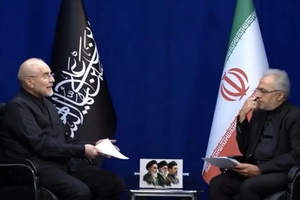
In recent times, many Iranians have expressed dissatisfaction with the unyielding, hardline stance of the Islamic Republic of Iran Broadcasting (IRIB). As discussions about a potential leadership transition unfold, observers are eager to see if the media institution will shift its narrative approach, which has been criticized for being excessively one-sided.
The Role of IRIB in Political Narratives
For years, hardline factions in Iran have manipulated IRIB, a state broadcaster whose leadership is appointed directly by the Supreme Leader, to counteract diplomatic initiatives aimed at fostering relations with the West, particularly the United States. This trend continued unabated even during the recent funeral ceremonies for former Supreme Leader Ali Khamenei, during which hardline voices on state media condemned efforts to pivot the country away from perpetual military confrontation.
As the five-year term of current IRIB chief, Jebelli, approaches its conclusion, scrutiny of his tenure has intensified. Initially raised in reformist circles, criticism has now permeated mainstream political dialogue. Jebelli’s association with ultraconservative factions, particularly the Paydari Party, has drawn ire from various political commentators, who see him and his cultural deputy, Vahid Jalili, as significant proponents of IRIB’s staunch editorial direction, especially its antagonism towards the government’s diplomatic pursuits and postwar reconstruction efforts.
Potential Changes at IRIB
Many analysts see an impending shakeup at IRIB as an indicator of whether Iran’s new leadership is willing to temper extreme narratives and foster a more balanced media landscape. A recent opinion piece from the moderate outlet Asr-e Iran, titled “Countdown to the Start of Changes in the IRIB,” emphasized that the political fallout from the broadcaster’s recent censorship of Parliament Speaker Mohammad Bagher Ghalibaf has become a concern at senior levels of government. To some, this incident has transcended a mere editorial misjudgment and become a question of national security, impacting internal cohesion at a tumultuous time for the nation.
The commentary warns that IRIB has breached a significant political boundary by transforming a media conflict into a governance crisis. It argues that a publicly funded entity must not serve as the stronghold of any extreme faction, particularly when such a stance conflicts with the broader consensus within government leadership. This critical perspective pushes for reforms within the IRIB’s management, suggesting that the current model hinders Iran’s strategic goals.
State-Society Divide and Internal Crises
Significantly, the pro-reform daily Arman-e Melli recently echoed these sentiments, framing IRIB’s tendency to censor moderate voices as clear evidence of a more profound institutional crisis within Iran’s political fabric. The paper accused the broadcaster’s leadership of being overtly aligned with hardline factions, effectively stifling even government-backed narratives when they clash with extreme interests.
The recent censorship of Ghalibaf, who is advocating for a shift from wartime priorities to economic recovery, has been portrayed as detrimental to the semblance of internal unity. Arman-e Melli believes that such actions have exacerbated the divide between the Iranian state and its populace, conveying that IRIB’s operations threaten governmental stability.
Furthermore, reformist figure Hassan Rasouli voiced concerns about the detrimental effects of inner-party disputes, particularly regarding international negotiations. He suggested that domestic media must foster unity and strategic stability during a critical geopolitical period.
As discussions about IRIB heat up, Iran’s leadership faces mounting pressure to prove its commitment to meaningful reforms. Recent developments, including the reinstatement of Judiciary Chief Gholamhossein Mohseni Ejei, have left many disillusioned, particularly those advocating for human rights. Should Jebelli’s administration continue in its role at IRIB, public frustration may escalate, reinforcing perceptions that the system remains resistant to necessary reforms across its dominant, hardline institutions.