
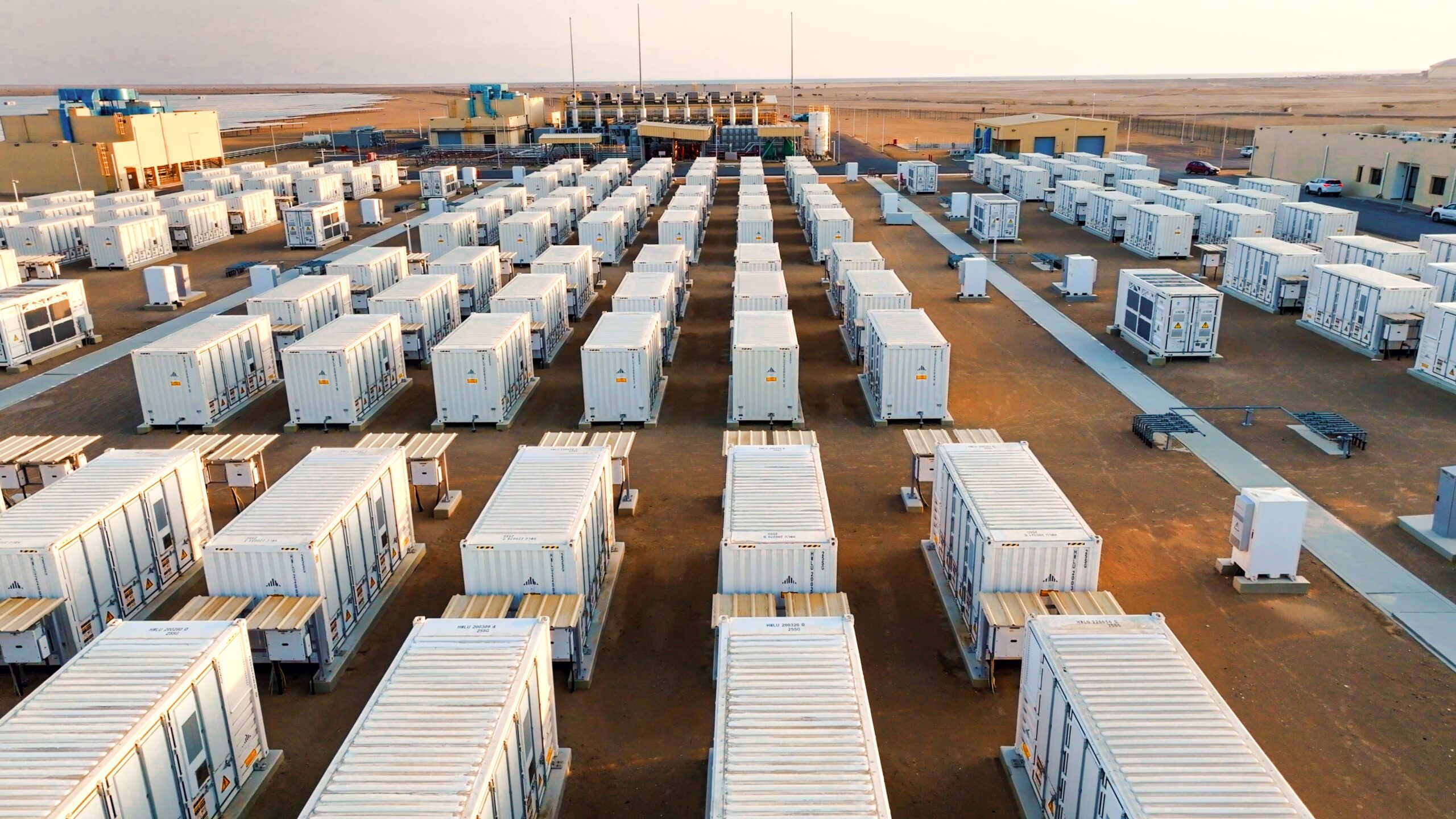
Saudi Arabia’s Red Sea multi-utility project has officially commenced full commercial operations, marking a significant milestone in renewable energy developments. This ambitious initiative aims to power a complete tourism destination along the country’s western coast, relying solely on renewable sources and eliminating the need for connection to the national power grid.
Completion of the Renewable-Powered Utility System
On August 21, SEPCOIII, a subsidiary of PowerChina and the project’s engineering, procurement, and construction (EPC) contractor, announced the achievement of full operational status for the utility complex. This project, contracted with ACWA Power in February 2021, boasts impressive figures, including an installed solar photovoltaic (PV) capacity of 358 MWac, supplemented by 1,225.4 MWh of battery energy storage and an additional 112.5 MW of backup internal combustion generation. Early estimates indicated about 340 MW of solar and 1.2 GWh of storage capacity.
Huawei played a crucial role by supplying photovoltaic inverters and the battery storage unit, previously announcing a combo of 400 MW solar capacity alongside 1.3 GWh of storage, showcasing the project’s technological advancements. The isolated nature of the Red Sea microgrid presents unique challenges, requiring it to manage its voltage and frequency, balancing the fluctuating solar generation with demand seamlessly.
Innovative Functionality of the Battery System
The battery storage system in this project isn’t merely functioning as typical energy storage, but is designed to support an isolated network. It offers essential capabilities such as black-start and fault-ride-through, demonstrating its robustness during operation. Notably, in May 2025, this formidable installation was recognized by Guinness World Records as the highest-capacity off-grid battery-based energy storage facility, boasting a staggering 1,125.18 MWh.
Unlike traditional solar-plus-storage projects, this multi-utility system integrates various essential infrastructures. The project features seawater desalination, drinking-water distribution, wastewater treatment, district cooling, and solid waste management, among other facilities. ACWA Power highlights the presence of three reverse-osmosis desalination plants with a combined capacity of 32,500 cubic meters per day, along with wastewater treatment capabilities reaching 16,000 cubic meters per day.
Public-Private Partnership and Long-Term Operations
The development is conducted under a 25-year utility concession, where Red Sea Global procures necessary resources rather than owning individual utility assets. This innovative structure is supported by Saudi Arabia’s Public Investment Fund through a long-term offtake agreement. SEPCOIII conducted the EPC processes, and several Chinese suppliers, such as Huawei and PV module manufacturer Longi, contributed to the project’s energy package.
The transition to full commercial operation signifies not just the end of construction, but the seamless integration of solar and battery assets, progressively commissioned since 2023. This landmark project not only serves as a functioning example of renewable technology but also sets a precedent for solar energy and grid-forming battery storage in isolated networks, offering insights that could benefit similar developments worldwide.
The project reflects the potential for innovative renewable energy solutions in locations where extending traditional infrastructure is neither practical nor economically viable. A full-scale implementation like this could serve as a blueprint for future projects in island regions, remote industrial settings, and other developments where sustainable utility generation is essential.