
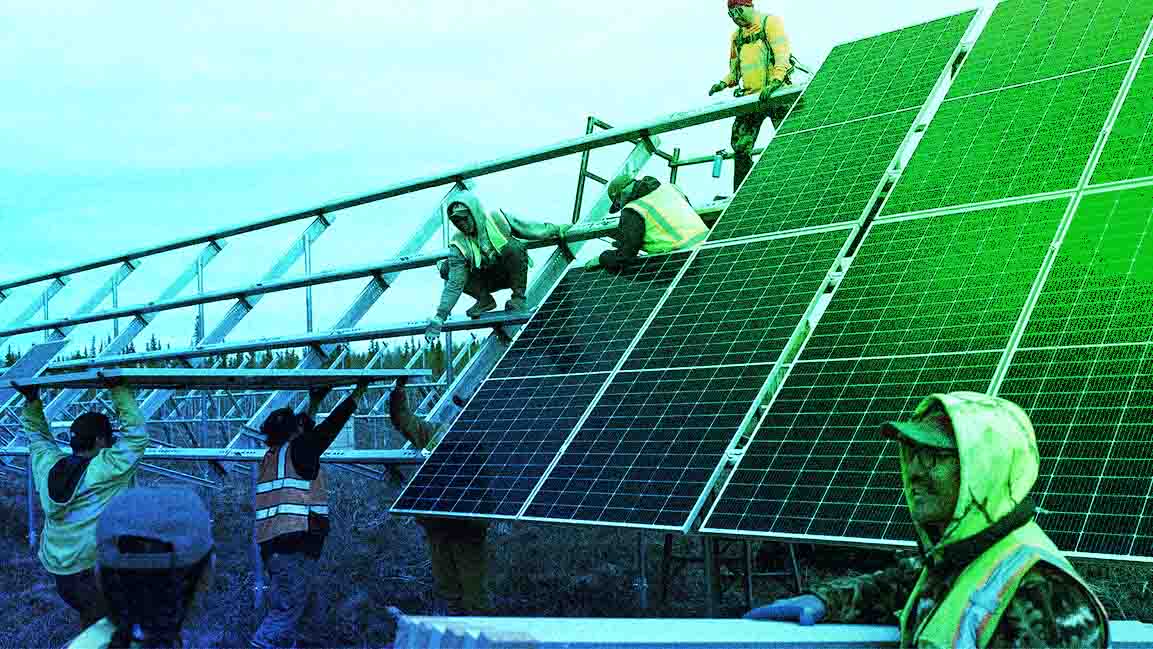
Saudi Arabia is making significant strides in renewable energy, with a pipeline now totaling 63.8 GW across 53 distinct projects. This growth showcases the Kingdom’s commitment to expanding its clean energy capabilities and achieving its long-term goal of net-zero emissions.
Growth of Renewable Energy Capacity
According to the Saudi Arabia Renewables Tracker released by the King Abdullah Petroleum Studies and Research Center (KAPSARC), the Kingdom’s renewable energy capacity has surged over 63 times since 2020, reaching an impressive 19.3 GW by 2026. This increase supports Saudi Arabia’s Vision 2030 initiative, which emphasizes enhancing power generation and integrating advanced, cleaner technologies. The Kingdom is aiming to achieve between 100 GW and 130 GW of renewable energy capacity by the year 2030 and is focused on reaching net-zero emissions by 2060.
KAPSARC’s report underscores the ambitious outlook of Saudi Arabia in the realm of energy and sustainability. With the ambitious target of reaching 100-130 GW of renewable energy capacity by 2030, the data suggests that further projects will likely emerge as Saudi Arabia intensifies its focus on renewable energy goals. This evolution demonstrates a promising trajectory for the Kingdom’s energy sector.
Dominance of Solar and Wind Power
In this pipeline of renewable projects, solar energy takes the lead, constituting approximately 81% of the total capacity, while wind energy accounts for about 19%. Currently, around 30% of the renewable capacity has already been installed, while 37% is in the development phase, and 32% is in the tendering process. This strategic distribution of projects across various regions—including Riyadh, Makkah, Madinah, and Jazan—aims to leverage Saudi Arabia’s diverse geographical advantages.
The tracker indicates a continuous decline in the overall cost of renewable energy production. The levelized cost of energy varies significantly, ranging from 1.04 cents per kWh at Shuaibah 1 to 2.98 cents per kWh at Layla. Large-scale solar initiatives currently underway are reported to be economically viable, with costs falling between 1.09 and 1.36 cents per kWh, underscoring the feasibility and attractiveness of solar energy in the Kingdom.
Upcoming Projects and Future Prospects
Looking ahead, the tracker points to eight substantial projects totaling 7.7 GW that are expected to come online in 2026, of which six have already been recorded as installed. Significant projects include the 2 GW Haden and Muwayh solar initiatives in Makkah, along with the 1.5 GW Khushaybi solar project in Al-Qassim. Additionally, several wind projects, such as the 600 MW Alghat wind project and the 500 MW Waad Al Shammal wind project, are also part of this expansive pipeline.
Moreover, it is noteworthy that two projects, the 400 MW Henakiyah 2 in Madinah and the 300 MW Rabigh 2 in Makkah, are still under development but expected to enhance the renewable landscape further as they approach commissioning. As Saudi Arabia progresses toward its ambitious 2030 renewable energy objectives, more projects are anticipated to enter the pipeline, effectively bolstering the Kingdom’s overall energy transition and sustainability agenda.
In summary, Saudi Arabia’s commitment to renewable energy reflects not only an environmental initiative but also a significant economic transformation, positioning the Kingdom as a leader in the future of sustainable energy production. The continued investment and development underscore Saudi Arabia’s readiness to meet its emission reduction targets while paving the way for a cleaner, more sustainable energy landscape.