
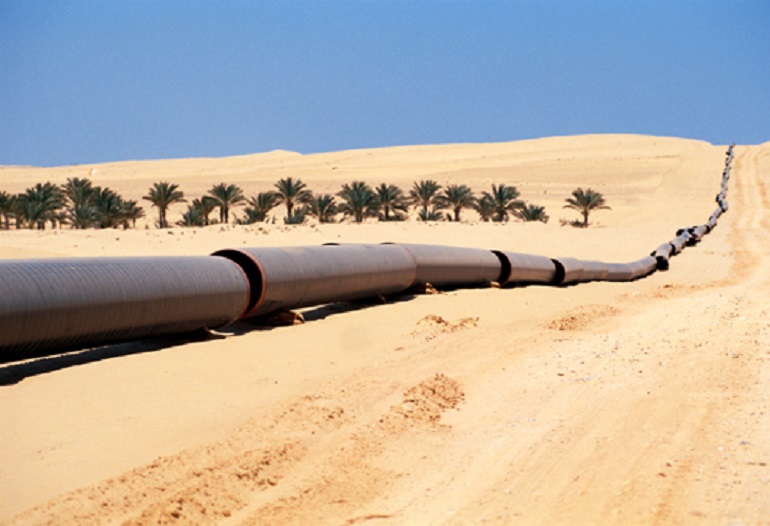
The global oil market is currently facing significant turbulence due to the recent shutdown of Saudi Arabia’s East-West pipeline, also known as Petroline. This interruption, prompted by a series of drone attacks, has intensified fears regarding the kingdom’s crude oil exports and has raised concerns about the future of international oil prices.
Impact of the Petroline Shutdown
The East-West pipeline plays a crucial role in transporting oil from Saudi Arabia’s eastern oil fields to the Red Sea port of Yanbu, stretching over 1,200 kilometers. This pipeline is responsible for moving about 4 to 5 million barrels of crude oil each day, which constitutes around 4-5% of total global supply. According to industry experts, the suspension of operations on this vital pipeline is bound to influence world oil prices, especially given the ongoing tensions in the Strait of Hormuz. Following the recent disruptions, Brent oil prices surged to $104.08 on September 13, a significant rise from $100.90 just days earlier.
In March, Saudi Aramco had already begun diverting shipments of Arab Light crude to the Yanbu port instead of traditional Gulf terminals, indicating the strategic significance of this route in the current geopolitical landscape. Recent estimates concerning oil loadings from Yanbu also reflect a mixed picture: while there are varying reports on the actual volume transported, it’s clear that the circumstances surrounding Saudi Arabia’s crude oil exports are increasingly complex, especially with the need to avoid attacks from the Iran-aligned Houthis.
Route Diversification and Global Supply Chains
Crude oil transported via Yanbu reaches international markets through two main routes. The first is a northbound route to Europe and the Americas, where oil moves through the Suez-Mediterranean pipeline after passing Egypt’s Ain Sokhna terminal. The second route is southbound to Asia, with tankers navigating through the Bab el-Mandeb Strait. Unfortunately, frequent attacks by the Houthis on commercial shipping in the Red Sea have compromised the reliability of the southern route, heightening the importance of the northern route through Egypt. Recent developments, including the Houthi takeover of strategic islands in the Red Sea, threaten to further disrupt global trade and may potentially sever large portions of seaborne communication.
The prolonged closure of Petroline could add another layer of complexity for Saudi Arabia, especially since oil exports have been increasingly routed through Egypt’s SUMED pipeline. The dual challenges posed by the Petroline shutdown and Houthi control could impose significant limitations on Saudi oil export routes.
The Role of the SUMED Pipeline
The SUMED pipeline, established in 1974, has offered an alternative for transporting Gulf crude to Europe, allowing it to bypass the Suez Canal’s restrictions. With a considerable storage capacity of 6 million cubic meters at its terminals in Ain Sokhna and Sidi Kerir, the SUMED pipeline has become a key player in global oil logistics. In the last week of August alone, crude loadings from the Sidi Kerir terminal reached an unprecedented average of 2.17 million bpd. The majority of these volumes were sourced from Saudi crude, emphasizing the pipeline’s significance during these trying times.
Experts argue that Egypt could further cement its role as a regional energy hub by optimizing its storage capabilities. Salah Hafez, a former vice-chairman of the Egyptian General Petroleum Corporation, suggests that Egypt should forge agreements with oil-producing nations to allocate more of their output to Egyptian storage facilities. This would help stabilize global oil exports and improve Egypt’s strategic positioning amidst ongoing disruptions.
In conclusion, the recent disruption in Saudi Arabia’s East-West pipeline underscores the fragile state of the global oil market. Saudi Arabia’s export strategies are being challenged both by geopolitical tensions and logistical constraints, making the role of pipelines like SUMED increasingly crucial. Egypt’s potential as a regional energy hub could play a vital role in mitigating these challenges and ensuring a steady oil supply moving forward.