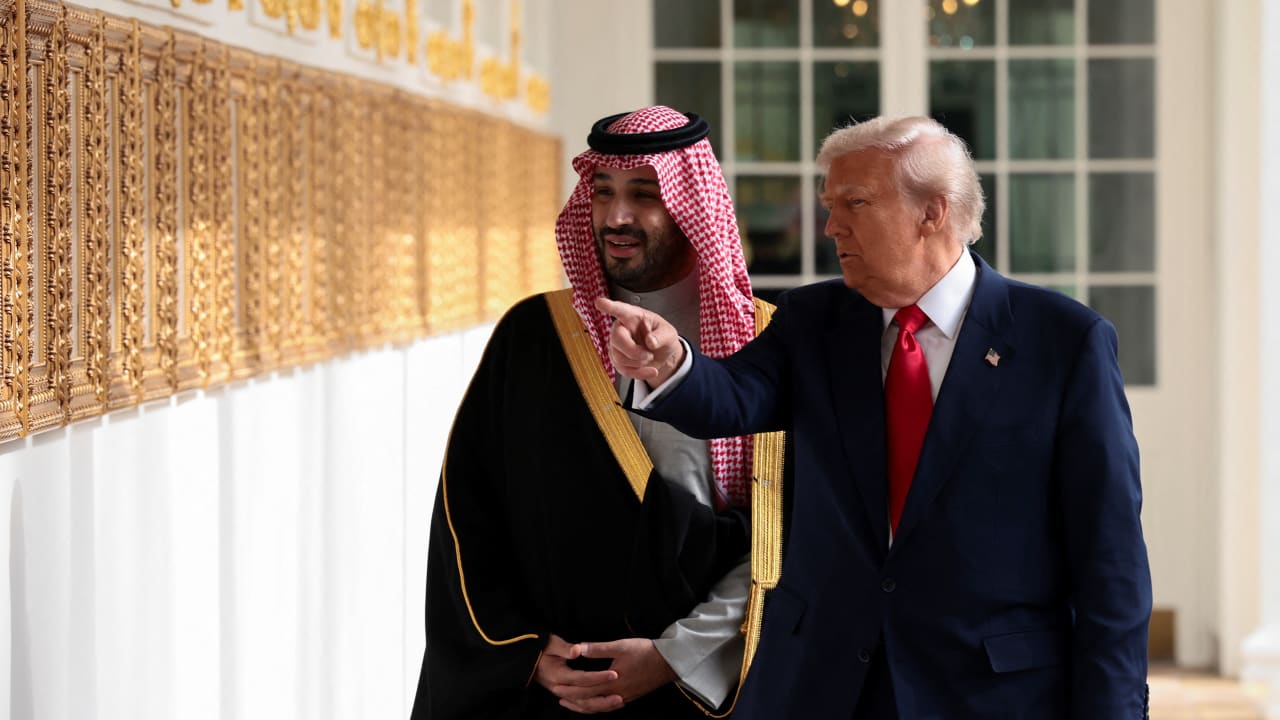
Saudi Arabia is reassessing its relationship with the United States, questioning the latter’s reliability as a protector. This shift in perspective was highlighted by Saudi analyst Mubarak al-Ati during a recent interview, emphasizing that while the US remains a superpower, its influence has waned significantly, particularly since events like the withdrawal from Afghanistan in 2021.
Declining Trust in US Leadership
According to al-Ati, Saudi Arabia perceives the US’s current leadership, especially under President Trump, as ineffective in addressing significant geopolitical challenges. He views Trump’s reluctance to engage in military interventions, such as opposing Iran’s government, as demonstrative of a broader decline in US foreign policy strength. This has led to a growing sentiment in Riyadh that the US is a “paper tiger”—maintaining formal power but lacking the capability or will to act decisively.
Al-Ati pointed out that the US’s withdrawal from Afghanistan served as a turning point, marking a clear sign of its diminishing role in international affairs. While the United States still holds a position of power, it no longer commands the same level of respect or authority it did a decade ago. The pivot from a unipolar world toward a more multipolar dynamic has opened new avenues for nations such as India, Saudi Arabia, and Brazil to explore their own partnerships beyond the traditional US influence.
The Emergence of a New Arab Bloc
In this evolving landscape, Saudi Arabia is positioning itself as a leader in forming a new “Arab-Islamic bloc” alongside countries like Pakistan, Turkey, and Qatar. Al-Ati indicated that this coalition reflects a strategic move to enhance regional solidarity and autonomy. By refraining from outright alignment with either the US or Iran, Saudi Arabia is carving out an independent path that allows it to engage pragmatically with diverse stakeholders.
He added that this shift could result in a significant re-evaluation of initiatives like the Abraham Accords. With a diminishing US presence in the Middle East, Gulf states and other Muslim nations are becoming less inclined to strictly adhere to American demands, including those related to normalization with Israel. This reflects a larger trend of decreased receptiveness toward American proposals.
A Vision for Regional Diplomacy
Furthermore, al-Ati envisions that Saudi Arabia’s diplomatic efforts could pave the way for peaceful negotiations within the region. His perspective suggests the possibility of an agreement involving Iran, Gulf States, and other interested parties, underscored by both Islamic and international guarantees. This initiative could serve as a path toward stability, promoting non-violent resolutions to longstanding conflicts.
In conclusion, as Saudi Arabia reassesses its relationship with the US, the nation is strategically aligning itself with other regional powers to establish a more prominent role in global diplomacy. By fostering independence and collaboration, Saudi Arabia aims to enhance its security and political influence in an increasingly complex world.