
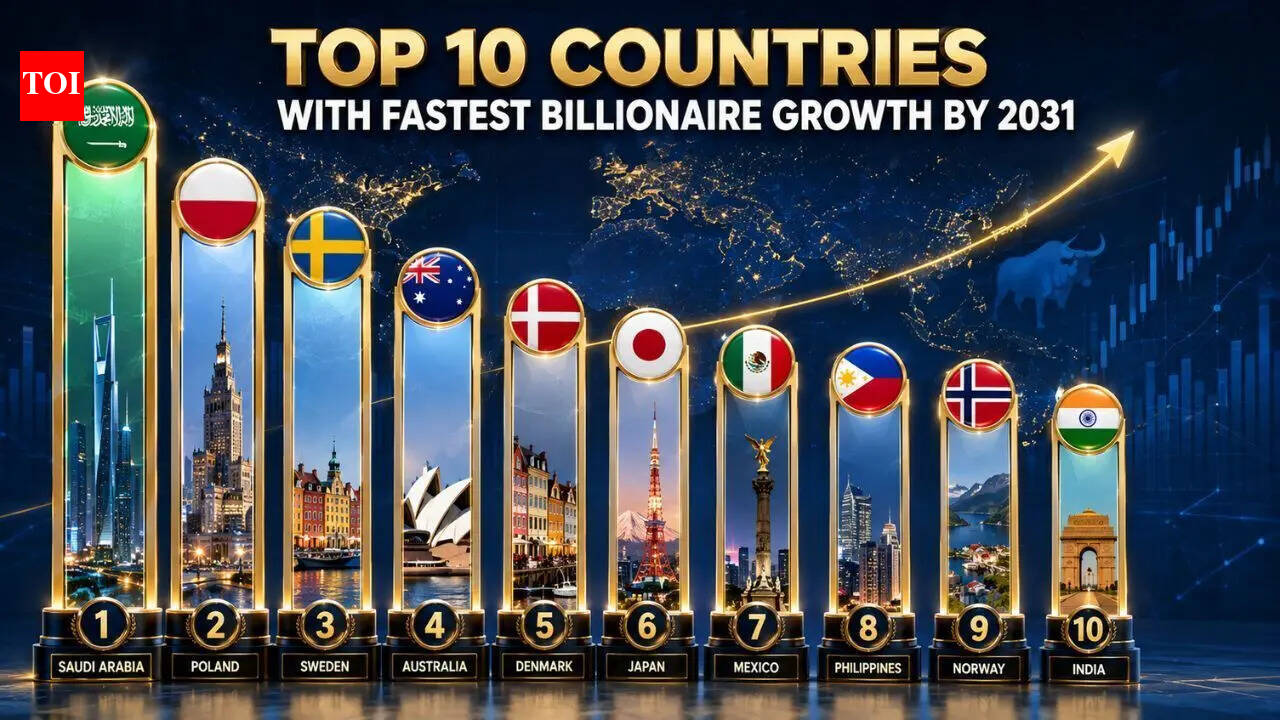
The upcoming years are predicted to transform the global wealth landscape, revealing notable shifts in billionaire populations that diverge from traditional economic narratives. Contrary to expectations centered around established Western economies, emerging markets are projected to witness significant increases in their wealthy elite. This growth is particularly tied to elements such as capital influx, innovative policy adaptations, technological advancements, and local investment cycles.
Projected Billionaire Growth by 2031
According to analyses from World of Statistics, several nations show remarkable potential for billionaire growth by 2031. An unexpected surge in wealth is set to occur in countries like Saudi Arabia, Poland, and Sweden. The anticipated billionaire count will shift dramatically, with projections indicating steep percentage increases that suggest bursts of wealth accumulation rather than gradual growth. This variation is not limited to a single economic model but reflects unique regional drivers in Asia, Europe, and the Middle East.
Top Countries with Impressive Billionaire Growth Rates
Leading this trend is Saudi Arabia, which is predicted to experience an astonishing 183% growth in its billionaire population. The country’s shift is often credited to ongoing economic diversification efforts, where traditional oil wealth is reallocated into sectors such as logistics, tourism, and extensive infrastructural projects. This rapid increase indicates a compact base of high-net-worth individuals expanding swiftly, indicating a unique approach to wealth generation.
Next on the list is Poland, expecting a 123% growth rate. This rise can be attributed to its manufacturing robustness, technology outsourcing capabilities, and deeper integration within European supply chains. Wealth generation is increasingly linked to contemporary business practices, with mid-sized firms scaling up and capturing global markets. Local entrepreneurs are beginning to secure larger shares of growing companies as capital starts circulating more locally instead of primarily toward Western Europe.
Sweden is forecasted to experience an 81% increase in billionaires by 2031. Unlike the explosive growth seen in some nations, Sweden exhibits a steadier pace influenced by technological innovation and robust export-driven industries. The existing billionaire class tends to accumulate wealth incrementally, largely through well-established family-owned businesses that maintain their value over time.
Australia, with a projected 77% increase, combines traditional resource wealth with a thriving technology sector. While mining wealth still contributes significantly, a burgeoning focus on fintech, biotech, and digital platforms indicates a more diverse wealth landscape. The interplay between established and emerging sectors has created a balanced economic environment that drives growth across both realms.
Denmark, not often highlighted in wealth discussions, is set to see a 75% rise among its billionaire class, with growth stemming from niche industrial design, pharmaceuticals, and renewable energy sectors. Despite being a smaller economy, Denmark’s businesses are global, ensuring that wealth accumulation transcends domestic boundaries.
Other Emerging Economies
Japan is anticipated to experience a more modest growth trajectory compared to its emerging counterparts, yet still noteworthy with a projected 65% rise. The shift is linked to corporate restructuring and renewed focus on shareholder value, as well as the gradual recovery of various economic sectors.
Mexico reflects a blend of manufacturing expansion and the amplification of longstanding industrial families, resulting in a 63% expected increase. Proximity to the U.S. supply chain influences investment habits, causing certain sectors to outpace others significantly.
Finally, the Philippines is expected to see a 63% rise in its billionaire demographic, buoyed by a service-driven economy benefiting from outsourcing and a widening digital landscape. Wealth here is often tied to services rather than heavy industries.
In conclusion, emerging nations are reshaping the global billionaire landscape with varying growth rates and unique local drivers, signaling a significant shift in the world’s economic power dynamics.