
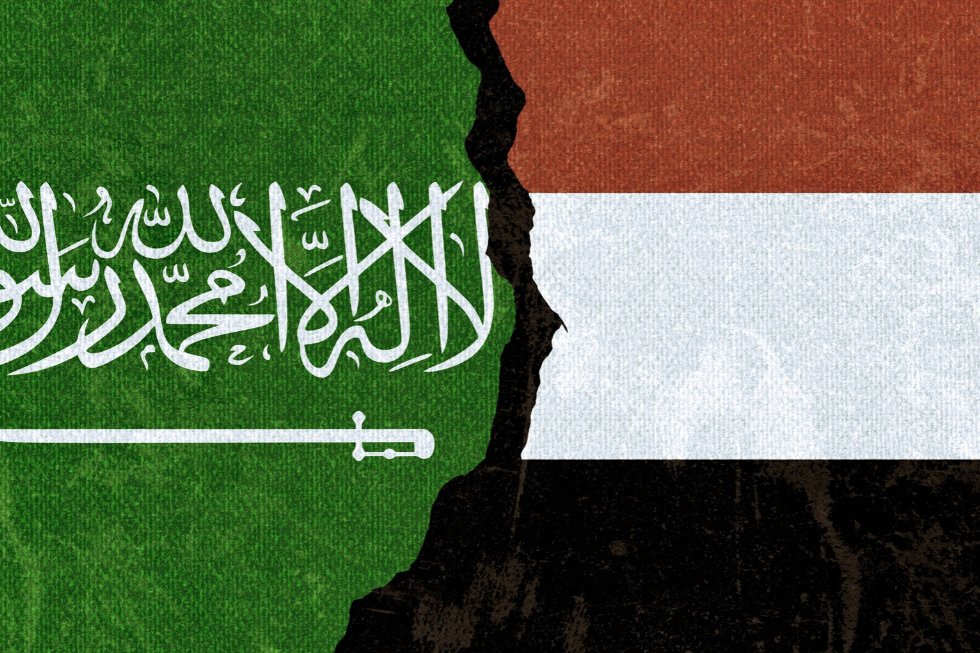
The recent advances made by Houthi forces along Yemen’s Red Sea coast highlight a critical shift in the ongoing conflict. By capturing the strategically significant port of Mocha and advancing toward the Bab al-Mandab Strait, the Houthis have reinforced their position in one of the world’s most vital maritime chokepoints. These developments reveal vulnerabilities among Saudi-backed Yemeni forces and indicate that both military and political strategies in the region need to be re-evaluated.
Strategic Significance of Bab al-Mandab
The Bab al-Mandab Strait connects the Red Sea to the Gulf of Aden and is a crucial junction for international trade, particularly for oil transportation. According to the U.S. Energy Information Administration, approximately 4.2 million barrels of crude oil and petroleum products passed through this strait in the first half of 2025. Its narrowest point is about 18 miles wide, underscoring its importance as a maritime route between Asia and Europe via the Suez Canal. Control of this area provides not just a strategic military advantage, but also significant economic implications for the global energy market.
The recent Houthi offensive forces Saudi Arabia to reassess its approach to the Yemen conflict. In previous months, Riyadh has employed military and political pressure to counteract the advances of the Southern Transitional Council (STC), as it viewed these encroachments as threats to its regional influence. The retaking of Mukalla, for instance, showcased Saudi Arabia’s immediate military objectives but left lingering questions about the long-term strategic implications of such victories.
The Challenges of Southern Political Dynamics
The situation in Hadramaut presents a complex political dilemma for Riyadh. The STC is not merely a militia but a significant political entity advocating for greater autonomy or even independence for South Yemen. This sentiment is rooted in historical grievances stemming from the unification of Yemen in 1990, which many southerners view as an erosion of their sovereignty. The STC’s push for a transitional period leading to a referendum on southern self-determination has further complicated the dynamics, illustrating the depth of political aspirations that extend beyond mere military confrontations.
Saudi Arabia’s response to the STC’s expansion has been multifaceted. While attempting to assert military control, Riyadh faces the challenge of navigating the intricate political landscape in southern Yemen. The political unrest among STC supporters, evidenced by large rallies in Aden demanding independence, signifies that military might alone cannot rectify the political fractures within Yemeni society. If Riyadh confronts the STC without addressing these underlying motivations, it risks alienating potential allies in the fight against the Houthis.
The Houthis’ Strategic Advantage
The Houthis, for their part, have adeptly framed their conflict as a struggle against foreign interference, which resonates with many Yemenis who see their sovereignty at stake. This narrative has been a powerful asset in their military and political arsenal. Even if their ideology does not enjoy universal support, it effectively paints their opponents as pawns of external powers.
The recent offensive illustrates that the Houthis are not focused solely on military superiority; they are exploiting the divisions among various Yemeni factions, such as the STC and Saudi-backed forces. This fragmentation within the anti-Houthi coalition not only diminishes military effectiveness but also hampers political cohesion in the broader context of Yemen’s governance.
A Call for Political Resolution
The advancements in Bab al-Mandab and Hadramaut compel Saudi Arabia to confront a more profound strategic dilemma. Military operations alone will not resolve the enduring issues surrounding Yemeni governance. The kingdom must acknowledge that opposition to southern independence does not equate to ignoring the aspirations of southern Yemenis. Engaging with the STC and other local forces may require negotiating political frameworks that recognize these competing visions for Yemen’s future.
In summary, the latest developments underline that military actions, while significant, do not equate to genuine control or long-term stability. Saudi Arabia’s real challenge lies in fostering a united political front capable of countering the Houthis and addressing the complex dynamics that threaten Yemen’s unity. Only by prioritizing engagement and dialogue can Riyadh hope to build the necessary political trust to navigate this multifaceted conflict.