
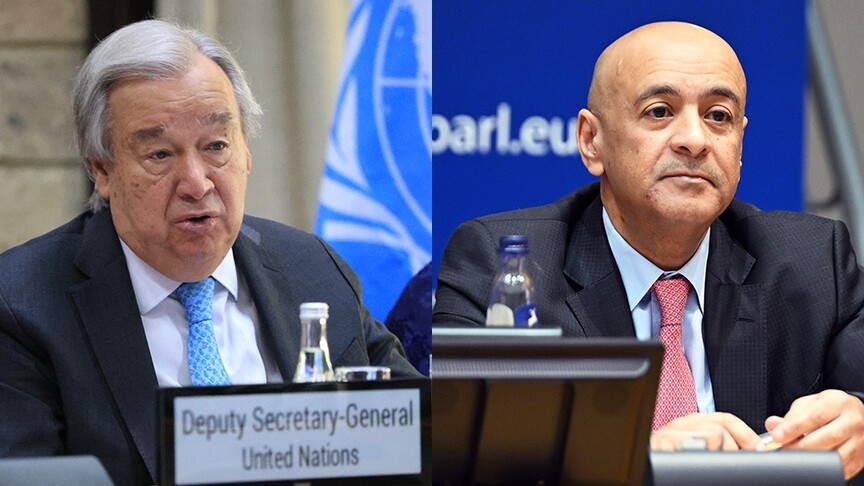
UN Secretary-General Antonio Guterres and Gulf Cooperation Council (GCC) leader Jasem Mohamed Albudaiwi have issued a strong condemnation of recent Houthi assaults on Saudi Arabia. These attacks, which have seemingly targeted civilian sites, are regarded as a significant threat to the stability and security of the entire region.
Condemnation of Houthi Attacks
During their meeting in New York, coinciding with the GCC chief’s attendance at the 81st session of the UN General Assembly, both Guterres and Albudaiwi highlighted the grave implications of the Houthi militia’s actions. Their joint statement emphasized that such aggression against Saudi Arabia, primarily aimed at civilian populations, poses a dire risk to regional peace. This dialogue underscores the urgency of addressing these threats, which not only impact Saudi Arabia but have broader implications for the surrounding areas.
Collaboration Between GCC and UN
In addition to discussing the Houthi attacks, Guterres and Albudaiwi explored avenues for strengthening cooperation between the GCC and the United Nations. Their conversation included a review of geopolitical developments affecting the region and emphasized the importance of joint diplomatic endeavors to address ongoing conflicts. Guterres recognized the significant advancements made by GCC nations, praising their roles in fostering durable stability not only in the Gulf region but also globally.
Recent Alerts and Ongoing Threats
The conversation comes in light of heightened security alerts issued by Saudi Civil Defense, which reported incidents in various locations including Riyadh and Al-Kharj. While the agency did not specify the exact nature of the threat, the alerts indicated an atmosphere of concern following recent Houthi attacks. Earlier reports noted that one individual had lost their life, and two others were injured due to debris from a Houthi drone intercepted near Taif, highlighting the tangible danger that these assaults pose to civilian life.
Escalation of Houthi Hostilities
In a troubling escalation, the Houthis have warned of ongoing missile and drone threats, asserting that they have implemented a “maritime blockade” on Saudi Arabia. This situation has intensified tensions between Saudi Arabia and the Houthi movement, which has held control over Yemen’s capital, Sanaa, and other provinces since September 2014. Since March 2015, Saudi Arabia has mobilized a coalition to support Yemen’s internationally recognized government against the Houthi insurgency. The continuation of such hostilities reinforces the urgent need for comprehensive diplomatic interventions aimed at restoring peace.
In conclusion, the recent meeting between Guterres and Albudaiwi sheds light on the pressing issues faced by the region, particularly the threats posed by Houthi militias. As both officials focus on cooperative strategies, it remains crucial for international stakeholders to rally together in pursuit of a lasting resolution to these conflicts.