
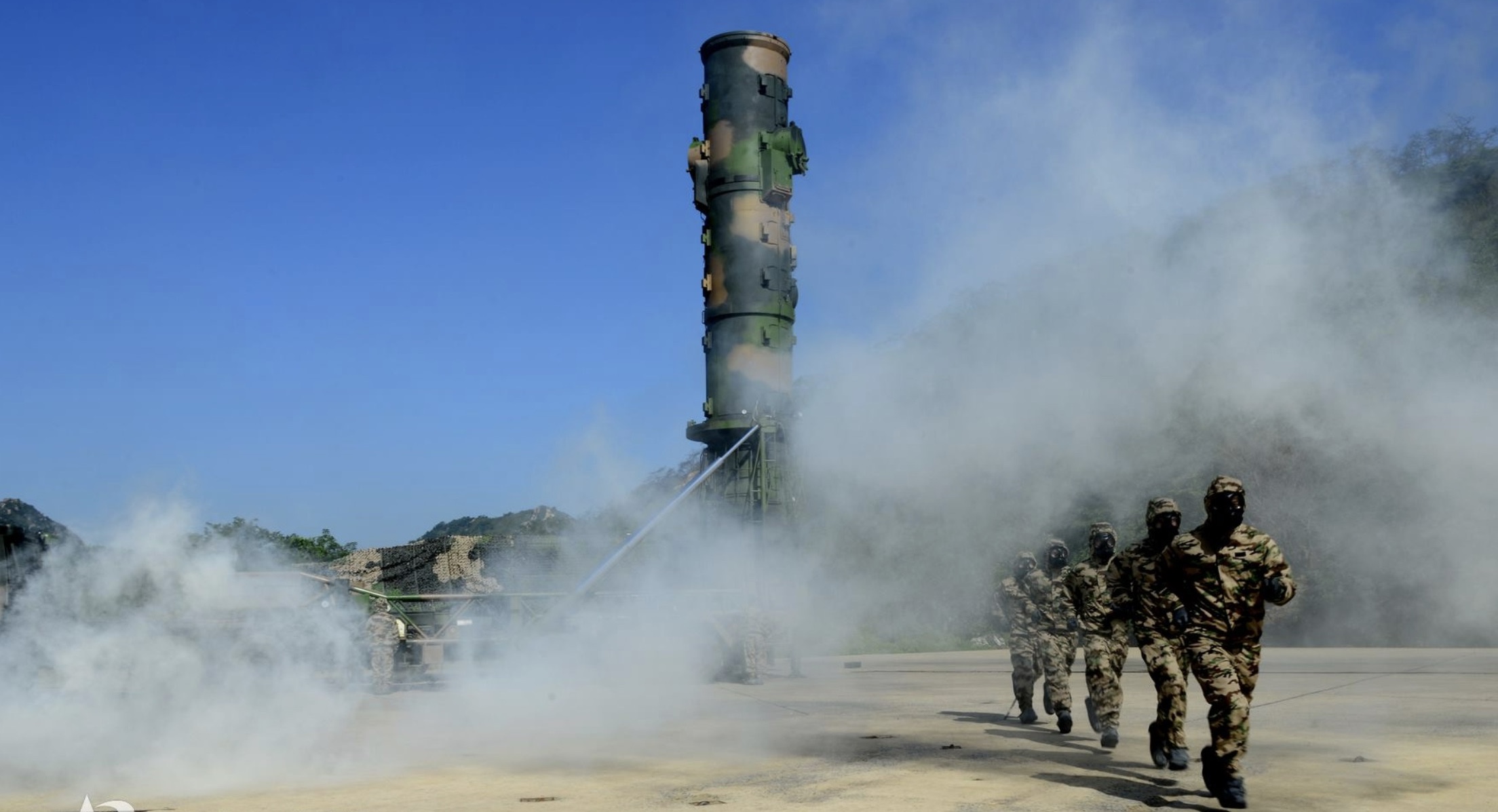
The Saudi Arabian armed forces have recently deployed the Chinese DF-15A short-range ballistic missile against the Yemeni Ansurullah Coalition forces. This action marks a significant milestone as it is the first reported use of this weapon system, a culmination of decades of military procurements from China. Historically, Saudi Arabia has operated one of the region’s most discreet ballistic missile programs, which has been largely developed with Chinese assistance since the 1980s. The discovery of missile debris in Marib Governorate, Yemen, amid renewed conflict illustrates the evolving military capabilities of Saudi Arabia.
The Evolution of Saudi Arabia’s Ballistic Missile Capabilities
The foundation of Saudi Arabia’s missile capability was laid in 1988 when the Royal Saudi Strategic Missile Force acquired the Chinese DF-3. This intermediate-range ballistic missile, powered by liquid fuel, offered a remarkable striking range of approximately 3,000 kilometers, depending on its payload. The arsenal expanded further in 2007 with the introduction of the DF-21, a more modern system featuring solid-fuel propulsion. It wasn’t until 2014 that Saudi Arabia publicly showcased its ballistic missiles during a military parade, a move interpreted as a strategic message directed primarily at Iran.
Understanding the DF-15A and Its Role in Modern Warfare
The DF-15A, a recent addition to Saudi Arabia’s arsenal, belongs to a family of solid-fuel, road-mobile short-range ballistic missiles developed during the late Cold War. This upgraded variant has an effective range of around 600 kilometers, making it suitable for striking targets across much of northern Yemen from within Saudi borders. The DF-15A can carry a conventional payload of 500 to 750 kilograms, significantly enhancing its destructive potential compared to traditional rockets commonly utilized by regional armed groups.
The DF-21, while having a shorter operational range compared to the DF-3, offers critical advantages in mobility and responsiveness due to its road-mobile design. This characteristic allows for quick deployment, increasing survivability in combat scenarios. Despite its reduced range, the DF-21 is noted for its accuracy, making it a potent choice for conventional warfare across the Middle East.
Strategic Implications of Missile Usage in Yemen
The introduction of the DF-15A into Saudi Arabia’s operational strategy emphasizes that its ballistic missile capabilities extend beyond mere deterrence. This recent use suggests that elements of the missile force may be employed for conventional strikes against fixed positions, thereby providing Riyadh with versatile options in ongoing conflicts, including the war in Yemen. Saudi Arabia’s military strategy is increasingly focused on leveraging advanced missile technology for tactical advantages on the battlefield, signaling a shift in how it approaches regional security challenges.
The use of the DF-15A also grants a rare insight into Saudi Arabia’s clandestine missile capabilities developed in collaboration with China. This partnership has yielded an increasingly sophisticated arsenal that can support conventional military operations, challenging the perception of Saudi missiles as solely strategic deterrents. As tensions in the region continue to evolve, the implications of this military capability become crucial for understanding the dynamics of Middle Eastern geopolitics.
In summary, the deployment of the DF-15A by Saudi Arabia is a significant development in the context of its military strategies and regional influence. The ongoing partnership with China reflects a broader trend of evolving warfare tactics, providing Saudi Arabia with advanced tools to safeguard its national interests.