
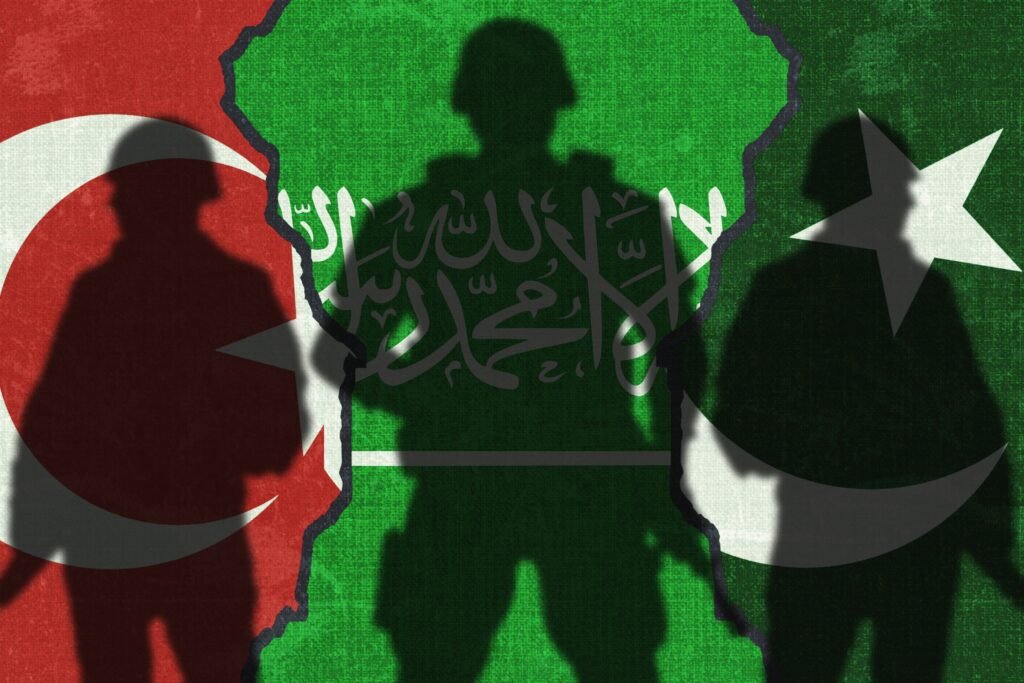
The recent agreement among Saudi Arabia, Pakistan, and Türkiye marks a significant shift in regional dynamics. Following the establishment of a strategic defense framework between Saudi Arabia and Pakistan a year prior, the inclusion of Türkiye has evolved this partnership into a trilateral alliance with a wider geographic and strategic scope. Although each nation faces unique security challenges, they have come together through a shared sense of insecurity rather than a singular threat.
Distinct Security Concerns of Each Nation
While the three countries have united, their security concerns differ greatly. Saudi Arabia’s primary anxieties lie within the Gulf region, focusing on issues such as the Red Sea, Iranian-backed armed groups, and the risks posed by missile and drone technology. Türkiye is engaged in its own complex security landscape, addressing concerns that range from the turbulent contexts in Syria and Iraq to tensions with Israel, and challenges from Russia in the Caucasus and eastern Mediterranean. Meanwhile, Pakistan grapples with ongoing rivalries, particularly with India, coupled with instability along its western border and persistent militant threats.
It is essential to note that this alliance is not rooted in a common enemy, but rather in overlapping insecurities. This distinction sets the Makkah Pact apart from more traditional alliances that often emerge in response to clear, identifiable adversaries. Instead, the trilateral collaboration emphasizes flexibility, allowing member nations to recognize that enhanced cooperation can bolster their individual and collective strategic positions.
The Geopolitical Advantage of Türkiye
Türkiye’s role in this alliance is particularly noteworthy due to its status as a NATO member and its significant geopolitical positioning. With a GDP projected to exceed $1.5 trillion by 2025, Türkiye possesses a robust and diverse economy. The nation boasts one of the largest conventional military forces in the region, enhanced by a proficient defense industry, extensive operational experience, and a diplomatic reach that extends from the Caucasus to North Africa.
Conversely, Saudi Arabia contributes substantial energy resources and significant economic capital. With over 182 billion barrels of proven oil reserves and a GDP of around $1.3 trillion, it serves as the resource-rich pillar of this grouping, further solidifying its importance in both economic and military terms.
Combined Strengths and Strategic Influence
Together, these three nations represent a formidable coalition, with a combined population of about 380 million and a territorial expanse of approximately 3.8 million square kilometers. This demographic and geographic muscle, when aligned with their military capabilities and economic clout, positions them uniquely in influencing strategic decisions within their respective regions.
Moreover, Türkiye and Pakistan bring distinct yet complementary strengths to the table. Pakistan offers a well-established military force along with strategic geographic advantages and a nuclear deterrent, while Saudi Arabia provides crucial financial resources and substantial energy influence, coupled with political leverage in the Arab and Muslim worlds.
In conclusion, the trilateral arrangement among Saudi Arabia, Pakistan, and Türkiye represents a strategic recalibration in the region, founded not on shared enemies but on a collective desire for enhanced security and influence. As this partnership evolves, the potential for a more integrated approach to regional challenges may well reshape the security architecture in the Middle East and beyond.