
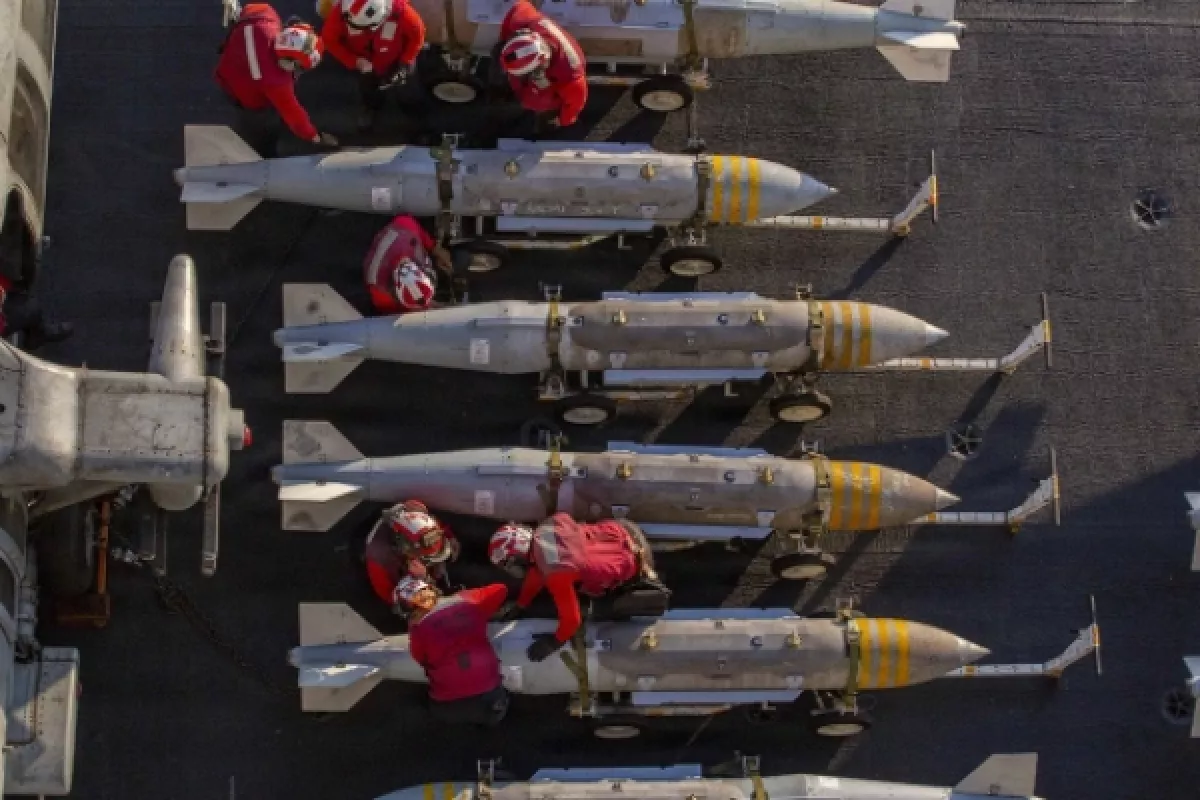
The implications of Saudi Arabia potentially pursuing a nuclear weapons program have come to the forefront of U.S. intelligence assessments, prompting urgent discussions in Congress. Recent reports indicate that officials are not ruling out the possibility of Riyadh developing military capabilities, which raises significant concerns regarding the Biden administration’s nuclear cooperation agreement with the kingdom.
Concerns Over Nuclear Cooperation Agreement
The current nuclear agreement allows U.S. firms to engage in extensive nuclear energy projects within Saudi Arabia, potentially worth tens of billions of dollars. While the Trump administration argues that this partnership will strengthen diplomatic ties and curb Saudi Arabia’s collaboration with nations like Russia and China, critics maintain that it carries undeniable risks. The State Department has emphasized a strong stance against supporting any Saudi nuclear weapon initiative; however, skepticism remains prevalent among lawmakers.
Democratic legislators have voiced particular alarm regarding proposed conditions surrounding uranium enrichment. Although the initial terms aim to restrict Saudi uranium enrichment to less than 5%, there is an allowance for an increase to 20% contingent upon additional studies and agreements. This shift in restrictions has led to worries that it could serve as a crucial stepping stone toward the development of military-grade nuclear capabilities.
Criticism from Legislators
Senators Ed Markey and Jeff Merkley have publicly criticized the nature of the agreement, suggesting it marks a significant deviation from previous U.S. policy. They claim that the relaxed regulations could ultimately facilitate Saudi Arabia’s access to uranium enrichment technology, echoing concerns that such advancements might lead to the country obtaining nuclear weapons. Their letter to Secretary of State Marco Rubio underscores the urgency of reevaluating the arrangements and its potential consequences.
Equally troubling is the lack of requirement for Saudi Arabia to adhere to the International Atomic Energy Agency’s (IAEA) Additional Protocol, which grants inspectors broader access to nuclear facilities. Experts in nonproliferation, including former IAEA chief Hans Blix, have warned that failing to include this stipulation could hinder efforts to monitor concealed weapons programs effectively.
Saudi Claims of Peaceful Intentions
In response to scrutiny, Saudi Energy Minister Abdulaziz bin Salman has asserted that the country’s nuclear endeavors will be pursued in a “peaceful” manner, emphasizing the commitment to responsibility and transparency. Nonetheless, U.S. officials have indicated that the State Department is more optimistic about the safeguards in place compared to the intelligence community’s assessments, raising questions about the reliability of these assurances.
As the agreement undergoes a 90-day review period in Congress, the political climate remains tense. Lawmakers have the power to block the deal, particularly given Crown Prince Mohammed bin Salman’s 2018 statement suggesting that Saudi Arabia would replicate Iran’s nuclear capabilities if Tehran successfully developed a nuclear bomb.
Furthermore, the broader geopolitical landscape adds complexity to the situation. While Trump has tied Saudi normalization of relations with Israel to the nuclear agreement, analysts suggest that Riyadh’s cooperation might be unlikely, especially given ongoing Israeli opposition to Palestinian statehood.
In light of these factors, the conversation surrounding Saudi Arabia’s nuclear ambitions and the U.S.-Saudi nuclear deal continues to evolve, as lawmakers and international observers closely monitor developments.