
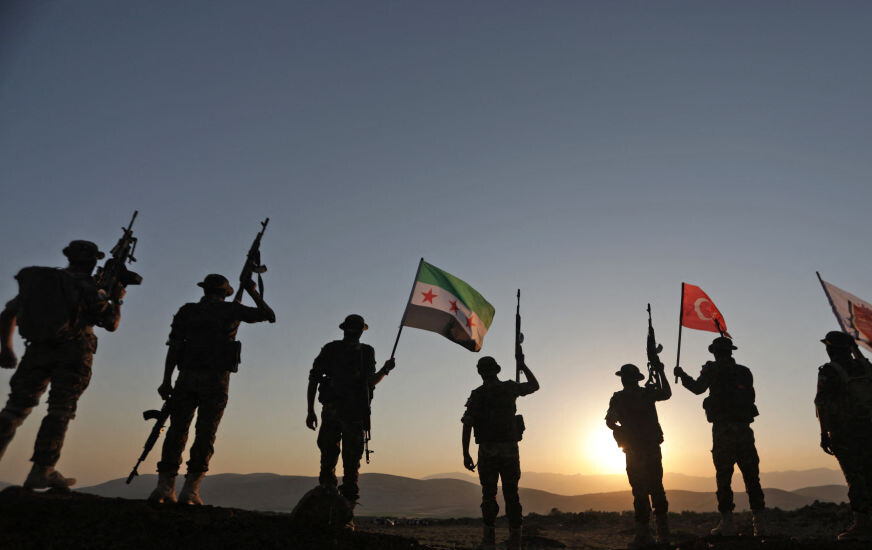
Turkey has established itself as a key supporter of Syria’s new leadership under President Ahmad al-Sharaa, who came into power after the collapse of Bashar al-Assad’s regime in December 2024. This shift in the political landscape presents numerous implications for both regional stability and international relations in the Middle East.
Turkey’s Strategic Interests in Syria
Turkey’s involvement in Syria is driven by various strategic interests, including security, economic factors, and the desire to counter Kurdish militancy. The rise of a new government offers Turkey a chance to foster a more stable environment along its border, as Ankara has long viewed the Assad regime as a significant threat due to its support for Kurdish militant groups. By backing Ahmad al-Sharaa, Turkey hopes to establish a regime that is more amenable to its interests, thereby reducing the power and influence of the PKK (Kurdistan Workers’ Party) and its affiliates.
Moreover, Turkey’s relationship with the new Syrian government is poised to facilitate trade and investment opportunities. As the region begins the process of reconstruction and rehabilitation, Turkey seeks to capitalize on its geographical proximity and established economic ties. Enhanced cooperation could lead to projects focused on infrastructure, energy, and agriculture, benefitting both nations economically while simultaneously fostering diplomatic goodwill.
The Impact on Regional Dynamics
Turkey’s support for President al-Sharaa also has implications for the broader geopolitical landscape of the Middle East. As Turkey endeavors to solidify its role as a regional leader, its relationships with other influential players in the area will be vital. The dynamics involving Iran and Russia, both of which had backed the Assad regime, may shift as they reassess their strategies in response to Turkey’s newfound influence in Syria.
This changing landscape could lead to new alliances and rivalries, altering the balance of power in the region. For example, Iran’s ability to project influence within Syria may be challenged by Turkey’s active engagement, potentially leading to increased tensions as Iranian interests are confronted by Turkish initiatives.
Future Prospects: Challenges and Opportunities
The path forward for Turkey in Syria is not without its challenges. The new government led by Ahmad al-Sharaa faces significant hurdles in terms of governance and legitimacy, which could complicate Turkey’s investment efforts. Economic stabilization and the establishment of law and order will be crucial for realizing Turkey’s vision of a cooperative partnership.
Additionally, the international community will play a role in shaping the future of Turkey-Syria relations. The West, particularly the United States and European nations, may misjudge Turkey’s motives or become concerned about its expanding influence, potentially leading to diplomatic friction. However, opportunities exist for collaboration on security and trade, which could strengthen ties if navigated prudently.
In conclusion, Turkey’s support for Syria’s new government represents a critical juncture in the Middle East’s evolving political landscape. As Ankara seeks to balance its security interests, economic aspirations, and regional influence, the outcomes will not only impact Turkey and Syria but also reverberate across the entire region.