
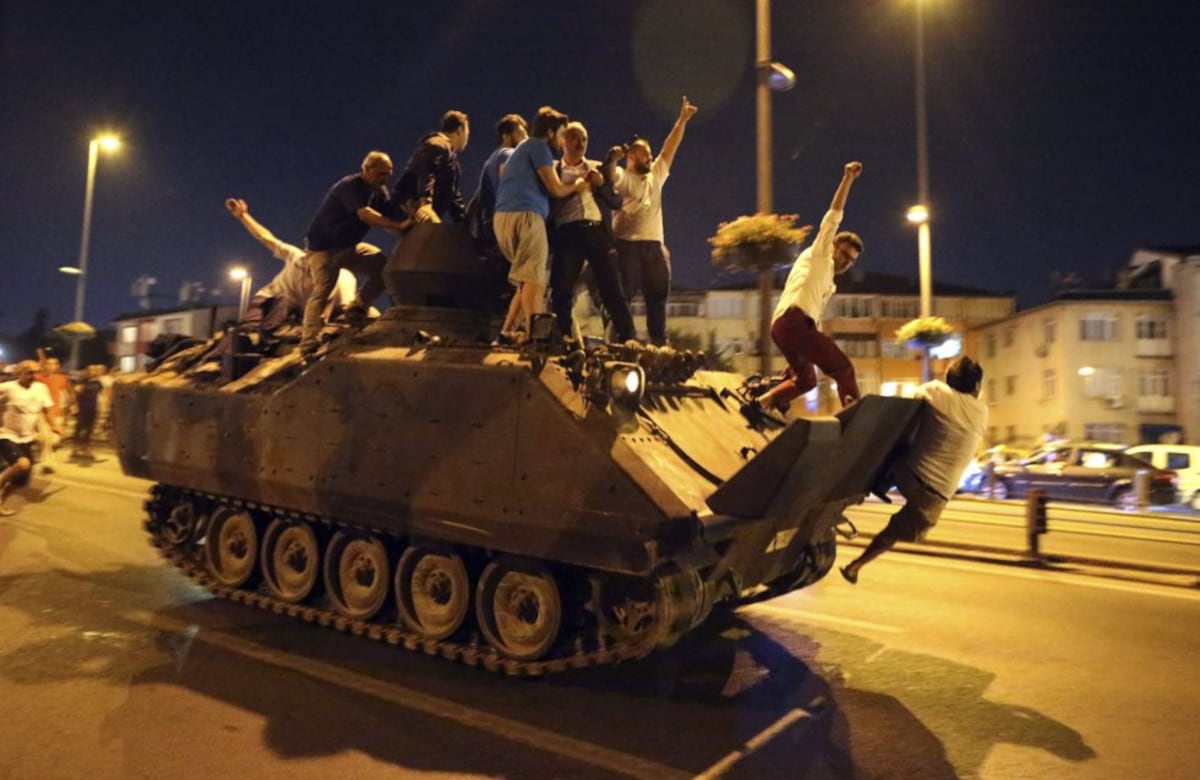
On the night of July 15, 2016, Istanbul’s bridges were bustling as usual. Cars were either heading home, flocking to downtown establishments, or escaping the city’s heat for the weekend. Yet, within moments, the ordinary turned extraordinary as two military trucks blocked traffic, creating an atmosphere of confusion and concern. The exact nature of the blockades remained unclear: was it a military exercise or a counter-terrorism operation? This incident echoed the turbulent history of contemporary Turkey, a nation forged by military influence and industrial upheaval.
Turkey’s Historical Military Influence
Turkey’s modern republic, shaped by the military-led reforms of Mustafa Kemal Atatürk, has seen the armed forces intervene in politics multiple times. Since the 1960 coup, the military has become an essential player in the political landscape, having toppled successive governments in 1960, 1971, 1980, and 1997. Despite Atatürk’s push for civilian governance, military involvement became a fixture, allowing the armed forces to exert significant sway over Turkey’s political and economic realms. The foiled coup attempt of 2016 would prove pivotal, leading to resilience among President Recep Tayyip Erdoğan’s supporters and reinforcing his grip on power amidst a backdrop of political instability.
As the coup unfolded, chaos ensued. Chief of Staff Hulusi Akar had been abducted for opposing the takeover, prompting a state of fear within the government. Among the last informed of the events was Erdoğan himself, on vacation at the time. As he learned of the military’s surprising movements via a phone call, he faced a communication breakdown with intelligence agencies and his staff, leaving him powerless to act immediately. This key detail would linger as one of the mysteries surrounding that fateful night.
The Aftermath: A National Turning Point
In the hours following the initial seizure of power, loyal military factions and civilians rallied in support of Erdoğan. His call to arms, broadcasted from mosques, prompted thousands to confront armed soldiers, armed only with makeshift weapons and sheer determination. Unfortunately, this resulted in the loss of 253 lives, now memorialized as martyrs, during violent confrontations throughout Turkey. This struggle laid the foundation for what is today recognized as the “Epic of July 15,” a day transformed into a national holiday, celebrated as Democracy and National Unity Day. Erdoğan’s supporters, many of whom had felt marginalized, consolidated their political power, and Erdoğan transformed the coup’s fallout into an opportunity for a stronger regime.
Purge and Repression: Erdoğan’s Response to the Coup
In the wake of the coup attempt, the Hizmet movement—linked to the exiled cleric Fethullah Gülen—was accused, although Gülen denied any involvement. With numerous members of the military confessing their affiliations during subsequent trials, the government initiated a sweeping campaign against alleged Gülenists. Over 113,000 individuals were imprisoned, and about 152,000 public sector employees were dismissed as Erdoğan sought to reshape institutions with loyalists from his own Islamist party and newly allied far-right factions.
This relentless purge extended beyond military ranks into various spheres of public life, as the Erdoğan administration leveraged the crisis to implement dramatic institutional changes. Although the official state of emergency was lifted two years later, many of its repressive measures persisted. Political opponents were removed from office, with trustees appointed in their place, and several key figures remained behind bars without trial for extended periods. These developments stifled dissent and reshaped Turkey’s political landscape, with the situation deteriorating to levels that few would have imagined prior to the coup attempt.
In conclusion, the events of July 15, 2016, not only marked a critical juncture for Turkey but also laid the groundwork for Erdoğan’s consolidation of power. As the nation grapples with the repercussions, the memories of that night continue to shape its political environment, revealing the complexities of governance, military influence, and societal chaos that remain at the forefront of Turkey’s evolving narrative.