
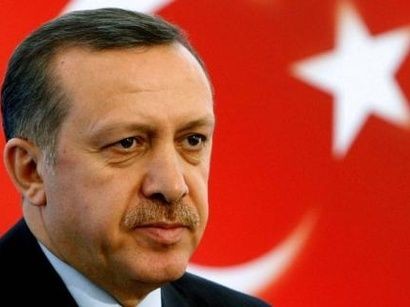
President Recep Tayyip Erdoğan’s recent visit to Kazakhstan on May 13-14, along with the informal summit of the Organization of Turkic States (OTS) held on May 15, signifies a pivotal shift in the geopolitical dynamics of Central Asia. These events should be viewed not in isolation but as part of an emerging framework that is redefining relationships in the region.
Strengthening Bilateral Relations
During Erdoğan’s stay in Astana, Kazakhstan and Turkey formalized their partnership through the Declaration on Eternal Friendship and Expanded Strategic Partnership. This agreement encompasses various sectors including trade, transport, energy, education, and defense, with the explicit target of boosting bilateral trade to $15 billion. The significance of these agreements is further underscored by Erdoğan receiving the Khoja Ahmed Yassawi Order, a nod to the cultural connections celebrated at the summit hosted in Turkistan, a city deeply connected to Yassawi’s legacy.
The following day, the informal OTS summit took place, focusing on the theme of “Artificial Intelligence and Digital Development.” This focus reflects a growing recognition that Central Asian countries are no longer solely operating within a Russia-China dichotomy. While Russia maintains a significant presence through historical and infrastructural ties, and China dominates as a key trade and investment player, Turkey is positioning itself as a distinct and strategic third actor.
Turkey: A Connector in Central Asia
While Turkey may not have the financial clout of China or the historical influence of Russia, its role as a connector between Central Asia and broader regions is essential. By linking Central Asia to Europe, the South Caucasus, and the Black Sea, Turkey offers partnerships anchored in cultural familiarity and less intimidating geopolitical stakes. As Kazakhstan’s President Tokayev mentioned, Turkey acts as a “golden bridge,” underlining its role not as an equal partner but as an essential facilitator in regional dynamics.
The concept of a “corridor power” emerges here: Turkey expands the available routes, partnerships, and strategic options, enabling Central Asia to navigate its relationships without falling into the dominance of larger powers. The meetings in Astana and the Turkistan summit exemplify this broader strategic vision, aiming to construct a “Turkic corridor” that integrates identity, transport, defense, and digital governance.
Identity as Infrastructure
The Organization of Turkic States might often be dismissed as merely a symbolic entity; however, its role transcends cultural rhetoric. Identity can function as a form of infrastructure in international relations, creating networks that ease collaboration. The shared language, educational ties, and cultural bonds foster trust, reducing barriers to agreements and collaborative projects. These elements facilitate political consultations, business forums, and student exchanges that contribute to a more interconnected region.
It’s important to note that the OTS does not aspire to replicate models like the European Union or NATO. Its efficacy lies in providing a platform where Central Asian states can coordinate efforts without an overt pivot away from their existing relationships with major powers. This creates a more nuanced diplomatic space for states like Kazakhstan and Uzbekistan, who are seeking greater autonomy without completely severing ties with Russia or China.
Digital Collaboration and Future Prospects
The OTS’s focus on digital development at the Turkistan summit illustrates that its ambitions extend beyond traditional cultural and transport integration. Governments in Central Asia are increasingly investing in digital governance frameworks, fintech, and AI strategies that influence state capacity and public service delivery. This digital shift has real implications for how countries engage in regional connectivity.
While Turkey may not match the scale of Chinese investments or provide the hard security assurances offered by Russia, its role introduces an alternative that strengthens the ability of Central Asian countries to navigate their geopolitical landscape. The relationships formed through shared digital initiatives, e-commerce platforms, and payment systems could enhance regional collaboration, moving beyond merely symbolic ties toward substantive integration.
In conclusion, Erdoğan’s visit and the OTS summit mark crucial steps in reshaping Central Asia’s strategic landscape. Rather than simply choosing between Russia and China, Central Asian states can leverage their partnerships with Turkey to diversify their options. The emerging Turkic corridor, supported by both cultural ties and institutional frameworks, could redefine how the region interacts with major global powers, promoting a more flexible and autonomous stance among its nations.