
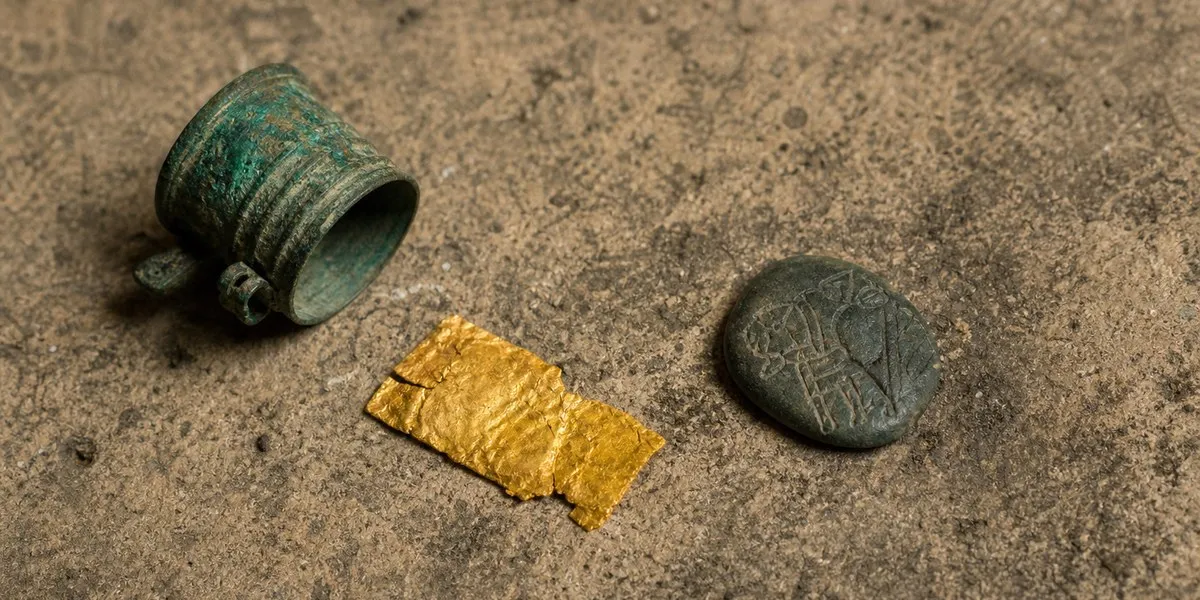
An astonishing find at the Türkmen-Karahöyük archaeological site in Turkey has brought to light an early Christian amulet, thought to be around 3,500 years old. Discovered during an excavation led by teams from Bilkent University, the University of Chicago, and Bilecik Şeyh Edebali University, this relic offers a glimpse into ancient cultures and their beliefs, as reported by various outlets, including Turkey Today and Jerusalem Post.
The Discovery of a Unique Amulet
The amulet, dating back to the 4th or 5th century AD, was located within a small copper container. Inside this ancient vessel researchers found an exceptionally thin gold plate, measuring only 0.1 millimeters in thickness. This minute piece is thought to inscribe a passage from the Bible, showcasing the intricacies of early Christian artifacts. Michele Ruzgar Massa from Bilkent University has speculated that this amulet may have been a protective charm, potentially belonging to a child, symbolizing the universal desire to guard loved ones against harm. Such protective amulets are infrequently unearthed, with a similar artifact having been previously found in Germany.
Inscription and Its Significance
In addition to the gold plate, a stone seal inscribed with hieroglyphics in the Luwian language was uncovered. The inscription includes a personal name alongside an official title, indicating that the seal belonged to a lesser-ranking individual within a bureaucratic framework. The name inscribed on the seal, “Kurunti-ziti,” connects to Kurunta, the Hittite god associated with nature and the countryside. This connection adds to the cultural richness of the discovery, revealing how religious beliefs intertwined with societal structures in ancient Anatolia.
Insights into the Administrative Role of Türkmen-Karahöyük
The assortment of artifacts found, including two copper seals and a clay seal impression with another name, points to the Türkmen-Karahöyük site as a significant administrative center during the Bronze and Iron Ages. The discovery not only illuminates the intricate social hierarchies of the time but also emphasizes the site’s role as a focal point for governance and community interactions. Researchers believe these finds could provide critical insights into the organizational complexities and the daily lives of the people who once inhabited this area.
This recent excavation is a reminder of how ancient artifacts can serve as windows into the past, revealing the interplay between religion, social structures, and daily life in ancient civilizations. As further studies are conducted, the insights gleaned from these findings promise to enrich our understanding of early Christian history and the cultural landscapes of prehistoric Anatolia.