
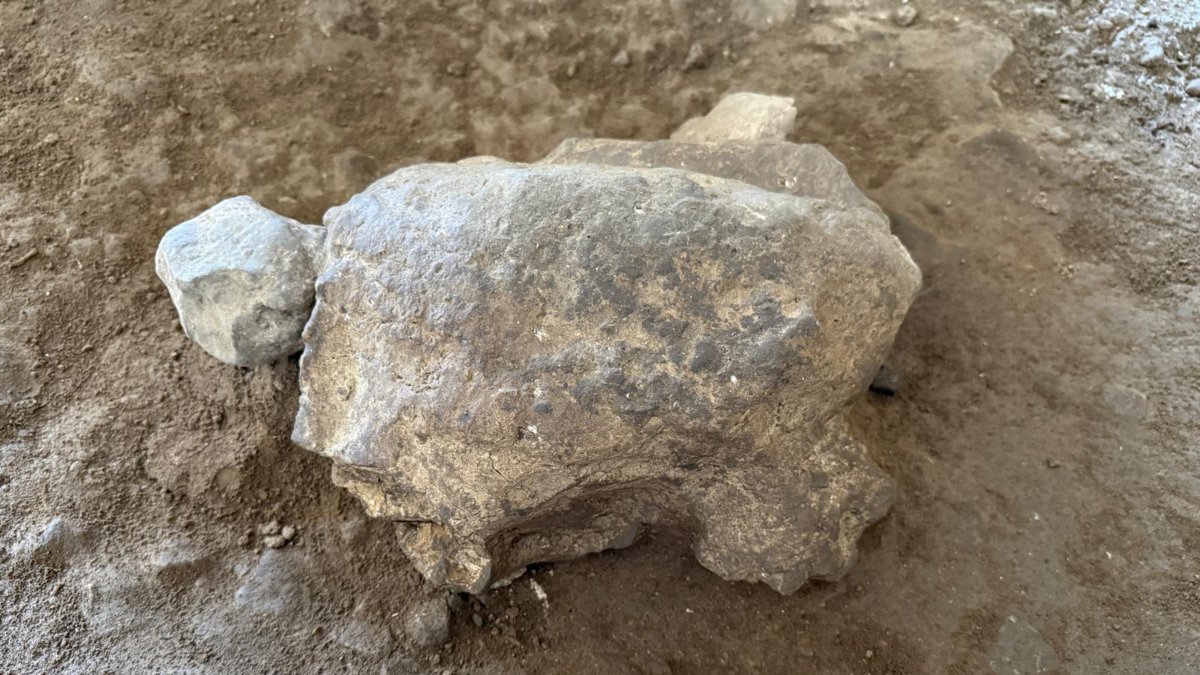
Archaeologists have made a significant discovery in northwestern Türkiye, where they unearthed approximately 25 turtle figurines that are believed to date back as far as 16,500 years. These remarkable artifacts were found at the Gedikkaya Hill and In Cave Archaeological Excavation Site, located in the Inhisar district of Bilecik province. This discovery not only sheds light on the region’s prehistoric past but also provides insights into the cultural practices of early human societies.
Excavation Process and Discoveries
The excavation, which was conducted from May 18 to July 18, involved a team of 14 archaeologists led by Professor Deniz Sarı from Bilecik Şeyh Edebali University’s Department of Archaeology. The project was undertaken on behalf of Türkiye’s Ministry of Culture and Tourism. The turtle figurines, primarily crafted from limestone, range in size, with the largest measuring about 30 centimeters in length and 20 centimeters in width. Radiocarbon dating has placed these finds within the period of 14,500 to 11,200 B.C., also known as the Epipaleolithic era.
Professor Sarı and her team believe that these figurines were created for ritualistic purposes and were intentionally placed within the cave, suggesting a significant spiritual or ritual context. This hypothesis is bolstered by the considerable amount of archaeological material found at the site, which supports the notion that it served as an important cult and ritual area for its ancient inhabitants.
A Ritualistic Context
Sarı indicated that the area’s archaeological significance was first noted during surface surveys conducted in 2017. Rescue excavations led by the Bilecik Museum took place between 2019 and 2023, culminating in the university’s recent involvement under a presidential decree. The newly found turtle figurines add valuable insights into the region’s ritualistic practices, indicating that communities may have engaged in rituals similar to modern spring festivals where physical offerings are made as a manifestation of hope and desire.
Interestingly, the figurines’ rough shapes imply they were likely crafted for specific spiritual purposes rather than as ornamental art, emphasizing their role in ritual practice. Sarı drew parallels between their arrangement and the contemporary Hıdırellez festival, during which individuals express their wishes by placing them at sacred sites, hinting at a longstanding tradition of ritualistic behavior associated with nature.
Further Insights on Turtle Symbolism
Researchers are also exploring whether the Gedikkaya Hill’s physical form might have inspired the creation of turtle figurines, possibly hinting at a form of mountain worship among prehistoric communities. Although it may be premature to label the site as a definitive mountain cult, the proximity of turtle figurines to the hill raises intriguing questions about the symbolic nature of the artifacts and their connection to the landscape.
Turtles have historically symbolized longevity and resilience in many cultures, adding another layer of meaning to their presence at this archaeological site. As a symbol of endurance, the turtles may have held significant ritual importance for the communities that lived here.
The figurines are now housed at the Bilecik Museum and Bilecik Şeyh Edebali University for further analysis and restoration. This discovery not only highlights the rich historical tapestry of the region but also opens avenues for ongoing research into the spiritual lives of some of humanity’s earliest societies.