
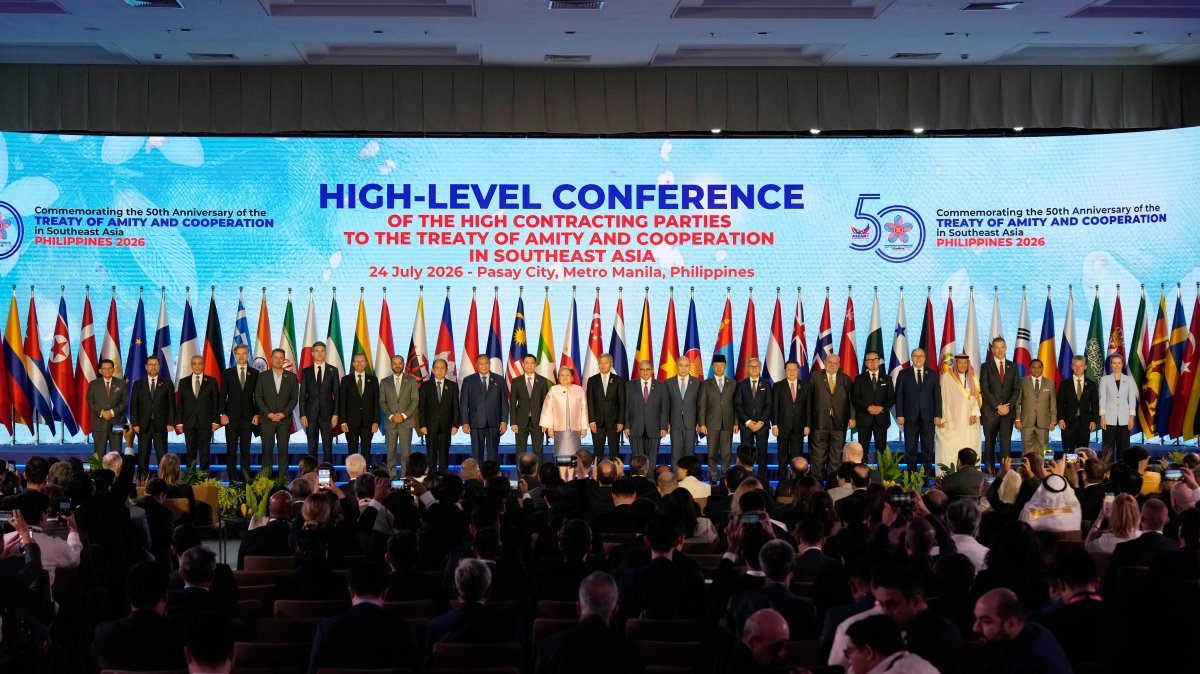
Foreign Minister Hakan Fidan’s recent statements regarding Türkiye’s designation as an Association of Southeast Asian Nations (ASEAN) Dialogue Partner highlight the country’s increasing engagement with Southeast Asia. This move reflects Ankara’s broader foreign policy strategy that emphasizes strategic autonomy and diversification of partnerships. Experts view the region as vital to Türkiye’s long-term diplomatic ambitions.
Türkiye’s Growing Influence in Southeast Asia
The acknowledgment of Türkiye as an ASEAN Dialogue Partner marks a pivotal step in Ankara’s efforts to bolster its presence in the Asia-Pacific region. Fidan announced that the decision was made during a meeting of ASEAN foreign ministers in Manila, granting Türkiye a status shared by only 11 other nations within the ASEAN framework. Mustafa Cem Koyuncu, an Asia-Pacific specialist and co-founder of Bridge Turkey, emphasized that Türkiye’s 2019 “Asia Anew” initiative is gaining momentum, reinforcing its economic ties, political presence, and cultural connections in Southeast Asia.
The Indo-Pacific has emerged as a theater for global strategic rivalry, particularly between the U.S. and China. Koyuncu argues that ASEAN is crucial for navigating this complex landscape, as it provides a platform for member states to collectively exert influence and manage international relations without aligning too closely with any major power. He stresses that ASEAN’s strength comes from its institutional cohesion, enabling member countries to coordinate their strategic interests collectively.
ASEAN’s Strategic Role amid U.S.-China Rivalry
Founded in 1967, ASEAN was created to ensure peace and stability while promoting economic cooperation among its members, which now include 11 countries: Indonesia, Malaysia, Thailand, the Philippines, Singapore, Brunei, Vietnam, Laos, Myanmar, Cambodia, and Timor-Leste. Koyuncu warns that the rising tension between the U.S. and China adds layers of complexity for ASEAN, presenting both opportunities for economic growth and risks associated with militarization. The organization aims to optimize the benefits of investments from both powers while striving to maintain its neutral stance.
ASEAN’s approach—guided by the principle of “ASEAN Centrality”—allows the bloc to maintain strategic autonomy, giving countries in the region the space to manage relationships with major powers. Rather than mediating conflicts, ASEAN provides an inclusive framework for discussion, thereby safeguarding its members from geopolitical pressures.
Enhancing Türkiye-ASEAN Relations
Türkiye has laid the groundwork for closer ties with ASEAN since signing the Treaty of Amity and Cooperation in Southeast Asia in 2010 and receiving Sectoral Dialogue Partner status in 2017. This most recent designation as a full Dialogue Partner signifies an institutional leap, allowing Türkiye to engage more comprehensively with ASEAN on political, economic, and sociocultural issues. While trade remains a focal point, Türkiye aims for broader cooperation extending to areas like development, academia, and cultural exchange.
Türkiye’s trade with ASEAN has shown significant growth, from $6.5 billion in 2010 to an anticipated $16.12 billion by 2025. Leading trading partners for Türkiye in the region include Malaysia, Indonesia, and Thailand. Ahmet Faruk Işık, a researcher on Chinese foreign policy, emphasizes that the eventual success of Türkiye’s involvement with ASEAN will depend on concrete projects with defined timelines and objectives rather than merely its new status.
As ASEAN faces increasing geopolitical pressures, the opportunity for Türkiye to expand its defense industry cooperation is notable. Several Southeast Asian nations are seeking alternatives to the military supplies they traditionally obtain from the U.S. and China. Türkiye’s diplomatic and economic momentum is expected to grow as it solidifies its role within ASEAN, enhancing its strategic positioning in the ever-evolving global landscape.
In conclusion, Türkiye’s elevation to ASEAN Dialogue Partner status does not just represent a formal recognition; it opens doors for deeper collaboration across multiple sectors. With its active and balanced foreign policy, Türkiye is well-poised to navigate the intricate dynamics of Southeast Asia and leverage its unique position to foster mutually beneficial partnerships in the region.