
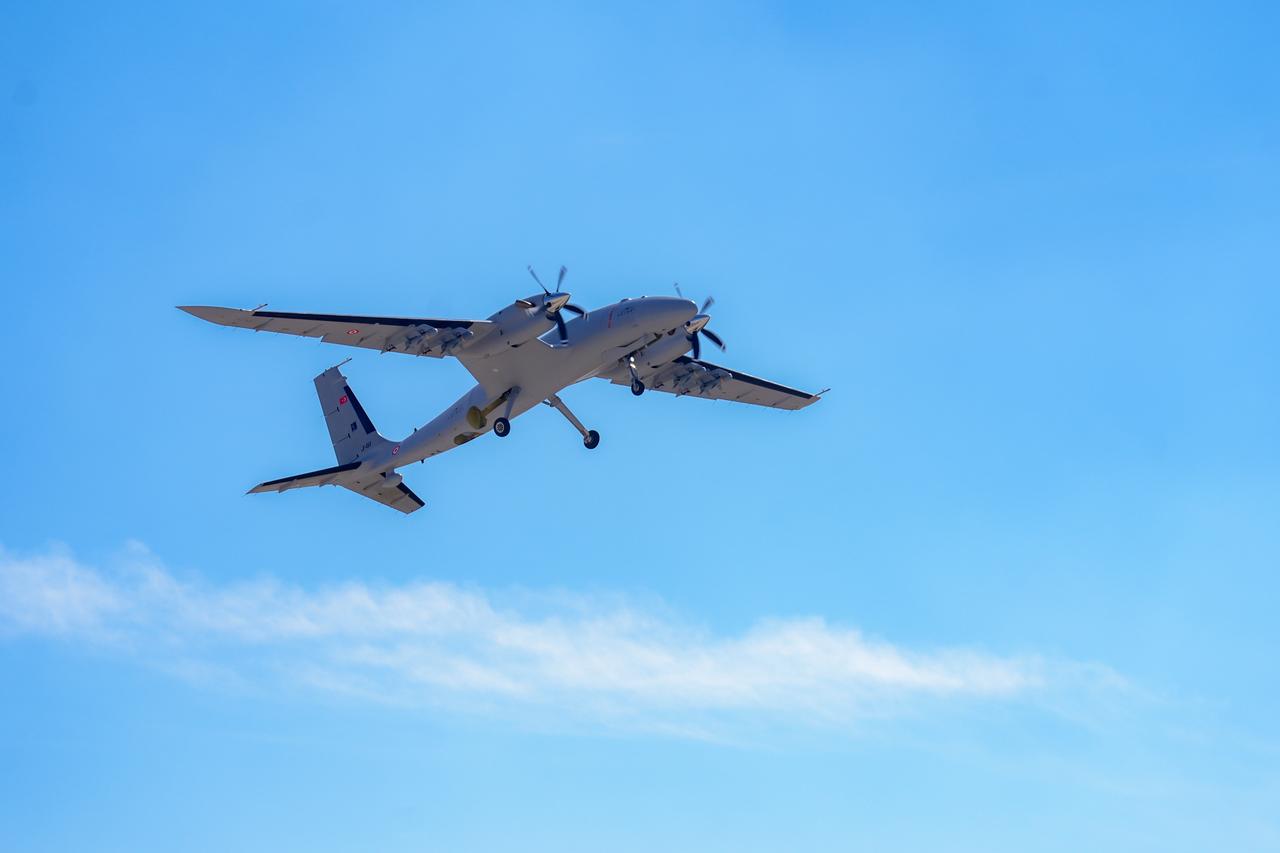
Turkish drone manufacturer Baykar, led by Chairperson Selcuk Bayraktar, recently emphasized the importance of diversifying technological advancements to ensure Türkiye’s sovereignty. At the International Astronautical Congress held in Antalya, he cautioned against relying solely on unmanned combat aerial vehicles (UAVs) for national autonomy, highlighting the necessity for progress across various technological domains to avoid a precarious global landscape.
Significance of Broader Technological Development
Bayraktar pointed out that success in UAVs is just one piece of the puzzle. Achieving comprehensive independence and prosperity involves advancements in multiple technology sectors. He remarked, “Simply developing a single unmanned combat aircraft does not guarantee a nation’s sovereignty.” This statement reflects Baykar’s ambition not only to maintain its prowess in UAV production—where it currently excels as a leading global manufacturer and exporter—but also to branch out into other critical technologies, including space exploration.
He noted that the rapid transformation in large-class UAVs over the past two decades has positioned Baykar as a significant contributor to defense technology, primarily through international collaborations with allied nations. “Our innovation has led us to develop effective solutions in various fields, ensuring independence in operations and technology,” he stated. Furthermore, he underscored the importance of the intention behind technological advancement, as even commonplace devices like smartwatches can serve dual purposes, such as gathering intelligence.
Anticipating Future Races in Technology
Bayraktar urged nations like Türkiye to focus on emerging technological races rather than solely competing in existing markets dominated by monopolies. He stated, “It’s more strategic for us to invest our resources in races that are just beginning.” As part of this vision, he revealed Baykar’s new ambitions, including the “red apple” project focused on establishing an indigenous Global Positioning System (GPS), known as the Ulug Bey, to bolster Türkiye’s capabilities in space.
He also hinted at future technological aspirations beyond UAVs, stressing the need for countries with developing technological ecosystems to seek opportunities yet unfathomed. By doing so, Türkiye can position itself as a key player in pivotal industries that shape the next era of technological innovation.
Warnings Against Overdependence on Technology
Bayraktar conveyed a sobering message regarding the implications of unchecked technological development. He expressed concerns that a prevailing global strategy aims to create dependency, reducing individuals to passive consumers of technology while monopolies capitalize on personal data. “If we continue to operate under this ambition, a terrible extinction awaits humanity,” he warned, hinting at the dangers of relying solely on automatons that make decisions on our behalf.
He further highlighted the moral implications of such a trajectory, noting that a world where atrocities can be rationalized undermines inherent values of innocence. Bayraktar passionately advocated for a future that fosters a just and humane existence, “We aim to create a world that serves the greater good, not only for our generation but for future ones.”
Moreover, the rising interest in technology among youth bodes well for Türkiye’s future. With 55,000 students engaging in competitions like Teknofest—an increase from 20,000 in its inaugural year—Bayraktar feels optimistic about the next generation’s role in shaping Türkiye’s technological landscape. As the country navigates these critical advancements, the journey toward independence in all technology sectors appears promising and essential.