
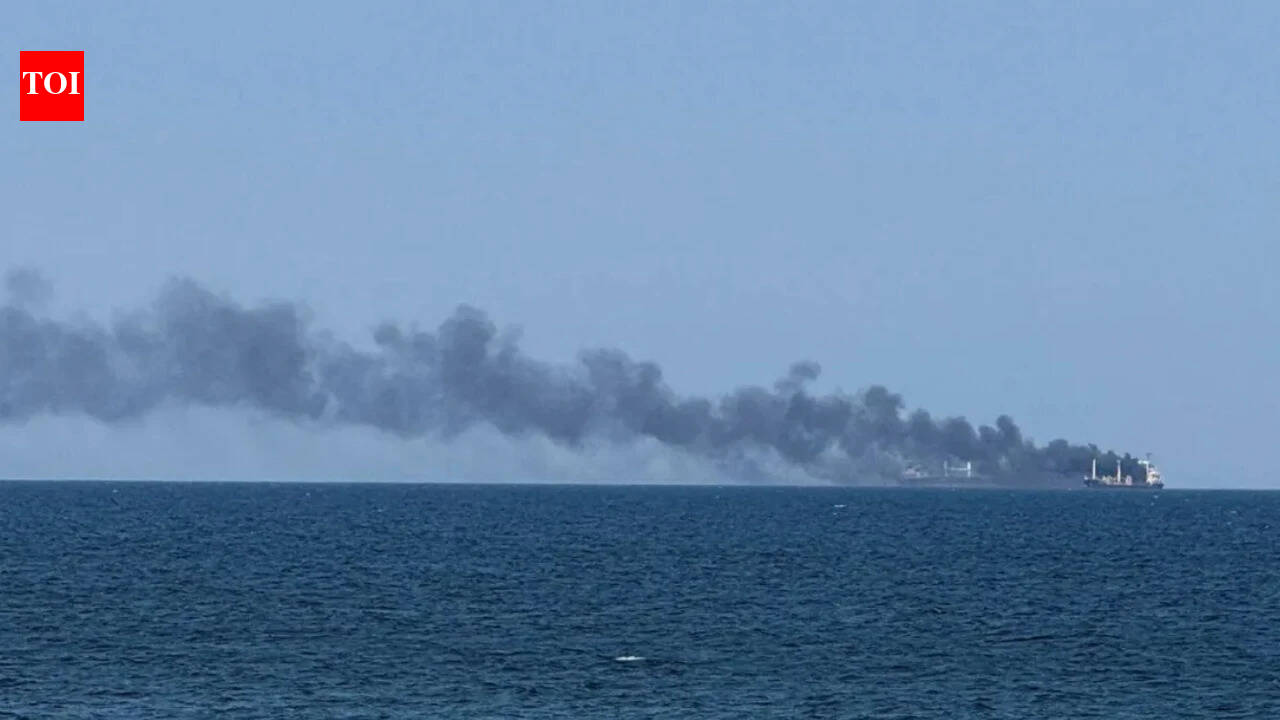
Turkey’s Diplomatic Response to Black Sea Attacks
Recent maritime incidents in the Black Sea have prompted Turkey to take diplomatic action, summoning Ukraine’s ambassador following attacks on Turkish vessels. These incidents have raised concerns about the safety and security of navigation in the region, leading Turkey’s foreign ministry to voice significant worries regarding the protection of both people and assets.
Details of the Attacks
The aggression occurred on consecutive days, with Turkey’s foreign ministry reporting that the container ship Lider Bordo Mavi was attacked while off the Russian coastline on a Wednesday. The following day, a second vessel, the Lider Kocatepe, sent to assist the first ship, also came under fire. Although the Turkish government has not confirmed any casualties resulting from these incidents, local news outlets indicate that the damaged container ship was safely towed to the Turkish port of Samsun.
Increasing tensions have been evident in the region, with Ankara stressing the urgent need for Ukraine and Russia to refrain from further targeting civilian maritime operations. The significance of commercial navigation on the Black Sea is underscored by Turkey’s operational fleet, which consists of ships registered under various international flags. These Turkish commercial vessels have increasingly become vulnerable to drone attacks that are believed to be launched by Ukraine.
Turkey’s Diplomatic Position and Broader Implications
Turkey’s diplomatic stance exhibits a desire to de-escalate the situation and ensure a safe maritime environment while emphasizing the necessity of preserving both human lives and ecological integrity. The country’s foreign ministry also highlighted the importance of cooperation among nations to maintain safe navigation practices in the Black Sea. As maritime tensions continue to simmer, Turkey’s role as a regional stabilizer is under scrutiny, especially considering its historical ties with both Ukraine and Russia.
The backdrop of these maritime confrontations includes a complex geopolitical landscape, where the intersection of military engagement and civilian trade becomes increasingly precarious. Turkey’s call for a cessation of attacks on civilian vessels is a critical aspect of its strategy to mitigate repercussions not only for itself but also for the wider regional economy.
Future Developments and Regional Stability
As the situation develops, the focus will likely remain on how both Ukraine and Russia respond to Turkey’s diplomatic overtures. Continuous threats to civilian maritime vessels could exacerbate the conflict, potentially triggering broader economic and diplomatic repercussions. There is an urgent need for an immediate resolution to these attacks to ensure stability in the Black Sea region, where numerous countries rely on safe shipping routes for their commerce.
In summary, Turkey’s recent diplomatic maneuvers highlight the ongoing struggles for securing free navigation in the Black Sea amidst rising tensions between Ukraine and Russia. With the potential for further escalation, it remains critical for regional powers to engage in open dialogue to safeguard maritime interests and ensure peace and security in the waters vital to international trade.