
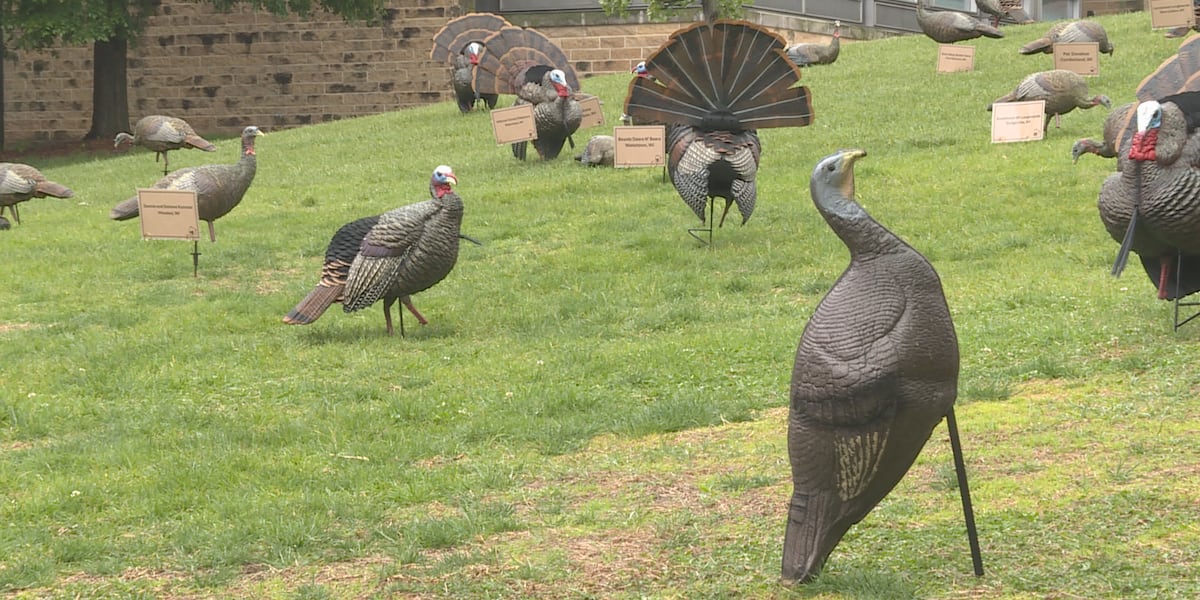
On a remarkable Sunday morning at the University of Wisconsin-Madison, Bascom Hill was adorned not with the usual pink flamingos, but with 50 decoy turkeys. This unique display was part of the celebration marking the 50th anniversary of the successful reintroduction of wild turkeys to the state of Wisconsin.
Celebrating 50 Years of Wild Turkeys in Wisconsin
The event was organized by the National Wild Turkey Federation (NWTF), which strategically placed the lifelike turkeys at the base of Bascom Hill. Tylor Flynn, the NWTF’s regional director for Wisconsin, emphasized the success of this restoration effort, calling it one of the most effective wildlife reintroduction programs in the nation. The initial decline of the wild turkey population in Wisconsin was primarily due to overhunting, leading to its near extinction in the state.
In the early 1970s, a determined effort was made to restore this iconic bird. The Wisconsin Department of Natural Resources played a crucial role by trapping eight ruffed grouse and trading them with Missouri for 29 wild turkeys. These turkeys made their debut in La Crosse, gradually repopulating across much of Wisconsin, demonstrating resilience and adaptability.
Impact of the Reintroduction Program
Thanks to these efforts, wild turkeys are now a common sight in many parts of Wisconsin, providing both ecological benefits and recreational opportunities for residents. Beyond the celebration, the NWTF is dedicated to habitat preservation on a national scale. Flynn noted the organization’s commitment to purchasing various properties that serve public land use and enhance habitats for wildlife.
This commitment is vital not only for turkeys but for the diverse ecosystems they inhabit. By improving these habitats, the NWTF ensures that future generations can enjoy the beauty and benefits of Wisconsin’s natural landscapes. Their work encompasses not just restoration but also education and community engagement.
Future Prospects and Educational Outreach
Following the event, the decoy turkeys will be put to a good use in learn-to-hunt programs, further promoting outdoor education and sustainable hunting practices. This initiative not only honors the history of wild turkeys in Wisconsin but also fosters a sense of conservation awareness among the community.
Ultimately, the 50th anniversary celebration serves as a proud reminder of what can be achieved through dedicated conservation efforts. Wisconsin’s wild turkeys stand as a symbol of hope and success in wildlife reintroduction, encouraging ongoing interest in both hunting and habitat preservation.
As you think about the impact of wildlife conservation, consider exploring local programs and organizations dedicated to preserving natural habitats. Engaging with community initiatives is a great way to contribute to preserving Wisconsin’s rich biodiversity for years to come.