
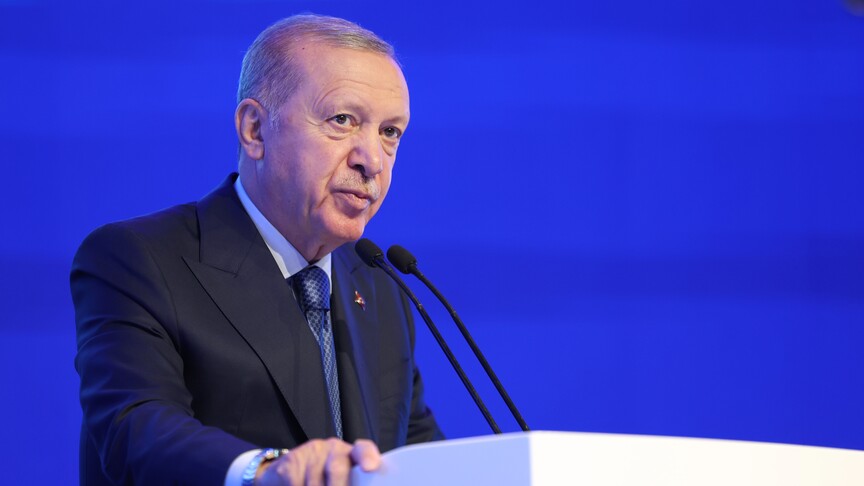
Turkish President Recep Tayyip Erdogan recently announced a significant advancement in Türkiye’s educational performance. According to the latest findings from the Programme for International Student Assessment (PISA) for 2025, Türkiye has seen a remarkable 50% increase in its rankings in essential subjects like reading, writing, and science. This development not only showcases the potential of Turkish students but also highlights the effectiveness of recent educational reforms and initiatives.
Türkçe Eğitimdeki Başarılar
During a ceremony marking the beginning of the 2026-2027 academic year at Gazi Anatolian High School in Ankara, Erdogan emphasized that Türkiye stands out as the sole country to achieve substantial progress across all three domains of assessment. This achievement is crucial as it reflects a concerted effort to enhance the quality of education in the nation, which has long been a focus of governmental policies. The President’s statements resonate with educators and policymakers who strive to elevate Türkiye’s standing in global education rankings.
The President cautioned against any attempts to undermine the significance of these results, urging the public to recognize them as a point of collective pride. He pointed out that the enhancements in education are the result of tireless effort from both educators and students alike. By fostering a sense of national accomplishment, Erdogan aims to encourage further engagement in educational pursuits across Türkiye.
Eğitim Reformları ve Gelecek Vizyonu
Erdogan’s remarks come at a pivotal time when educational reform is paramount for the nation’s long-term growth. With an increasing focus on STEM (Science, Technology, Engineering, and Mathematics) education, Türkiye is implementing changes to the curriculum aimed at fostering creativity and critical thinking skills among students. The improvements demonstrated in the PISA results can be attributed to these strategic changes in teaching methodologies and evaluation processes.
In addition, the Turkish government plans to continue investing in educational infrastructure, enhancing teacher training programs, and integrating technology into the classroom. These initiatives are designed to prepare students not only for national assessments but also for the global job market, thereby aligning Türkiye’s educational objectives with international standards. The increased rankings serve as a testament to the success of these strategies, instilling hope for a brighter educational future.
Sonuç ve Toplumsal Etkileri
As Türkiye celebrates this academic success, the implications extend beyond just educational rankings. The uplifted status fosters a sense of optimism within the community, igniting enthusiasm among students, parents, and educators alike. It encourages young minds to strive for excellence while reinforcing the belief that hard work and commitment can yield significant results.
As Türkiye moves forward, the commitment to educational improvement remains a cornerstone of national development strategies. The achievements in the PISA assessments will likely result in a renewed focus on elevating educational standards and nurturing the next generation of thinkers and leaders. Erdogan’s emphasis on these accomplishments signals a transformational moment for Türkiye, paving the way for a future where education plays a pivotal role in driving societal progress and innovation.