
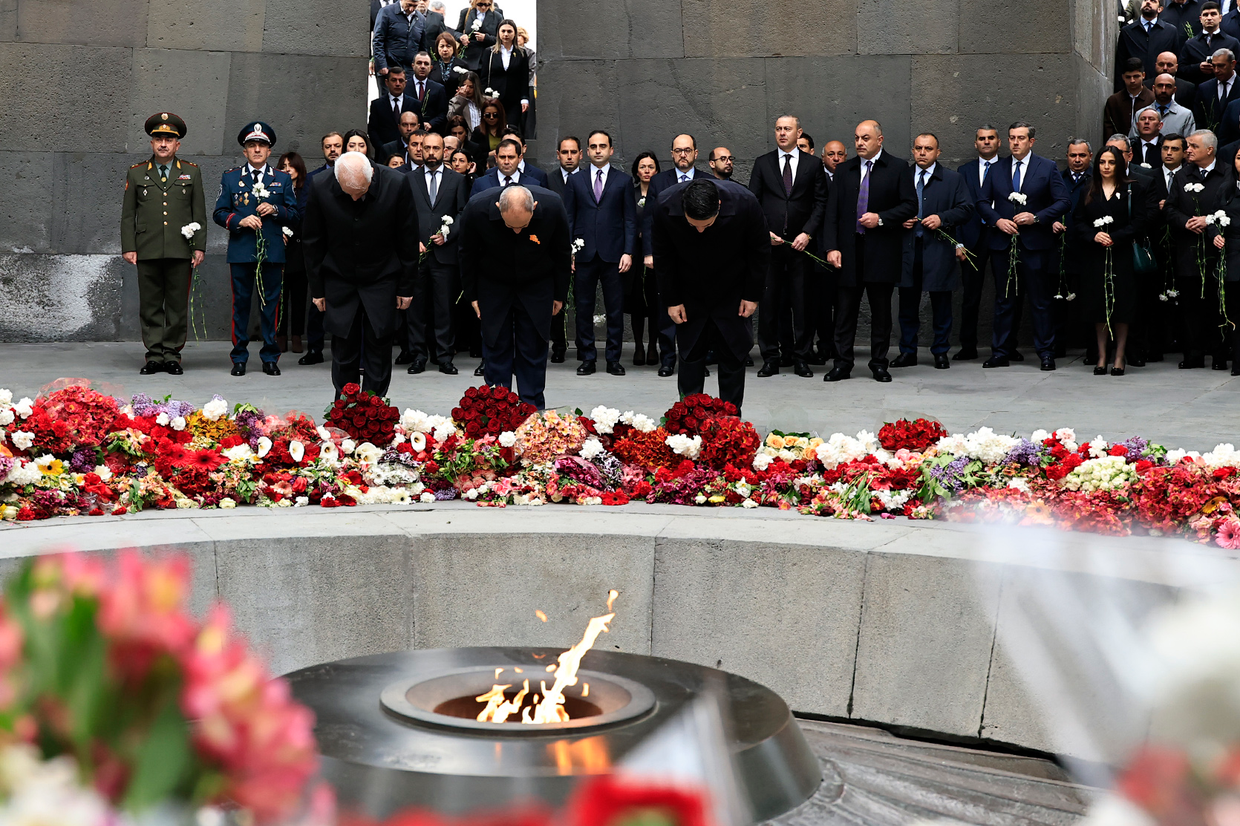
Turkish President Recep Tayyip Erdoğan has vocally criticized Israel for its recent decision to progress toward recognizing the Armenian Genocide. He claims that this move is an attempt by Israel to obscure its actions in Gaza, referring to it as slander. Erdoğan’s assertion that Turkey’s history is devoid of genocides and oppression has drawn significant skepticism. Meanwhile, state-controlled media in Azerbaijan has echoed this sentiment, framing the condemnation of Israel not as a direct rebuke but rather as a demonstration of solidarity with Turkey.
Israel’s Recognition of the Armenian Genocide
In June, the Israeli government advanced a resolution aimed at recognizing the Armenian Genocide, an act still pending final approval by the Knesset for official acknowledgment. This decision has stirred outrage in Turkey and has placed Azerbaijan in a complicated position. As a close ally of Turkey that refuses to acknowledge the genocide, Azerbaijan faces pressure to navigate its relationships both with Turkey and Israel, which it has historically engaged with on various levels.
In response to the Israeli resolution, Armenian Prime Minister Nikol Pashinyan adopted a cautious stance, refraining from explicit commentary but implying that the recognition merely serves political purposes. This suggests that Armenia, while supportive of international acknowledgment of its suffering, is wary of how the situation may be used for political leverage.
Turkey’s Historical Revisionism
Erdoğan’s claims about Turkey’s history center around notions of justice and compassion, a portrayal that conveniently overlooks the mass violence inflicted upon Armenians and other ethnic groups during the late Ottoman Empire—a period marked by widespread recognition of genocidal acts. The Turkish President mentioned past instances of protecting those who suffered discrimination, such as Jewish refugees from the Inquisition, while glossing over ongoing issues like the repression of Kurdish people within Turkey.
In a recent piece published by the Turkish state broadcaster TRT, analysts insinuated that the recognition of the Armenian Genocide could have ulterior motives, asserting that it serves as a retaliation against Turkish stances related to Israel’s actions in Gaza. Observers have pointed out that weaponizing historical events to provoke political rivalries undermines genuine efforts for reconciliation and acknowledgment.
Azerbaijan’s Diplomatic Tightrope
Following the Israeli resolution, Azerbaijan has opted for a careful diplomatic response. The Azerbaijani Foreign Ministry wasted no time in condemning the action and called on Israel to reconsider its stance. The Azerbaijani media has framed this response in a context of support for Turkey, underscoring the phrase “one nation, two states,” which symbolizes their close relationship.
A notable Azerbaijani pro-government outlet asserted that Baku’s immediate condemnation reflects its steadfast allegiance to Turkey and rebuts claims of being pro-Israel. This careful balancing act demonstrates how Azerbaijan is genuinely concerned about maintaining its relationship with both Turkey and Israel, conscious that the Israeli decision may jeopardize diplomatic ties with Ankara.
In summary, the interplay between Turkey, Azerbaijan, and Israel over the recognition of the Armenian Genocide underscores complex historical narratives and present-day political realities. Erdoğan’s rhetoric, coupled with Azerbaijan’s diplomatic maneuvering, illustrates how historical issues remain instrumentalized in contemporary geopolitics. The consequences of these tensions are likely to evolve, potentially impacting international relations in the region further.