
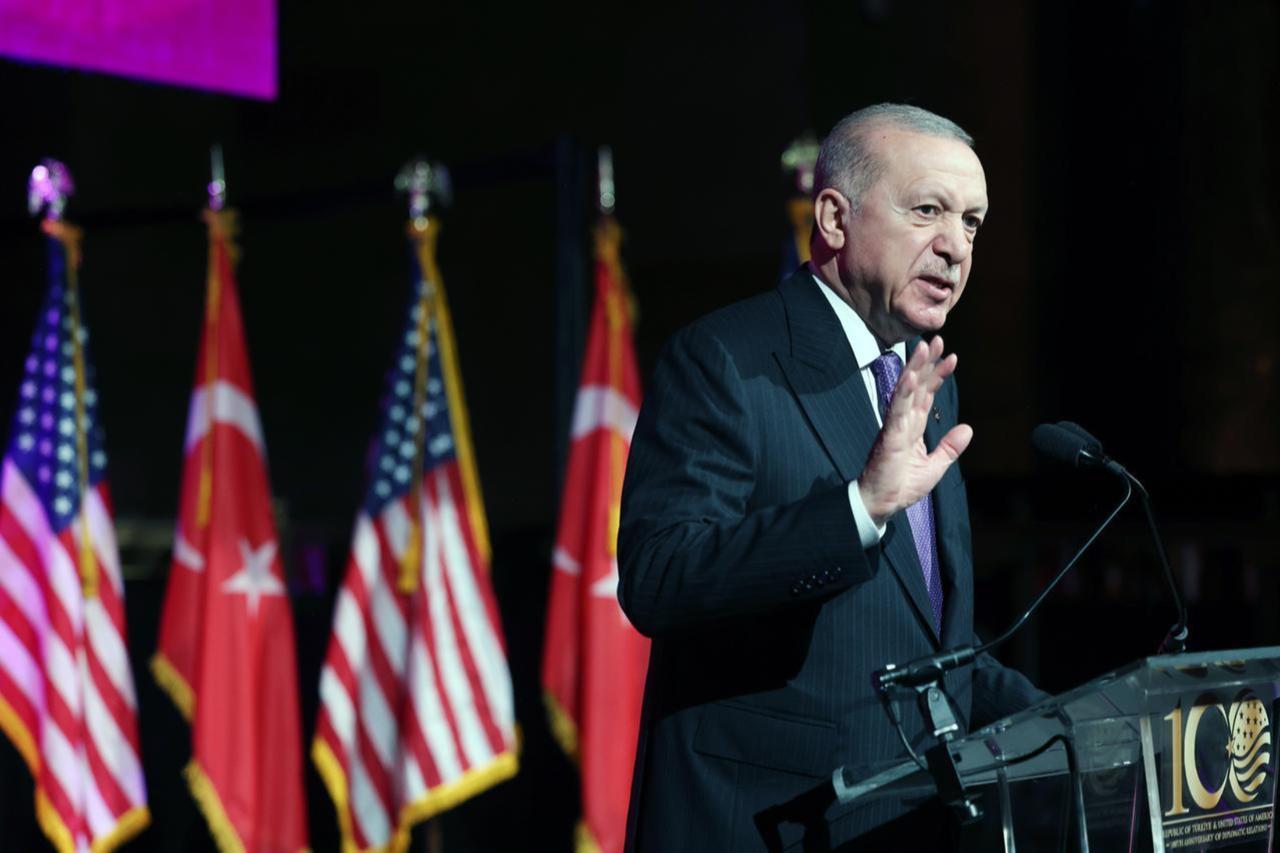
President Recep Tayyip Erdogan recently criticized foreign-oriented security tactics in the Middle East during his four-day trip to New York for the United Nations General Assembly. He defended Türkiye’s involvement in the newly established Mecca Defense Agreement, stating that external interventions have often led to greater instability. Erdogan addressed reporters at the Turkish House in New York, asserting that international entities attempting to dictate security measures for the region typically exacerbate existing problems. His remarks come amid ongoing discussions regarding the treaty, which some, including Saudi Arabia, have questioned.
Defending the Mecca Defense Agreement
Erdogan emphasized that the defense agreement is a significant step forward. He reassured that Türkiye will navigate this arrangement without falling into provocations or traps. By promoting collaborative security measures, Erdogan believes that regional stability can be achieved without reliance on external powers, which historically have failed to bring about lasting peace. He made these comments while participating in the 81st session of the United Nations General Assembly under the theme “Rebuilding Trust, Reviving Transformation.” His address marked his sixteenth at the assembly, where he also engaged with leaders from over 130 nations.
Calls for Support on Gaza
During his speech, Erdogan highlighted the ongoing crisis in Gaza, noting that sustainable peace can only occur once violence ceases and a permanent ceasefire is established. He placed the responsibility on the international community, particularly the United States, to enforce compliance with existing peace frameworks. He criticized Israel for its aggressive actions that undermine these efforts, insisting that stopping the fighting is insufficient without effective mechanisms to sustain peace. Erdogan described the persistent humanitarian disaster in Gaza, stressing that the international focus must remain on the suffering caused by years of conflict.
Freedom of Navigation in the Strait of Hormuz
Erdogan voiced Türkiye’s opposition to any attempts to close the Strait of Hormuz to maritime traffic, labeling the significant reduction in vessel movements as indicative of a broader global issue, not merely a bilateral dispute between Iran and the U.S. He stated that preserving the freedom of navigation in this critical waterway is vital for energy markets and the daily lives of millions. Erdogan urged a return to diplomatic negotiations to explore peaceful resolutions rather than escalating tensions in the region.
Strengthening U.S.-Türkiye Relations
Erdogan contrasted the current state of U.S.-Türkiye relations with the administration of President Joe Biden, stating that his previous collaboration with President Donald Trump had reinvigorated their partnership. He highlighted discussions surrounding Türkiye’s request to rejoin the F-35 jet program, expressing hope for tangible progress on this matter. With the centennial of diplomatic relations between Türkiye and the United States approaching in 2027, Erdogan reiterated his desire for a lasting partnership with the U.S.
Erdogan also addressed various domestic issues, including efforts to resolve long-standing conflicts with the PKK, diplomatic relations with Iraq, and preparations for the upcoming U.N. Climate Change Conference (COP31) in Antalya. He underscored that Türkiye aims to leverage the summit to advocate for equitable climate financing for developing countries, reinforcing its role as a significant player in global dialogues.