
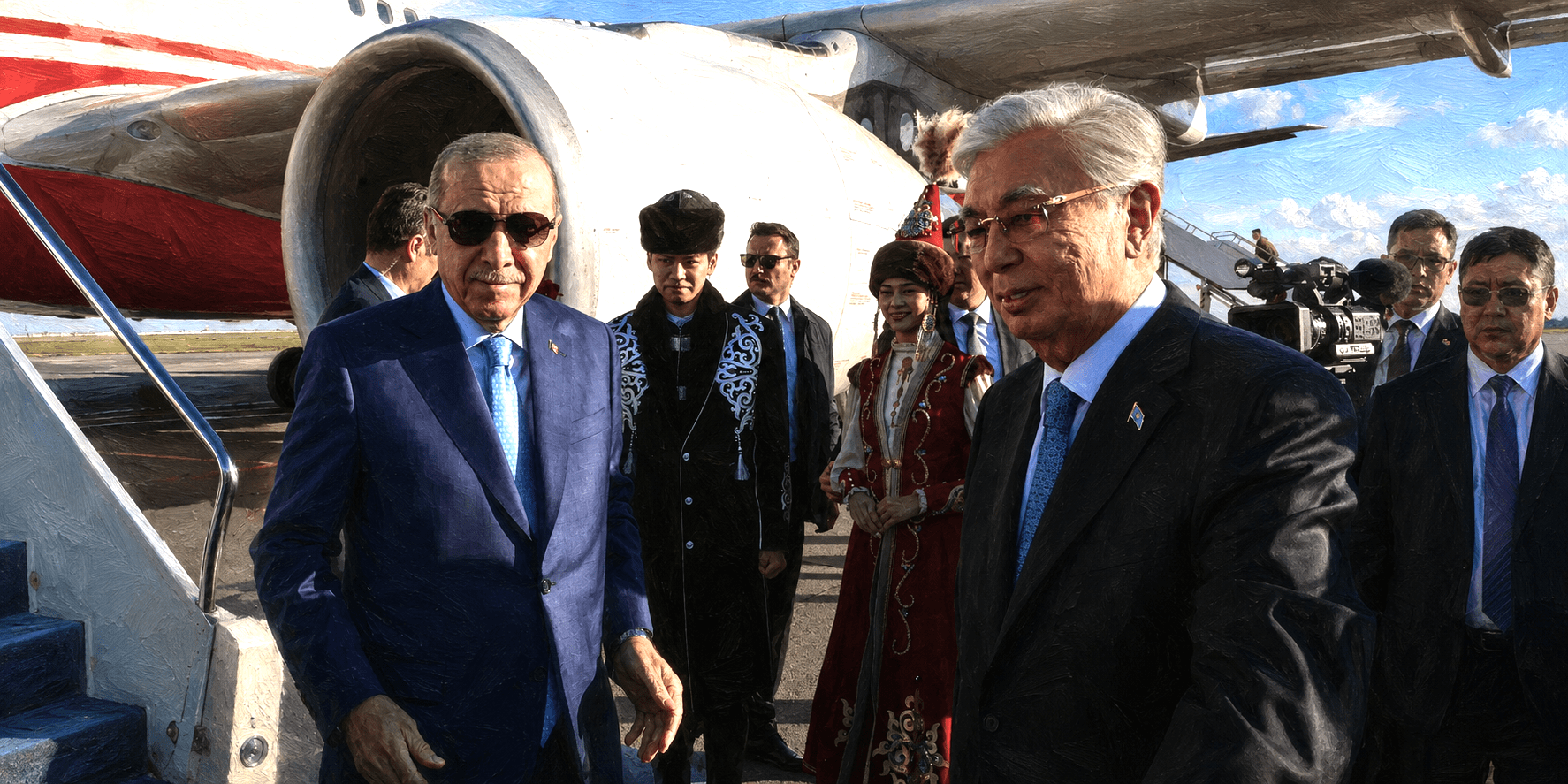
Turkish President Recep Tayyip Erdoğan’s recent visit to Kazakhstan signals a deepening collaboration between Ankara and Astana, particularly in the context of the Middle Corridor initiative. This focus on enhancing trade relations reflects Kazakhstan’s goal of expanding its international partnerships while adhering to a balanced foreign policy stance.
The Significance of the Middle Corridor
Central to the discussions between Erdoğan and Kazakh President Kassym-Jomart Tokayev was the development of the Middle Corridor, officially known as the Trans-Caspian International Transport Route (TITR). This route is pivotal for facilitating trade and transport between Europe and Asia. Erdoğan underscored its importance during a joint media briefing, likening it to a “contemporary Silk Road.” His remarks highlighted the corridor’s strategic role in fostering economic connectivity across regions, making its significance more apparent in today’s global trade dynamics.
Strengthening Cultural and Economic Ties
Kazakhstan’s efforts to deepen its ties with Turkey went beyond mere economic agreements. The two nations have pledged to enhance cultural, humanitarian, and economic cooperation, with ongoing joint ventures aimed at developing infrastructure, including Almaty International Airport. This cooperation showcases Turkey’s active involvement in Kazakhstan’s developmental projects, particularly through investments and expertise from Turkish firms.
The emotional welcome Erdoğan received reflects the importance of this partnership. Tokayev referred to Erdoğan as a “dear brother,” emphasizing the absence of any disagreements between the two countries and praising Erdoğan’s policies as balanced and strategically sound. This warm reception suggests a commitment to a relationship based on mutual respect and shared interests.
A Pragmatic Approach to Foreign Policy
Analysts recognize that while the visit was marked by camaraderie, it is underpinned by a pragmatic approach to foreign relations. Political commentator Daniyar Ashimbayev emphasized that Kazakhstan maintains a clearly defined stance on international issues, independent of external influences. This sentiment echoes Tokayev’s assertion that Kazakhstan operates on its terms, striving for balanced relations with all global partners.
Moreover, Alena Dmitriyeva, head of the Youth Research Center’s analysis division, pointed to the newly emerging framework for cooperation across Eurasia. As both countries work toward enhancing access to alternative transportation routes, the relationship appears set to bolster trade efficiency significantly. Notably, Erdoğan’s visit coincides with a reported increase in rail and road freight traffic between Kazakhstan and Turkey, demonstrating the tangible benefits of increased collaboration.
Investment Trends and Future Prospects
Turkey’s significant investments in Kazakhstan—totaling approximately $6 billion—outweigh Kazakhstan’s $2.5 billion investments in Turkey. With around 3,800 Turkish companies established in Kazakhstan and a bilateral trade turnover nearing $5 billion, the economic ties between the two nations are robust. Additionally, the presence of 14,000 Kazakh students in Turkey highlights the educational and cultural exchanges that contribute to a stronger bilateral relationship.
In conclusion, the evolving partnership between Kazakhstan and Turkey epitomizes the nation’s multi-vector foreign policy. This relationship is characterized by a combination of warmth and pragmatism, enabling Kazakhstan to cultivate varied international alliances while actively pursuing its national interests. As both countries continue to cooperate on infrastructure and trade, their partnership is likely to grow in depth and significance, benefiting both economies while maintaining Kazakhstan’s diplomatic independence.