
The European Union is enhancing its relationship with Turkey, which it considers vital for ensuring regional stability amidst shifting geopolitical dynamics. This deepened collaboration focuses on areas such as foreign policy, trade, migration, and connectivity.
Importance of the EU-Turkey Relationship
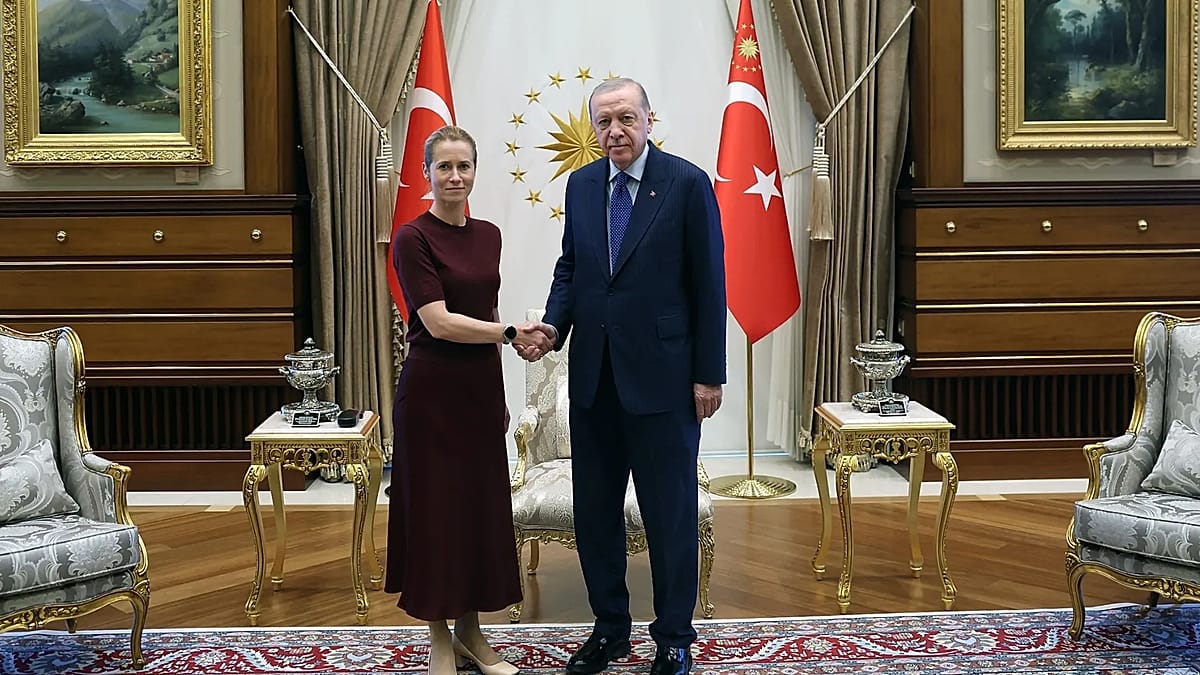
On Tuesday, senior EU officials, including Kaja Kallas, the EU’s foreign policy chief, and Magnus Brunner, the Commissioner for Internal Affairs and Migration, visited Turkey to meet with President Recep Tayyip Erdoğan and Foreign Minister Hakan Fidan. This significant visit, referred to by officials as a “jumbo meeting,” underscores Turkey’s role as a crucial partner in aspects like security and energy, especially considering its status as an EU candidate nation. Kallas remarked that Turkey plays a vital role in safeguarding NATO’s eastern flank, noting the country’s contributions to collective security.
This meeting took place just ahead of a pivotal NATO summit in Ankara but primarily focused on enhancing EU-Turkey relations, especially as Turkey’s EU accession process has been stalled since its launch in 2005. With discussions revolving around various foreign policy issues like Iran, Syria, and Gaza, both parties aim to create a united front. The joint statement post-meeting emphasizes a commitment to multilateralism and a collaborative approach towards tackling global and regional challenges. Furthermore, Turkey’s potential support for a future EU mission in Lebanon was also deliberated, especially with the expiration of the UN Interim Force’s mandate this year.
Connectivity and Economic Collaboration
Brussels is placing significant emphasis on developing the Trans-Caspian International Transport Route, also known as the Middle Corridor. This initiative provides an essential link between Europe and Central Asia while circumventing Russia. As European Commissioner for Enlargement Marta Kos highlighted, the rapid changes in global trade dynamics demand a reassessment of traditional routes. An increase in competition among global powers has encouraged businesses to seek more reliable supply chains, therefore offering Turkey and the EU a shared opportunity for strengthening trade and energy ties.
In addition to infrastructure discussions, there were talks regarding Turkey’s modernization of access to the EU customs union, a system established in 1995 that remains flawed due to several exceptions. The joint statement also highlighted the significance of a reciprocal industrial policy approach, hinting at the Industrial Accelerator Act, which aims to enhance European competitiveness. Turkey’s participation in the Single European Payments Area, an EU initiative aimed at streamlining cashless payments, also received a positive mention.
Addressing Challenges and Concerns
While the geopolitical landscape appears to facilitate a closer relationship between Brussels and Ankara, notable challenges persist. Recent remarks by European Commission President Ursula von der Leyen have drawn Ankara’s ire, particularly as she compared Turkey to countries such as Russia and China regarding attempts to exert influence over Europe. This comparison raised concerns among Turkish officials, especially given Turkey’s status as both an EU candidate and a NATO ally.
Additional points of contention include long-standing issues surrounding Cyprus, with EU officials voicing support for UN Secretary General efforts concerning the region. Human rights and rule of law have also been focal points for EU policymakers, particularly in light of recent events involving the arrest of Ekrem İmamoğlu, the opposition mayor of Istanbul. As a candidate country, Turkey is expected to uphold high standards of democracy, human rights, and rule of law, concerns that remain pivotal in shaping future engagements.
In summary, while the drive to strengthen ties between the EU and Turkey is evident, balancing cooperation with addressing underlying challenges will remain critical for both parties moving forward. The outcomes of these discussions will have lasting implications for regional stability and international relations.