
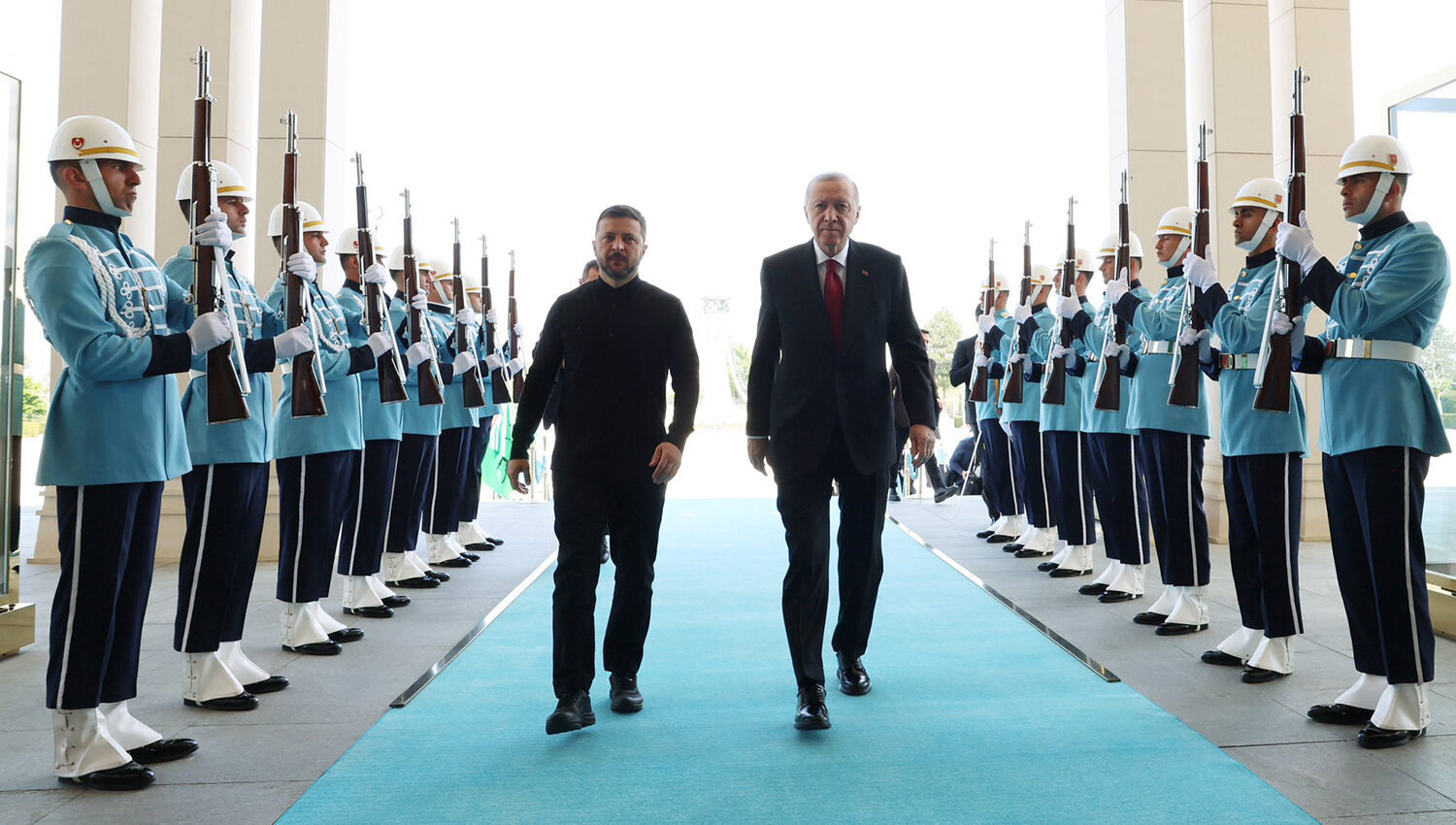
The recent ratification of a bilateral free trade agreement between Ukraine and Turkey marks a significant development in their economic collaboration. This agreement, over a decade in the making, aims to bolster trade relations and is particularly timely given the current geopolitical landscape shaped by Russia’s invasion of Ukraine.
Implications of the Free Trade Agreement
The free trade agreement, signed during Turkish President Recep Tayyip Erdoğan’s visit to Kyiv in February 2022, allows both nations to expand their trade. Ukraine has long sought access to Turkey’s carefully protected agricultural sector, while Turkey has aimed to enhance its exports of industrial goods to Ukraine. The initial response from business sectors in both countries has been mixed; some express excitement about new opportunities, while others worry about increased competition within sensitive industries.
Under the terms of the agreement, Turkey will remove tariffs on 93.4% of Ukrainian industrial goods and 7.6% of agricultural products immediately. Over a span of three to seven years, additional tariffs will be phasing out, allowing both nations to adjust to the new trading conditions. Concurrently, Ukraine will initially lift tariffs on 56% of Turkish industrial goods and 11.5% of agricultural products, with further reductions planned in the coming years.
However, the backdrop of Russia’s military actions introduces unforeseen complexities to this agreement. As both nations navigate heightened economic challenges and altered market conditions, a special clause has been included, permitting the reassessment of certain provisions after the agreement’s ratification.
Goals of Economic Cooperation
The primary aim of this free trade deal is to elevate bilateral trade to an ambitious target of $10 billion, as set by leaders Volodymyr Zelenskyy and Erdoğan. Recent statistics reveal that trade between Ukraine and Turkey reached approximately $8 billion in 2025, reinforcing Turkey’s status as Ukraine’s third-largest trading partner. Despite this progress, Ukraine has seen its traditional trade surplus with Turkey diminish due to the ongoing war, which has hampered its agricultural and industrial capacities.
A substantial portion of Ukraine’s exports to Turkey consists of grain and sunflower oil, which account for nearly 77% of trade. Turkish firms often process these raw materials into higher-value goods. The new trade agreement aims to encourage more value-added production within Ukraine, potentially restructuring this unbalanced trade dynamic.
The implementation of the free trade agreement carries inherent risks for Ukraine’s economy, particularly given the competitiveness of Turkish manufacturing against Ukraine’s struggling sectors. Should the agreement primarily lead to increased exports of raw materials from Ukraine paired with a surge in manufactured imports from Turkey, the economic imbalance could deepen rather than resolve.
Broader Implications for Reconstruction
One crucial aspect of the agreement is its potential role in Ukraine’s post-war reconstruction. With Turkish investments in Ukraine surpassing $5 billion over the last five years, there is significant potential for further development. Turkish firms, accustomed to operating in challenging environments, are well-equipped to contribute to rebuilding essential infrastructure in Ukraine, ranging from roads to energy facilities.
Commercially, the agreement opens avenues for Turkish industries to access a growing market in Ukraine, particularly in sectors like construction and consumer goods. As reconstruction efforts will likely be supported by international organizations, Turkish companies stand to gain from these opportunities without requiring significant financial backing from Ankara.
This agreement also provides a framework for further integration into European markets by allowing Ukrainian manufacturers to import Turkish components while retaining preferential tariff access when exporting to the EU. As Turkey continues to navigate complex geopolitical waters, stronger ties with Ukraine could bolster its regional influence while mitigating dependency on Russia.
In conclusion, the free trade agreement between Ukraine and Turkey represents not just an economic alignment but a strategic partnership aimed at mutual benefits amid a turbulent geopolitical climate. If successfully enacted, it could foster deeper collaboration in trade, reconstruction, and defense, ultimately contributing to a more durable partnership between the two nations.