
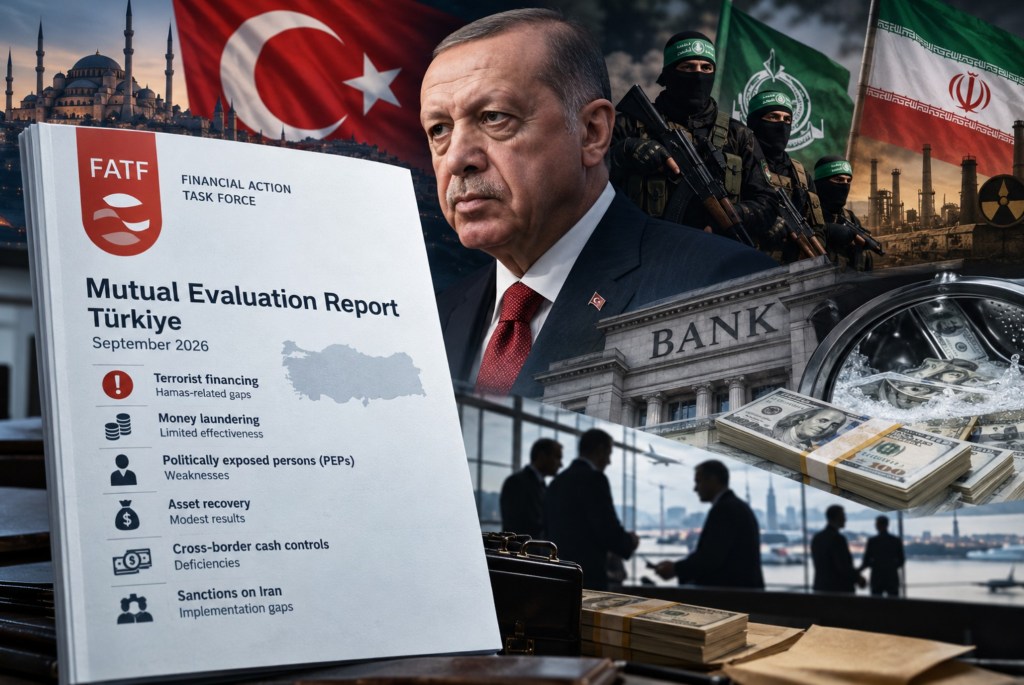
Turkey’s FATF Assessment: Compliance vs. Effectiveness
Turkey’s recent assessment by the Financial Action Task Force (FATF) paints a complex picture of its compliance with international standards against money laundering and terrorist financing. While the government of President Recep Tayyip Erdogan has publicly celebrated its technical compliance ratings, the FATF report uncovers significant gaps in the effectiveness of Turkey’s measures in these crucial areas.
Technical Compliance vs. Actual Effectiveness
Turkey’s Ministry of Treasury and Finance highlighted that it received a compliant rating for 38 out of 40 technical recommendations set by the FATF. However, this focus on technical compliance reveals only part of the story. The comprehensive FATF report emphasizes that having laws and regulations in place is one aspect, but the real measure of success lies in their practical application. On this front, Turkey’s effectiveness rating is only “Moderate” in eight out of eleven assessed areas. The country achieved a “Substantial” rating in just three categories: risk assessment, policy coordination, and international cooperation.
This disparity between compliance and effectiveness is notable, particularly regarding investigations into money laundering and terrorist financing. FATF’s assessment revealed that while Turkey conducts thousands of terrorist financing probes, many of these are concentrated on politically motivated cases related to the Gülen movement, sidelining other potential threats like Hamas, which the Turkish government does not classify as a terrorist organization.
Shortcomings in Enforcement and Investigative Capacities
FATF pointed out significant deficiencies in Turkey’s enforcement capabilities, particularly concerning organizations not recognized under its domestic sanctions regime. The report criticized Turkey for the lack of investigations and prosecutions involving entities like Hamas, citing only two instances of cooperation with foreign requests for information. This has created a substantial gap in effectiveness, suggesting that Turkey’s current efforts are not adequately targeting all potential risks within its financial system.
Moreover, while Turkey launched over twenty-three thousand money laundering investigations between 2021 and 2025, many of these efforts fell short in handling complex cases. Investigations into high-risk activities, such as professional money laundering and cross-border currency movements, were notably limited. Reports of political interference in high-profile investigations further complicated matters, revealing a system that often prioritizes appearances over substantial action against serious financial crimes.
Asset Recovery and Cross-Border Cash Movements
The FATF report raised alarm over Turkey’s ability to recover assets linked to criminal activity. Although thousands of transactions were temporarily halted for review, a starkly low percentage translated into actual seizures. Between 2021 and 2025, only 3.2% of reviewed transactions resulted in asset seizure. Such inefficiencies prompted concerns regarding the judicial processes governing these actions.
Additionally, cross-border cash movements showcased significant enforcement weaknesses. Turkey reported substantial incoming cash declarations, but its detection and seizure rates for smuggling and illicit financial transfers were alarmingly low. The FATF recommended intensified scrutiny of incoming funds and urged improved coordination among law enforcement agencies to enhance Turkey’s capacity to manage cash-flow risks.
Politically Exposed Persons and Beneficial Ownership Transparency
Another critical issue highlighted by FATF is the weak oversight concerning politically exposed persons (PEPs), a category that includes government officials susceptible to corruption and money laundering risks. The prevalence of inadequate procedures for identifying PEPs, particularly among exchange offices, undermines efforts to enforce proper due diligence and manage higher-risk customers effectively.
Moreover, Turkey’s registry for beneficial ownership is criticized for its heavy reliance on self-reported data. This lack of systematic verification raises alarms regarding the integrity of the financial system and the country’s ability to combat money laundering and sanctions evasion.
In summary, Turkey’s compliance with FATF’s technical recommendations reflects noteworthy progress, yet the effectiveness of implemented measures remains questionable. The FATF’s roadmap for improvement emphasizes the need for tangible outcomes—calling for advancements in investigating sophisticated financial networks, asset recovery, and oversight of politically exposed persons. Without addressing these critical gaps, Turkey will likely continue to face scrutiny on the global stage.