
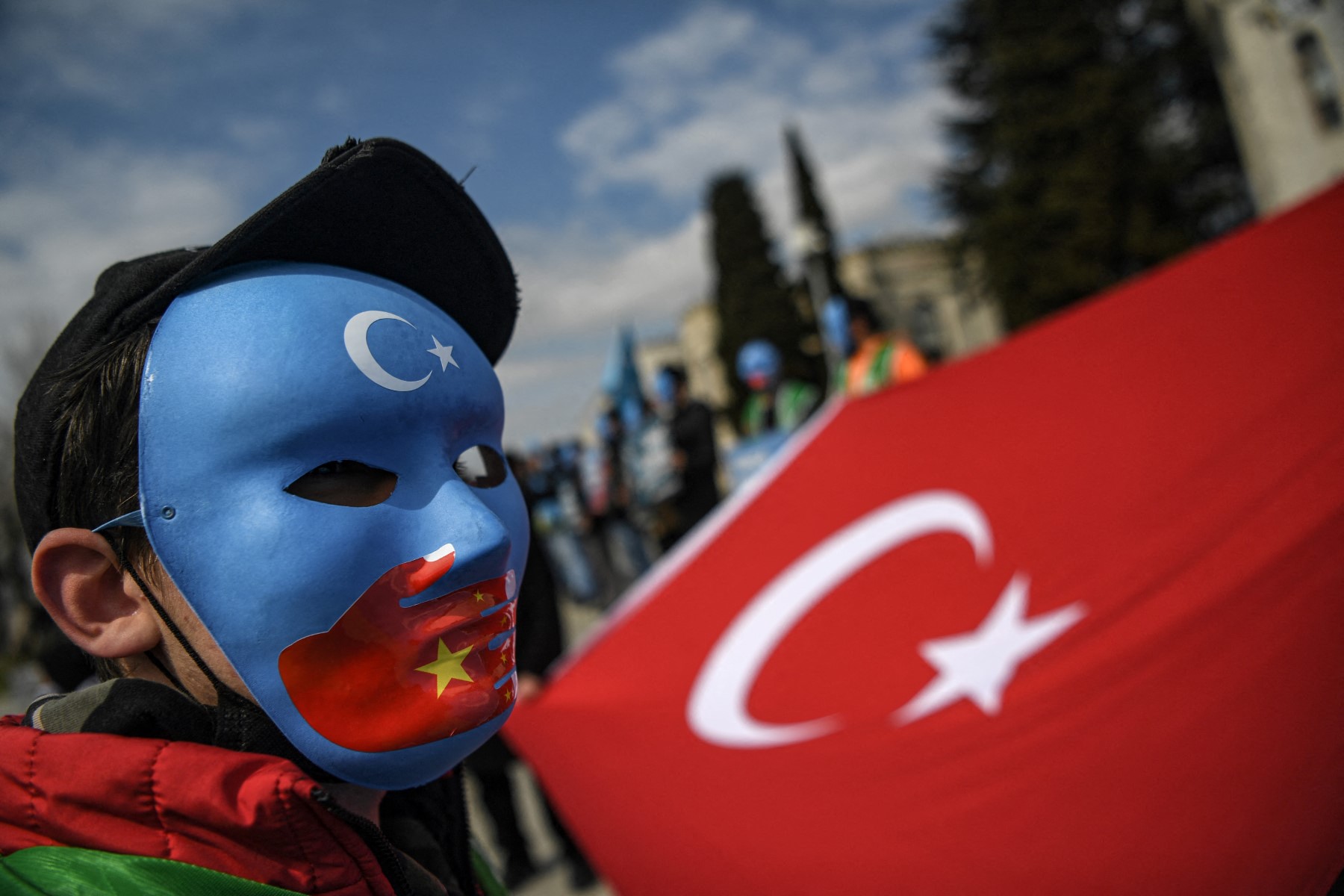
On March 19, 1996, a highly classified directive from the Politburo of China recognized Turkey as a pivotal center for the East Turkistan independence movement. This movement was largely championed by the Uyghur population and other Turkic groups, striving for autonomy in Xinjiang. China’s response was strategic; they focused on undermining any Turkish solidarity with these groups by fragmenting the Uyghur diaspora and isolating its leaders while ensuring that the East Turkistan issue remained off the global agenda.
China’s Strategic Maneuvers with Turkey
Turkey became the main target of Beijing’s diplomatic efforts, which aimed to strangle any movement towards Uyghur independence. One year after the initial directive, Turkey’s dependence on Western military systems became a vulnerability that China capitalized on. While Turkey had relied on NATO for its defense, it was without a credible indigenous missile program. The Sakarya rocket with a range of 40 kilometers was insufficient for its military aspirations, lacking essential design and production capabilities. In this void, China emerged as a critical source of missile technology, filling the gaps left by a hesitant West and a paralyzed Russia following the collapse of the Soviet Union.
By 1997, Turkey’s National Defense Ministry formalized this relationship with a $250 million contract with the China Precision Machinery Import Export Corporation. This agreement, known as Project K, not only delivered 200 WS-1 rockets to Turkey but also laid the groundwork for an indigenous missile manufacturing capacity, ushering in a crucial military upgrade with the TR-300 Kasırga system deployed in 1998, drastically extending Turkey’s missile range to 100 kilometers.
Transition from Political Support to Military Independence
A year later, Turkey deepened its collaboration with China by signing another $300 million contract for the licensed production of the B-611 ballistic missile. This arrangement marked a significant shift in Turkey’s defense capabilities. The J-600T Yıldırım became Turkey’s first homegrown ballistic missile, boasting a range of 150 kilometers. Simultaneously, the political landscape shifted as Ankara began dismantling the political foundation of the East Turkistan movement on its soil.
Prior to these contracts, Turkish policy had framed Uyghur activism as part of its national agenda. In 1992, President Turgut Özal openly championed Uyghur independence. Yet, as relations with China tightened, particularly during the late 1990s, Ankara began to curtail support for Uyghur groups, pushing through secret directives that restricted their operations. By 2000, the East Turkistan cause was subordinated to a counter-terrorism framework, leading to a diplomatic realignment that emphasized trade over human rights concerns.
The Renewal of Turkish Military Strategy
As Turkey’s missile technology advanced, the geopolitical implications became far-reaching. From a mere artillery rocket with limited range, Turkey’s capabilities evolved into a sophisticated ballistic arsenal that included the Bora and Tayfun missiles, extending ranges to over 1,000 kilometers. The implications expanded as Turkey began to leverage this newfound military technology for regional influence, explicitly threatening NATO ally Greece.
Turkey established partnerships beyond China, collaborating with nations like Pakistan to enhance its defense manufacturing capabilities. The combination of political alignment, military technology, and economic cooperation became a tightly woven network, allowing Turkey to project itself as a formidable player in global defense.
Turkey’s ambition to develop long-range missile systems received further validation through new facilities in Somalia, which eliminated geographical limits on testing. As Ankara planned for a comprehensive missile program, it also moved away from Western oversight. With China’s foundational missile technologies and Pakistan’s nuclear expertise forming the backbone of this new military strategy, Turkey carved out a path to autonomous power projection.
The modern Turkish narrative frames the Uyghurs within a greater Turkic identity, transforming their struggle for independence into a strategic asset. In exchange for missile technology and military partnerships, Ankara effectively traded political support for the Uyghur cause, redefining the calculus of power in both regional and global contexts. By blending civilian aspirations and military advancements, Turkey not only secured its defense autonomy but also reconfigured its relationship with traditional powers.