
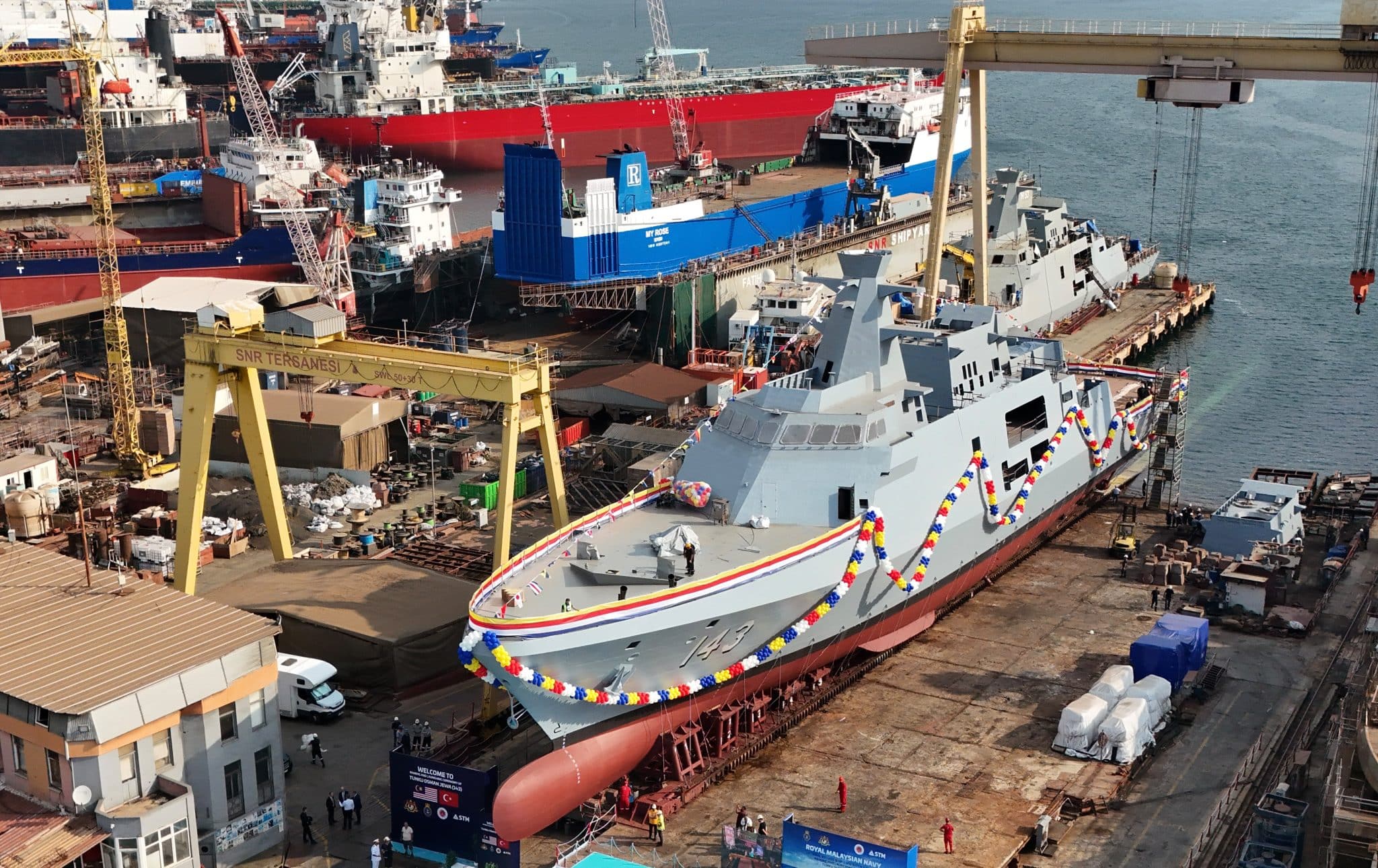
The Royal Malaysian Navy continues to expand its capabilities with the launch of the TUNKU OSMAN JEWA (143), the third and final LMS Batch II corvette. This significant event took place at Istanbul Shipyard in Türkiye on August 9. With advancements in naval technology, this latest addition symbolizes Malaysia’s commitment to enhancing its maritime defense.
The Significance of the LMS Batch II Corvettes
The LMS Batch II corvettes are pivotal to the Royal Malaysian Navy’s modernization efforts. Designed for various roles, these vessels will enhance the Navy’s operational flexibility and efficiency. The TUNKU OSMAN JEWA, along with its sister ships, is equipped with modern weaponry and advanced systems, allowing for effective responses to a range of maritime threats.
The introduction of these corvettes signifies Malaysia’s intent to strengthen its maritime defense ecosystem. With growing security challenges in the region, having a versatile fleet is essential for safeguarding national interests. The LMSB2 corvettes will bolster capabilities in surveillance, reconnaissance, and maritime interdiction operations, which are integral to maintaining regional stability.
Technical Specifications and Capabilities
The TUNKU OSMAN JEWA is designed with state-of-the-art technology and offers impressive specifications. This corvette boasts enhanced radar systems, missile platforms, and advanced navigation capabilities. The ship’s versatile design allows it to operate in various conditions, making it suitable for both peacetime and combat scenarios.
One notable feature of the corvette is its modular construction, allowing for efficient upgrades and modifications as technology evolves. This adaptability ensures that the TUNKU OSMAN JEWA will remain relevant and capable for years to come. Additionally, it is equipped with stealth features, minimizing detection, and enabling greater operational advantage in hostile environments.
Implications for Regional Security
The launch of the TUNKU OSMAN JEWA marks a significant enhancement in Malaysia’s naval prowess, which has broader implications for regional security dynamics. As tensions rise in various maritime areas, the presence of advanced naval assets contributes to deterrence against potential threats. This strategic move is seen as a commitment to safeguard not only Malaysia’s waters but also contribute positively to regional maritime security collaborations.
As nations in the region face various security challenges, including piracy and illegal fishing, investing in naval capabilities is crucial. The Royal Malaysian Navy’s bolstered fleet will play an essential role in joint operations with neighboring nations, fostering cooperation and collective security within ASEAN and beyond.
Future of Maritime Defense in Malaysia
The completion and launch of the TUNKU OSMAN JEWA (143) symbolize more than just an addition to the naval fleet; it’s an integral part of Malaysia’s long-term maritime defense strategy. As technology in maritime warfare continues to evolve, future ships and upgrades are expected to align with emerging trends and threats.
This commitment to modernization reflects Malaysia’s recognition of the changing maritime landscape. Future investments in technology and naval capabilities will undoubtedly strengthen the nation’s position as a key player in regional maritime security. The TUNKU OSMAN JEWA is poised to be a cornerstone of this evolving strategy, ensuring that the Royal Malaysian Navy remains prepared for whatever challenges lie ahead.
In conclusion, the launch of the TUNKU OSMAN JEWA at Istanbul Shipyard represents a significant step forward for Malaysia’s naval capabilities, addressing both current challenges and preparing for future maritime needs.