
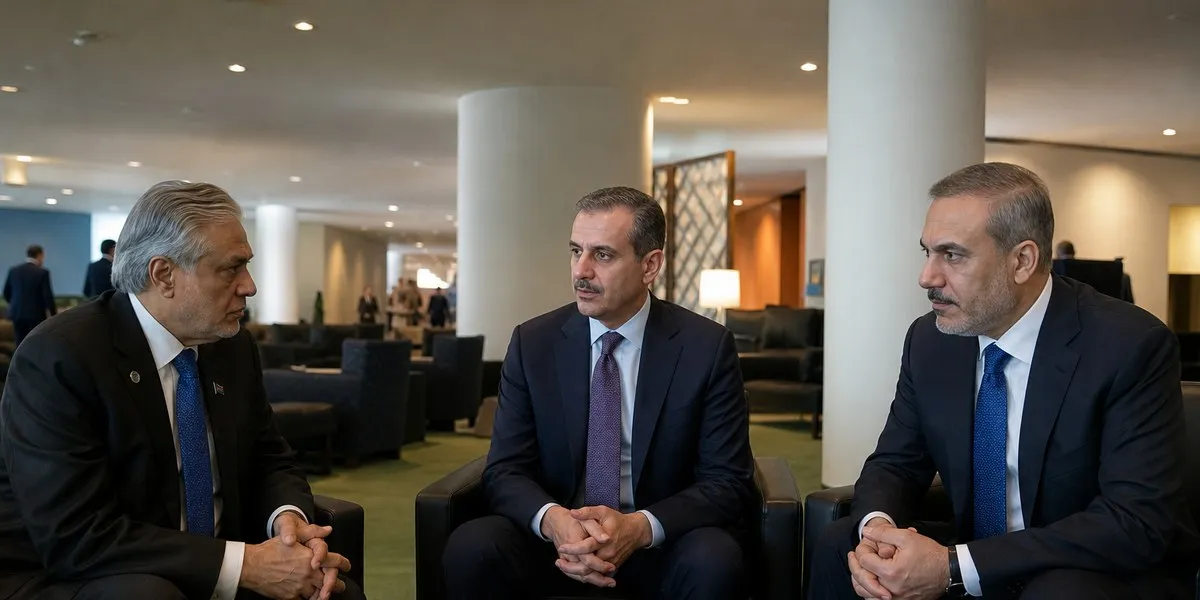
In New York, Pakistan’s Deputy Prime Minister and Foreign Minister Ishaq Dar engaged in discussions with the foreign ministers of Saudi Arabia and Türkiye. This meeting occurred during the UN General Assembly and focused on advancing the institutional frameworks of the trilateral Mecca Agreement concerning defense collaboration among the three nations.
Key Discussions in New York
The talks included notable figures such as Saudi Foreign Minister Prince Faisal bin Farhan and Turkish Foreign Minister Hakan Fidan. Dar shared insights on social media platform X, highlighting that the discussions also addressed critical regional and international security matters. The exchange of ideas among these diplomats signifies the growing importance of collaboration in addressing security challenges that transcend national boundaries.
Understanding the Mecca Agreement
On August 7, Pakistan, Saudi Arabia, and Türkiye officially signed the Mecca Agreement, a pivotal pact concerning joint defense. This agreement stipulates that any attack on one of the participating states will be construed as an attack on all involved. The foundational premise of collective defense strengthens the security fabric of these nations, showcasing their commitment to mutual protection in a volatile regional landscape.
The first collaborative meeting to lay the groundwork for this alliance took place in Istanbul on August 31. During this meeting, representatives from the involved countries deliberated on the establishment of institutional mechanisms for the alliance. Notably, it was decided that Pakistan would take the lead in managing the secretariat in Riyadh. This strategic positioning places Pakistan at the center of this trilateral defense arrangement, reinforcing its role as a key player in regional security dynamics.
Implications of Enhanced Cooperation
The necessity for enhanced cooperation among these countries stems from various geopolitical challenges in the region. As global security landscapes continue to evolve, the trilateral relationship cultivated through the Mecca Agreement is likely to play a crucial role in deterring threats and fostering stability. By uniting their military and diplomatic resources, Pakistan, Saudi Arabia, and Türkiye are making a significant statement regarding their collective security interests.
Furthermore, this initiative is expected to resonate well within the broader context of international relations, where collaborations like these can serve as models for other nations to follow. The engagement among leaders suggests a commitment to developing a strategic alliance aimed at navigating the complexities of modern security threats.
As these countries move forward with their commitments under the Mecca Agreement, the implications are profound not only for their individual nations but also for regional stability. Such agreements foster an environment where collaborative defense strategies can be more effectively implemented, potentially leading to a more secure and peaceful future for the region. Through continued dialogue and engagement, Pakistan, Saudi Arabia, and Türkiye are positioning themselves to face emerging challenges with unified strength.