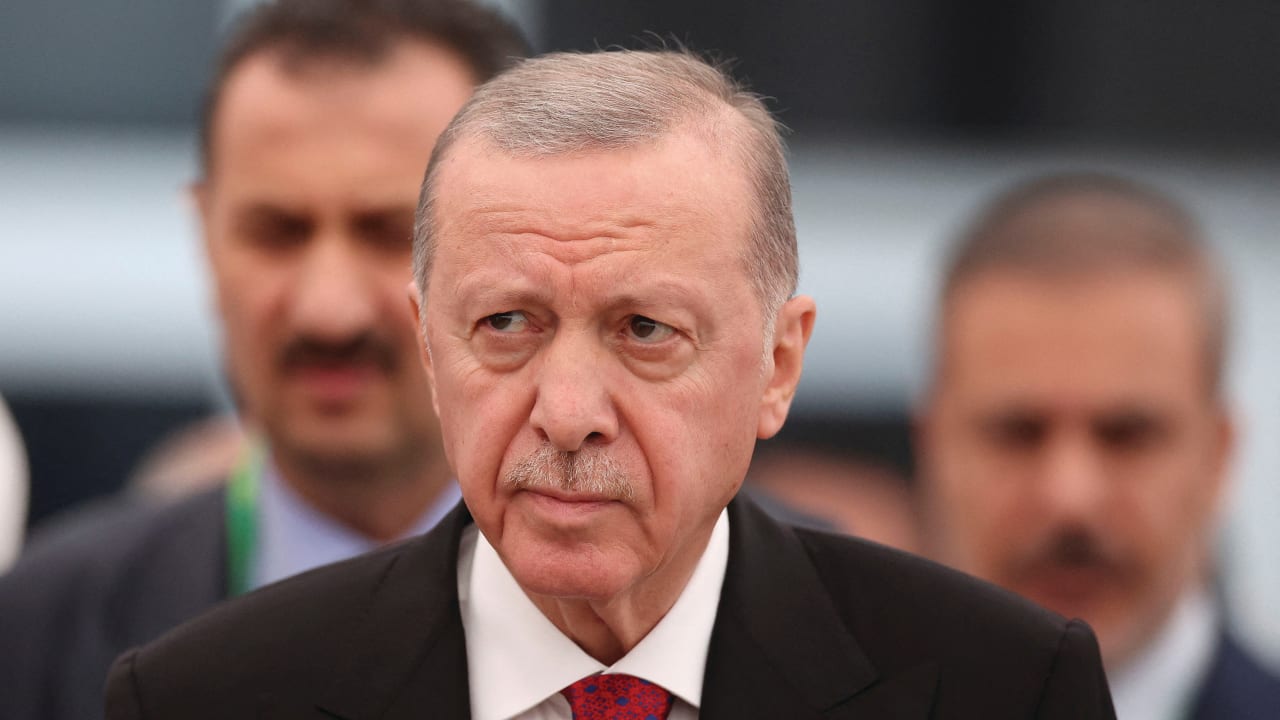
On May 21, a pivotal ruling from a Turkish court marked a significant shift in the country’s political landscape by disbanding the leadership of the main opposition party, the Republican People’s Party (CHP), under the direction of Özgür Özel. This decision has profound implications for Turkish democracy, raising questions about the future of political opposition in a country that has been increasingly moving toward authoritarianism.
### The Illusion of Democracy in Turkey
For years, President Recep Tayyip Erdogan and his allies have asserted that Turkey remains a democratic state, albeit with imperfections. Elections are held, opposition parties exist, and critical voices are cautiously expressed. However, the recent court ruling against the CHP dismantles one of the last remaining illusions of a competitive political environment. It signals that the government may be more threatened than its leaders care to admit, giving the impression of a weakening grasp on power.
### A Response to Fear
At first glance, this court action might seem counterproductive. Erdogan has effectively controlled Turkish politics for over two decades, yet he feels the need to act against an opposition already hampered by significant disadvantages. The motivation for such repression can often be traced back to a fear of losing power, which compels authoritarian leaders to eliminate rivals who pose a potential threat.
Political scientists argue that modern autocrats do not sideline their challengers because they are strong but rather because they sense vulnerability. As economic conditions worsen and public discontent rises, figures from the opposition who present credible alternatives gain traction. The Turkish landscape exemplifies this model, illustrating a regime reacting out of insecurity rather than confidence.
### Economic Turmoil and Government Anxiety
Erdogan’s government currently faces a landscape marred by rampant inflation, currency devaluation, and institutional decline, with public dissatisfaction on the rise. The recent success of the CHP in major municipalities like Istanbul and Ankara during the 2024 elections showcased the opposition’s ability to mobilize support despite the government’s repressive tactics. The ruling against the CHP demonstrates not only a governmental overreach but also an insecurity indicative of a regime that feels its grip on power is at risk.
### The Complex Nature of Contemporary Authoritarianism
Contrary to the belief of many Western observers that dictatorships without popular support are inherently fragile, Turkey presents a different narrative. Even when a government loses its legitimacy, it can remain resilient by controlling state mechanisms. Erdogan’s administration exemplifies this reality; over the last decade, the government has transformed itself into a more entrenched power, with institutions designed to uphold, rather than challenge, its authority.
While elections continue, they are conducted on a deeply unequal playing field, and dissent is met with considerable backlash. This shift towards a more insidious form of autocracy combines aspects of democratic appearance with underlying authoritarian governance, a hybrid model that may prove disturbingly stable.
### Implications for the Future of Democracy
The ruling delivered on May 21 is significant not only for Turkey but for democracies worldwide. It raises critical questions about the integrity of democratic institutions. If electoral processes are being subverted and the mechanisms for political change dismantled, the future of democracy in Turkey—and potentially other nations—comes into question.
Erdogan’s regime may appear brittle on the surface, but as history has shown, vulnerabilities do not always translate into political openings. Instead, they can lead to an increase in repression, further erasing the channels conducive to peaceful political transformation. For many Turks, the prospect of replacing their government through elections or mass demonstrations feels increasingly implausible, signaling a profound crisis for Turkish democracy.