
New archaeological findings in Turkey are illuminating the early development of Christianity, revealing historical insights that reshape our understanding of the faith’s nascent stages. From ancient tombs to remarkable frescoes, these discoveries are not only significant but also highlight the role of Anatolia in Christianity’s rise.
Significant Discoveries in Turkey
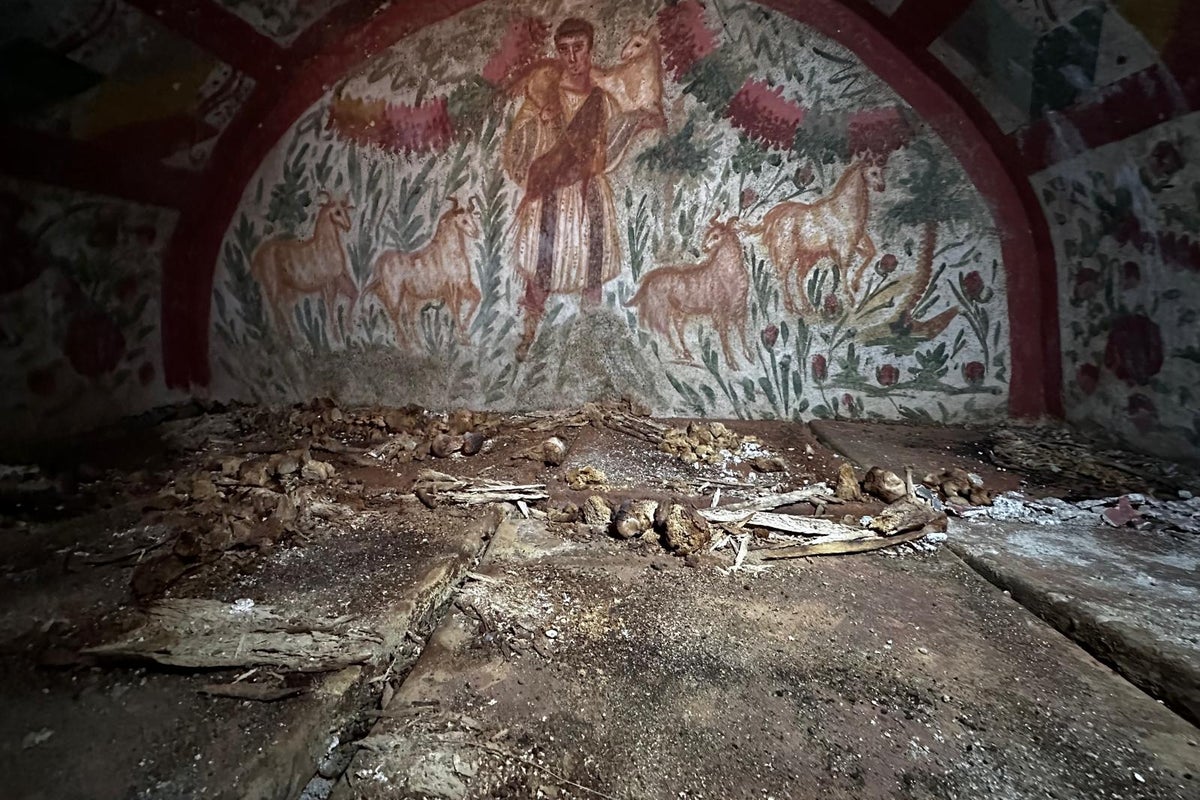
Recent excavations in Anatolia have unearthed numerous churches dating back to the fourth and fifth centuries, providing a glimpse into early Christian communities. Among the noteworthy finds is a well-preserved fresco depicting Christ, discovered in Iznik. This image, one of the oldest representations of Jesus, showcases Him as the Good Shepherd, and it dates back to the early-to-mid-third century. The vibrant colors of this artwork have remained intact due to its preservation in an oxygen-depleted underground tomb, allowing researchers to analyze its significance in early Christian iconography.
Moreover, archaeologists in Pergamon have identified one of the earliest images of Saint George, England’s patron saint, suggesting a wider diffusion of Christian symbolisms in the region. These discoveries not only contribute to our understanding of specific figures within Christianity but also underscore the social and cultural contexts in which these early communities flourished.
The Role of Anatolia in Early Christianity
Anatolia’s importance cannot be understated; it rapidly became a cradle of Christianity. Just decades after Christ’s crucifixion in Jerusalem, the region saw the establishment of numerous churches and communities. The fresco depicting Christ is a crucial artifact that reflects how early Christians envisioned Him—dressed in upper-class Roman attire, suggesting that His image was adapted to resonate with the local population’s cultural aesthetics.
Further historical research has revealed that the persecution of Christians, although less extensive than previously believed, played a role in the faith’s expansion. Studies suggest that the martyrdom of Christians attracted new followers, while the establishment of social care systems contributed to an increase in conversion rates. The juxtaposition of Christianity against the pagan frameworks of the time created a fertile ground for its growth.
Connections to the Roman Empire
The spread of emperor worship in Anatolia also provides context for understanding Christianity’s evolution. Archaeological evidence shows that the early Christians were living within a society that practiced emperor veneration, which created a counter-narrative to the Christian faith. For example, archaeological finds related to the cult of emperor worship can be linked to the challenges faced by early Christians trying to establish their beliefs against imperial ideologies.
This connection is illustrated in the Book of Revelation, which refers to the Roman Empire symbolically to critique its central role in an oppressive system. Recent discoveries of inscriptions and artifacts have shed light on this dynamic, showing how early Christians navigated their faith amid prevalent pagan practices.
Ongoing Research and Its Significance
The scale of ongoing archaeological research in Turkey reflects a growing interest in the early centuries of Christianity. Collaborative projects by international scholars continue to enhance our understanding of this pivotal era. Evidence from ancient cities like Ephesus and Sardis indicates that early Christians were not only active participants in society but also managed to create spaces for worship despite facing significant challenges.
Additionally, inscriptions found in Smyrna illuminate early Christian thoughts and beliefs, marking them as some of the earliest writings on the subject. These findings provide a roadmap for understanding the societal structures that shaped the faith during its formative years.
As researchers continue to explore the archaeological landscape of Turkey, the historical relevance of these discoveries becomes increasingly apparent. As noted by Professor Candida Moss from the University of Birmingham, Anatolia played a crucial role in early Christian history, inviting scholars and enthusiasts alike to further investigate this rich tapestry of belief and culture.