
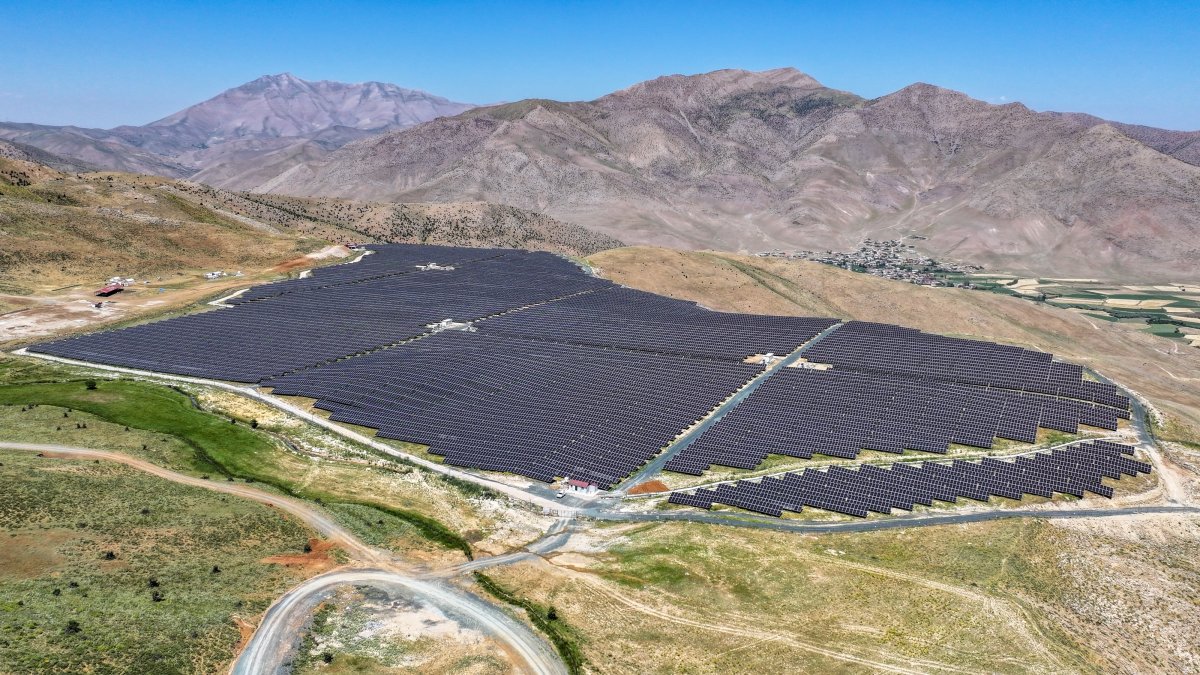
Renewable energy has emerged as a cornerstone in Türkiye’s electricity landscape, significantly influencing the growth of the nation’s installed capacity. A recent report detailed that between June 2025 and June 2026, a remarkable 88.1% of the net capacity increase stemmed from renewable sources. This shift highlights Türkiye’s commitment to sustainable energy practices and reflects ongoing investments in renewables.
Capacity Growth in Türkiye
Recent calculations from Anadolu Agency, based on the Energy Market Regulatory Authority’s Electricity Market Sector Reports, indicate that Türkiye’s electricity capacity surged by over 6,300 megawatts (MW) during the specified timeframe. By mid-2025, the nation had achieved a total installed capacity of 119,740 megawatts. This figure increased to 126,113 megawatts by mid-2026, showcasing an increase of approximately 6,373 megawatts, with a substantial portion—about 5,613 megawatts—originating from renewable energy sources. Thus, the renewable energy capacity soared from 73,195 megawatts to 78,808 megawatts, raising its share of total installed capacity from 61.1% to 62.5%.
Key Contributors: Solar and Wind Energy
The predominant forces driving this growth in renewable capacity have been solar and wind energy. When considering both licensed and unlicensed facilities, Türkiye’s solar capacity escalated from 23,573 megawatts to 27,210 megawatts, translating to a net increase of approximately 3,637 megawatts. Simultaneously, wind energy also experienced growth, with installed capacity climbing from 13,476 megawatts to 15,281 megawatts, marking an increase of about 1,805 megawatts. Together, the 5,442-megawatt boost from solar and wind energy represented nearly 97% of the growth in renewable capacity, accounting for 85.4% of the net increase in Türkiye’s total installed electricity capacity.
As a result of this progress, solar energy has risen to become the second-largest contributor in Türkiye’s energy landscape, following hydropower. By the end of June, the capacity figures were as follows: hydropower at 32.3 gigawatts, solar at 27.2 gigawatts, and wind at 15.3 gigawatts. Notably, the combined capacity of hydropower, solar, and wind has reached 74.8 gigawatts, making up approximately 59% of Türkiye’s total electricity capacity.
Renewables’ Impact on Electricity Generation
The surge in installed capacity has also had a significant effect on electricity generation profiles across the country. Total electricity generation from both licensed and unlicensed facilities in Türkiye increased from 171.3 terawatt-hours (TWh) in the first half of 2025 to roughly 174.8 TWh in the first half of 2026. However, electricity generation from renewable sources saw even stronger growth. It rose from 81.3 TWh in early 2025 to 107.5 TWh in early 2026, marking a 32.3% year-over-year increase. Consequently, the share of total electricity generation from renewables surged from 47.4% to 61.5%, indicating that over 60% of electricity produced in Türkiye now comes from renewable sources.
This remarkable growth has largely been attributed to hydropower, which increased its production from 33.9 TWh to around 57 TWh, reflecting a 67.9% rise. Additionally, wind power generation advanced by 14.2%, while total generation from solar facilities grew from 17.6 TWh to 18.3 TWh, representing 10.5% of Türkiye’s total electricity generation.
Unlicensed Capacity and Electricity Trade
Unlicensed electricity generation has also played a vital role in Türkiye’s electricity capacity growth. From June 2025 to June 2026, unlicensed capacity saw an increase from 21,947 megawatts to 25,239 megawatts, reflecting a 15% growth within a single year. Notably, of this capacity, solar energy comprised about 96.7%. Furthermore, the contribution of unlicensed facilities to electricity generation also witnessed a rise, with gross generation climbing from 13.8 TWh to 14.6 TWh.
On the international stage, Türkiye’s electricity trade balance improved, with net electricity exports surging to approximately 1.426 million megawatt-hours (MWh) during the first half of 2026—a 45.5% increase compared to the previous year. This progressive shift towards renewable energy not only bolsters Türkiye’s energy security but positions it as a significant player in the regional electricity market.