
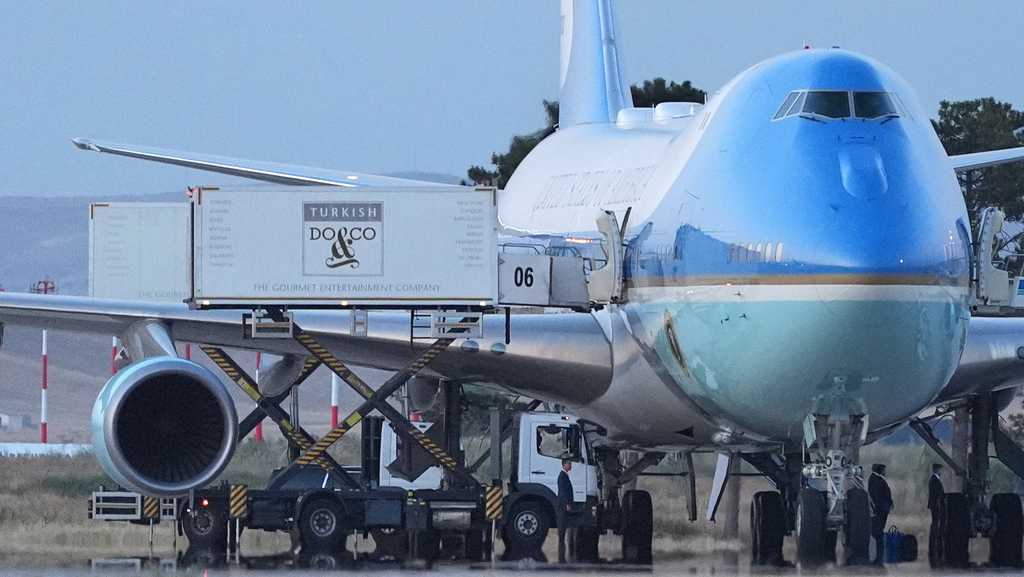
In a dramatic series of events, top officials in the United States, including Secretary of State Marco Rubio and Treasury Secretary Scott Bessent, used a tactical maneuver to ensure the safety of President Trump during a critical trip to Turkey. This operation underscores the importance of security protocols when dealing with high-profile leaders and the measures that can be taken to protect them from unforeseen threats.
Decoy Tactics in Political Security
Decoy planes have often been a part of statecraft, serving as an essential component of a larger strategy to safeguard leaders during international visits. In this instance, the deployment of a decoy aircraft allowed for an effective diversion, drawing attention away from the actual route taken by President Trump. Such tactics are crucial, particularly in regions where tensions are high and the risk to officials can escalate quickly.
This particular scenario highlights the intricate planning that goes into organizing foreign travel for prominent figures. The coordination between various government agencies, as well as security teams, is vital for the successful execution of such missions. Each aspect, from logistics to public relations, is meticulously calculated to ensure that any potential threats are mitigated and that the officials involved can focus on diplomacy and other critical engagements.
Security Measures in High-Stakes Situations
Utilizing multiple aircraft in a layered security approach is not only practical but necessary in contemporary geopolitics. This strategy allows the officials to maintain an element of surprise, making it challenging for any potential adversaries to track their movements. Security specialists emphasize the importance of these measures, particularly when politicians find themselves in volatile regions where they may face risks from various groups or organizations opposed to their policies.
The risks associated with public officials traveling abroad cannot be underestimated. The need for advanced planning and security protocols becomes even more pronounced when dealing with countries that exhibit unpredictable political climates. In this context, the roles of security teams cannot be overstated, ensuring that both the President and his cabinet members can engage confidently in diplomatic discussions without the looming fear of insecurity.
The Implications for Future Missions
The successful execution of this operation sends a clear message about the rigorous protections in place for U.S. officials. Going forward, the government is likely to continue refining these strategies to adapt to the evolving threats of international travel. This proactive stance not only serves to protect the immediate interests of U.S. leaders but also reassures the public that their safety is a priority during important global interactions.
In summary, the use of decoy planes and sophisticated security measures during President Trump’s journey to Turkey exemplifies the importance of strategic planning in political travel. As geopolitical landscapes shift, the United States remains committed to ensuring the safety of its leaders through innovative and tactical approaches. Maintaining a strong focus on security will be essential for future diplomatic endeavors, enabling U.S. officials to continue fostering vital relationships around the world without compromising their safety.