
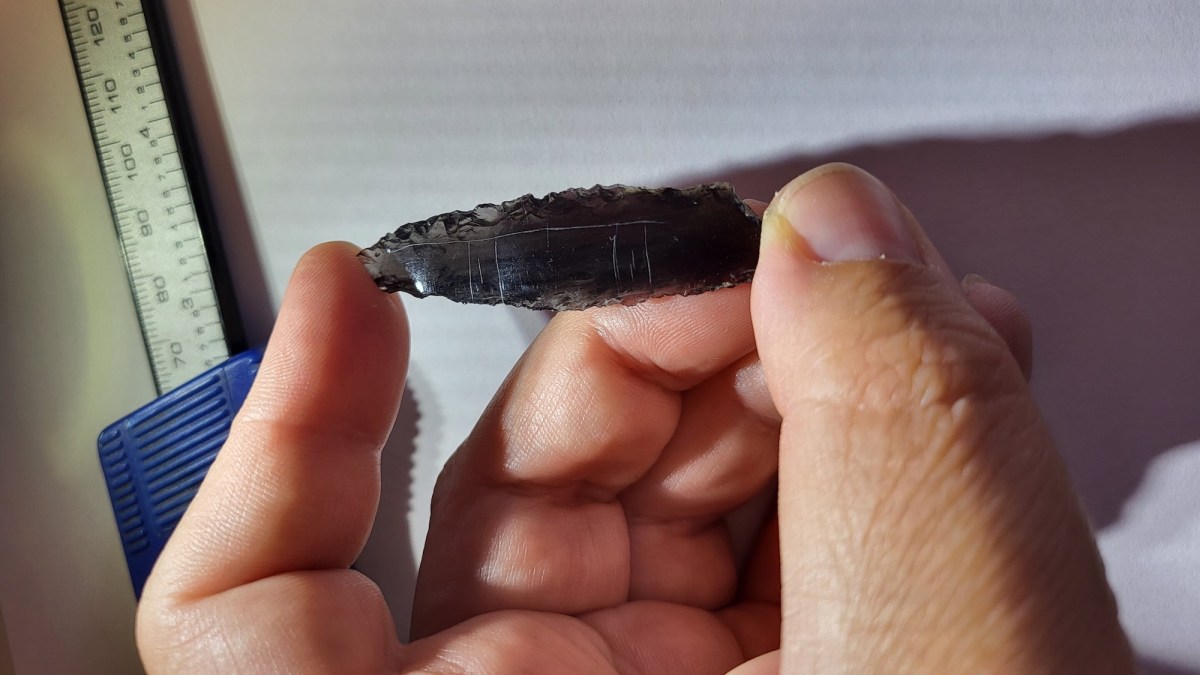
Archaeological discoveries can often unveil the mysteries of ancient cultures, and a recent study has added valuable insight into the enigmatic obsidian arrowheads found in central Turkey. Over the last four decades, researchers have located numerous examples of these intriguing artifacts at the Tepecik-Çiftlik site in Anatolia. A new publication from scientists at Aix Marseille Université has further cataloged 11 additional arrowheads, bringing the total to 54 known specimens, some dating back nearly 9,000 years.
Unique Characteristics of Obsidian Arrowheads
These arrowheads stand out not just for their material—crafted from obsidian, a volcanic glass—but for their distinctive designs. Study co-author Alice Vinet noted that while many similarities appear across different finds, each arrowhead remains unique, with no two incisions being identical. This uniqueness fuels speculation about their purpose and manufacturing techniques, particularly regarding the markings that cover some of the arrowheads. The researchers are still grappling with determining the exact significance behind these designs.
The arrowheads, dating to the Late Neolithic period, were primarily unearthed in the remnants of the Tepecik-Çiftlik village, which existed around 7,100 to 5,800 BCE. This area was rich in resources, with obsidian available from nearby sources. Such volcanic glass was highly prized by ancient societies due to its sharp edges and lustrous finish. The findings have prompted archaeologists to explore further the relationship between these tools and the way communities functioned during that era.
Theories Surrounding the Markings
The intrigue surrounding the markings on these arrowheads can be traced back to the work of archaeologist Kathryn Ataman, who in 1988 proposed that each incision served as a hunter’s signature, allowing them to claim their kills. However, this notion has come under scrutiny due to the relative scarcity of similarly incised arrowheads discovered since then. As Vinet and her team examined the markings, they identified certain features that allowed them to recognize additional arrowheads during subsequent excavations.
In their research, Vinet’s team scrutinized the craftsmanship behind the incisions. They hypothesized that the marks were deliberately made, as obsidian cannot scratch itself; therefore, other materials, like flint, were likely used in the creation of these intricate designs. Their recreations of the markings showed that artisans of the time needed to exert significant effort, implying that the incisions held some importance to those who made them.
Potential Patterns and Future Research
While the current findings yield no definitive patterns in the designs—some placed centrally on the arrowheads while others appear on the sides—researchers remain optimistic about future revelations. The circulating trade of obsidian in Neolithic times, which extended to regions like southern Levant, signals the potential for discovering similar tools elsewhere. Until concrete connections can be established, the designs on these arrowheads remain a captivating puzzle.
As Vinet stated, the excitement lies in both the striking similarities and the individualistic features present in each find. The continued exploration of these arrowheads not only sheds light on ancient technology and craftsmanship but also raises broader questions about social structures and cultural practices within Neolithic communities. With ongoing research, the secrets concealed within these remarkable artifacts may yet be unraveled, offering richer context to our understanding of human history.