
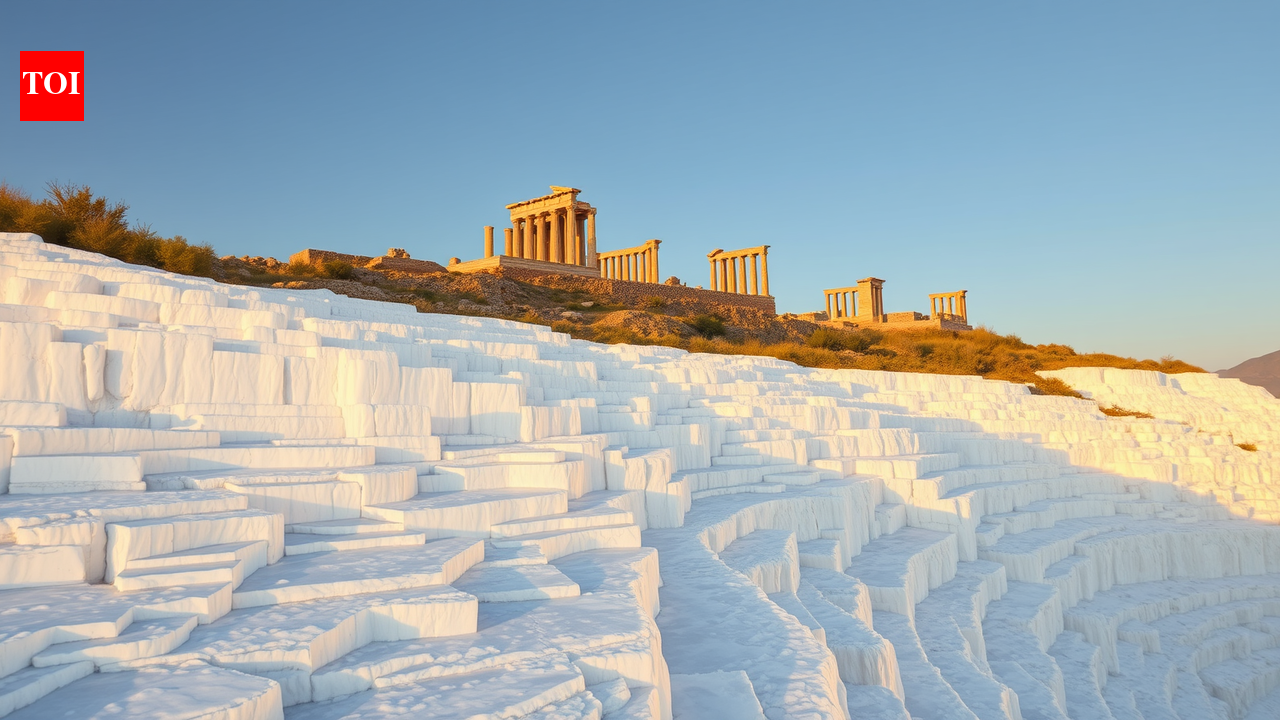
Turkey is renowned for its breathtaking natural wonders, and Pamukkale stands out as one of the most remarkable sites. Translating to “cotton castle” in Turkish, Pamukkale is celebrated for its stunning, luminous white terraces formed by calcite-rich thermal waters. This UNESCO World Heritage site, alongside the ancient city of Hierapolis, provides a fascinating glimpse into both nature’s artistry and historical significance.
Formation of Pamukkale’s Terraces
Pamukkale is often described as an “unreal landscape,” solely shaped by the forces of nature. The phenomenon begins with mineral-rich waters springing from hot springs nestled in the cliffside. As this warm water cascades down the slope and cools, it deposits layers of calcium carbonate, which accumulate over time, resulting in the striking white terraces visible today. In fact, these terraces vary in height, with some reaching up to six meters tall, showcasing a unique form of natural architecture. Besides the stunning beauty, the site also contains a complex system of natural canals that once transported thermal water, extending a remarkable 70 kilometers to nearby villages.
The Historical Significance of Hierapolis
The ancient city of Hierapolis, established in the late 2nd century B.C. by the Attalid kings of Pergamon, played a vital role due to the presence of the hot springs. Initially utilized for their therapeutic properties, these waters also supported local industries like wool processing. Hierapolis thrived under Roman rule after being ceded in 133 B.C. Despite a significant earthquake in 60 A.D. that devastated the city, it was rebuilt and flourished, especially during the 2nd and 3rd centuries A.D. Today, visitors can explore remnants from the Greco-Roman period such as baths, temples, and a grand theatre, all of which contribute to the site’s rich archaeological narrative.
UNESCO Recognition and Conservation Efforts
Inscribed on the World Heritage List in 1988, the Hierapolis-Pamukkale site satisfies three UNESCO criteria, highlighting its exceptional natural and historical landscape. Firstly, Hierapolis is recognized as an extraordinary example of a Greco-Roman thermal installation, harmoniously integrated into its natural surroundings. Secondly, the Early Christian monuments found within the site are of exceptional architectural significance, and thirdly, the sheer visual allure of the travertine landscape captivates all who visit.
Despite its beauty, the integrity of Pamukkale is challenged by the influx of tourists, necessitating various protective measures. The Turkish government has implemented conservation strategies, including designating the area as a protected zone and placing restrictions on visitor access to sensitive regions. These efforts ensure the preservation of the delicate ecology and the historical features that have attracted visitors for over two millennia.
In partnership with an Italian archaeological team active since 1957, the Site Management Directorate works diligently to maintain the site’s integrity, reflecting the ongoing commitment to both conservation and heritage tourism. Pamukkale remains a true testament to the interplay between natural wonders and human history, inviting visitors to appreciate the delicate balance of beauty and preservation.