
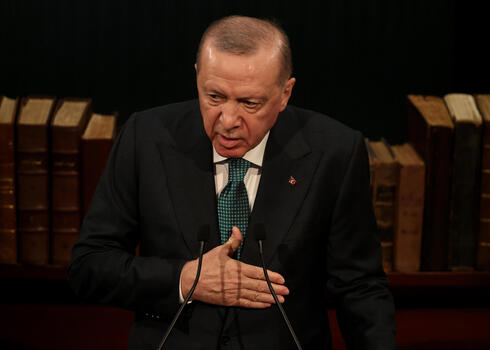
In a recent statement, former President Donald Trump emphasized his belief that Turkish President Recep Tayyip Erdoğan played a crucial role in maintaining peace and preventing involvement in a potential conflict with Iran. Trump’s remarks also included commendations for various world leaders, highlighting the importance of diplomatic efforts in averting broader regional wars. He underscored his personal contributions to these de-escalation measures, further framing the narrative around his diplomatic strategies.
Trump’s Perspective on Diplomacy
Trump’s assertions rest on the premise that strategic conversations and relationships with foreign leaders, such as Erdoğan, can significantly influence geopolitical stability. By acknowledging Erdoğan’s involvement, Trump reinforces the notion that collaboration between nations can mitigate the risks of escalating tensions. His diplomatic approach has often revolved around building personal relationships, which he argues fosters an environment conducive to peace.
The former president believes that effective diplomacy can act as a buffer against escalating confrontations, particularly in volatile regions. By promoting dialogue rather than aggression, Trump posits that leaders can work together to find common ground and resolve conflicts before they escalate into more significant confrontations. This stance aligns with his broader philosophy, where diplomatic engagements are prioritized over military interventions.
The Role of International Leaders in Conflict Resolution
In addition to praising Erdoğan, Trump referenced other world leaders who have played instrumental roles in fostering stability. His acknowledgment of various diplomatic figures serves to illustrate the broader global effort in combatting conflicts that risk spiraling out of control. Collaborative leadership and teamwork among these nations are seen as essential components in establishing a more peaceful international landscape.
Trump pointed out specific instances where he believes diplomacy has successfully diverted crises. By bringing attention to these victories, he aims to highlight the effectiveness of diplomatic channels over military might. His narrative seeks to encourage other leaders to engage constructively, rather than allowing conflicts to dictate their foreign policies.
Personal Involvement in De-escalation Strategies
Integral to Trump’s messaging is his role as a negotiator and a peacemaker. He frames his tenure as one marked by a commitment to reducing tensions and fostering dialogue. Trump frequently shares anecdotes of his direct interactions with international leaders to illustrate how his approach has led to tangible outcomes in conflict resolution.
His narrative serves not just to present a viewpoint but also to encourage an ongoing discussion about the merits of diplomacy in modern geopolitics. By positioning himself as an active participant in these discussions, Trump seeks to inspire future leaders to continue pursuing diplomatic avenues rather than defaulting to military actions. His assertions reflect a belief that engagement and understanding can leverage lasting peace.
In summary, Trump’s perspective on diplomatic relations embodies a strategy that prioritizes conversation and collaboration over confrontation. Recognizing the influence of leaders like Erdoğan, he advocates for the importance of unity among nations to create a more stable world. By emphasizing his role in fostering these relationships, Trump aims to reinforce the significance of diplomacy as a cornerstone of peaceful conflict resolution.